




The Power of a Single Statement
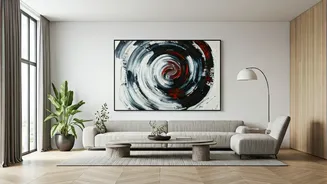
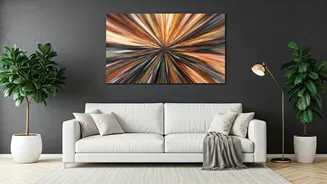
Why does one large piece of art work so much better than a dozen small ones? It’s all about creating a powerful focal point. A large canvas, photograph, or print immediately draws the eye, giving the room a sense of purpose and a clear center of gravity.
Instead of your gaze bouncing between small, scattered frames, it lands on one confident statement. This has a surprisingly calming and organizing effect on a room’s entire feel. Furthermore, contrary to what you might think, an oversized piece can make a small room feel larger. By occupying a significant portion of a wall, it creates an illusion of depth and grandeur, tricking the eye into perceiving the space as more expansive than it is. It’s a bold move, but one that pays off in architectural impact without any actual construction.
Choosing Your Centerpiece
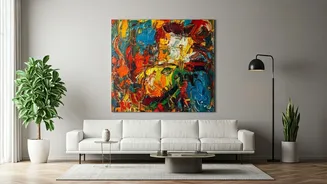
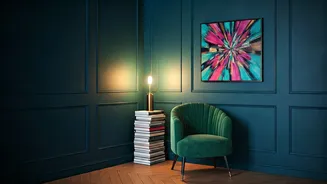
“Oversized art” doesn’t just mean a giant, expensive oil painting. The category is wonderfully broad. A large-format photograph, whether a dramatic landscape or a soulful black-and-white portrait, can set a sophisticated mood. Abstract art is another fantastic option; its use of color, texture, and form can inject energy and emotion into a neutral space without depicting a specific scene. Don’t limit yourself to things in a frame, either. A beautiful textile, like a vintage quilt, a Moroccan wedding blanket, or a modern tapestry, can add softness, texture, and a bohemian flair. The key is to choose something you genuinely love to look at. This piece will define the room, so it should reflect your personality and the vibe you want to cultivate.
Getting the Scale and Placement Right
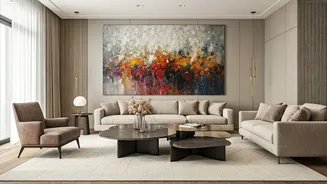
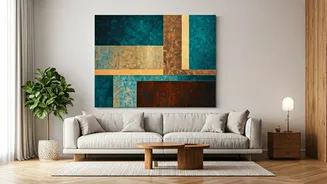
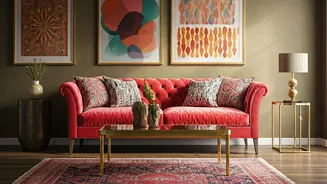
The success of oversized art hinges on two things: proportion and placement. A good rule of thumb is for the art to take up roughly two-thirds the width of the furniture it hangs above, like a sofa or a sideboard. If hanging on an empty wall, let it dominate the space—don't be shy. When it comes to height, designers agree: hang it lower than you think. The center of the artwork should be at eye level, which is typically around 57 to 60 inches from the floor. This connects the art to the human-scale elements in the room, making it feel integrated rather than like it's floating away. Prime locations include the wall above your living room sofa, behind the headboard in a bedroom, or at the end of a long hallway to create a stunning destination point.
Big Art on a Small Budget
The word “oversized” can sound expensive, but it doesn't have to be. Your dream piece might be more accessible than you think. Online marketplaces like Etsy, Society6, and Art.com offer a vast selection of large-scale prints from independent artists at a fraction of gallery prices. You can often buy the digital file and have it printed locally at a print shop for even greater savings. Another pro tip is to look for engineer prints—large, architectural-style prints that are incredibly cheap to produce and have a cool, industrial-matte finish. Or, get creative with a DIY project. Buy a large, blank canvas from an art supply store and create your own abstract masterpiece with a few sample pots of paint. You don’t have to be Picasso; a few bold, confident strokes of color are all it takes.
To Frame or Not to Frame
The final touch is the frame. A stretched canvas can often be hung as-is for a modern, minimalist look. This is especially effective for abstract pieces where the art extends around the edges. For prints and photographs, a frame is essential. A simple, thin gallery frame in black, white, or a natural wood finish will let the artwork be the star. If you want to add another layer of polish, consider a mat, which provides visual breathing room between the art and the frame. However, for a more contemporary and impactful look with a large piece, you can frame it “full-bleed,” with the image going right to the edge of the frame. This choice reinforces the scale and makes the artwork feel even bigger and more immersive.