



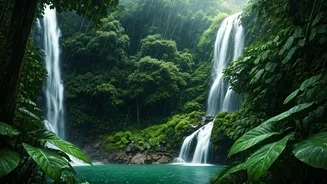
The Land of Living Green
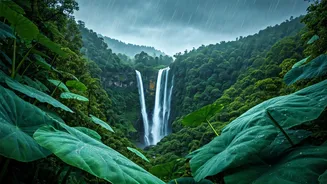
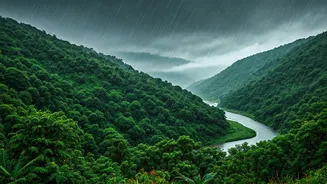
Known locally as Sohra, Cherrapunji holds a near-mythical status as one of the rainiest spots on the planet. Tucked into the Khasi Hills of Meghalaya in northeastern India, this plateau spends months shrouded in mist and pummeled by torrential downpours.
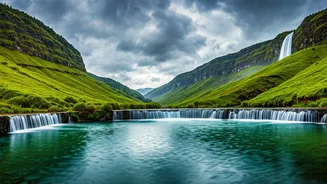
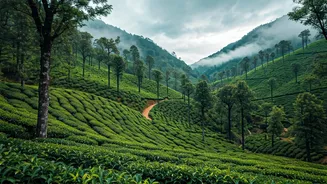
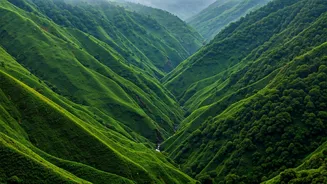
But as the monsoon recedes around October, it leaves behind a breathtaking reward. The landscape erupts in a blanket of lush, velvety green. Mosses, ferns, and grasses, supercharged by an abundance of water, cling to every surface—rocks, trees, and rolling hills—creating a continuous, impossibly verdant tapestry. The air is crisp, clean, and heavy with the scent of wet earth and blooming flora. It’s a period where the region feels reborn, trading the gray onslaught of rain for a vibrant, electrifying coat of life.
The Science of the Spectacle
This dramatic seasonal shift isn't an accident; it's a masterpiece of meteorology and geography. During the monsoon, moisture-laden winds sweep north from the Bay of Bengal. When they hit the steep, funnel-like cliffs of the Khasi Hills, they are forced rapidly upward. This sudden ascent causes the moisture to cool and condense, unleashing staggering amounts of rainfall directly over Cherrapunji and the nearby village of Mawsynram (the current record holder). The region’s porous limestone and sandstone geology mean that despite the deluge, the ground doesn't become a permanent swamp. Instead, the water carves out spectacular gorges and fuels countless waterfalls, while the topsoil supports a unique ecosystem poised to flourish the moment the rains ease. This annual cycle of extreme wet followed by sun-drenched growth is what produces such an intense and fleetingly perfect green phase.
Bridges Grown, Not Built
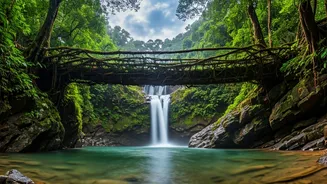
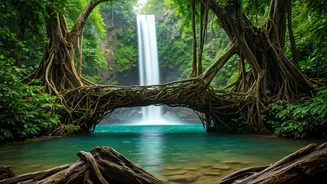
Perhaps nothing captures the spirit of Cherrapunji more than its living root bridges. For centuries, the indigenous Khasi people have developed a unique form of bio-engineering to cope with the rain-swollen rivers. Instead of building wooden bridges that would quickly rot in the damp climate, they guide the aerial roots of the *Ficus elastica* (rubber fig) tree across rivers and streams. Using hollowed-out betel nut trunks as guidance systems, they patiently train the roots over many years until they form a strong, living structure. These bridges are a testament to a deep, symbiotic relationship with nature. The most famous examples, like the Umshiang Double-Decker Root Bridge, are not just functional crossings; they are breathtaking works of natural art, intertwined with the very landscape they serve.
A Symphony of Waterfalls
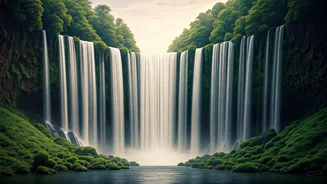
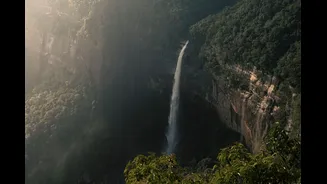
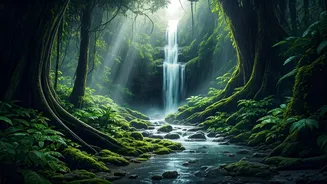
The post-monsoon period is also the best time to witness the region’s other main attraction: its waterfalls. Fed by the immense rainfall, hundreds of cascades plunge from the cliffs, their roars echoing through the valleys. The iconic Nohkalikai Falls, one of the tallest plunge waterfalls in India, is a particularly stunning sight. According to Khasi legend, its name tells a tragic story, but its beauty is undeniable as it drops from a verdant precipice into a turquoise pool below. Nearby, the Seven Sisters Falls (Nohsngithiang Falls) presents a majestic wall of water, a series of parallel streams gushing over the limestone cliffs. In the soft post-monsoon light, these cascades become shimmering ribbons of silver against the deep green backdrop, completing a scene of almost overwhelming natural beauty.