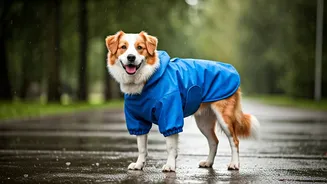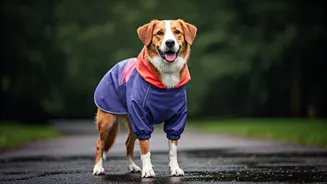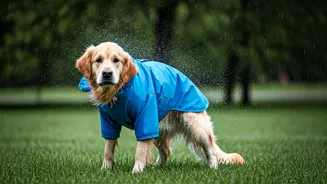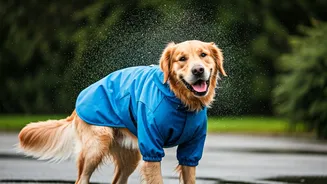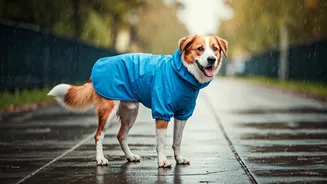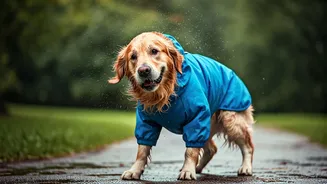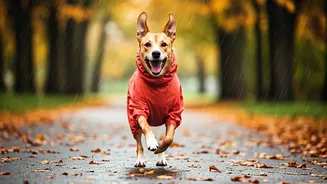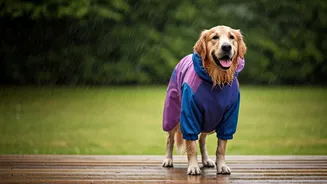



More Than Just a Fashion Statement
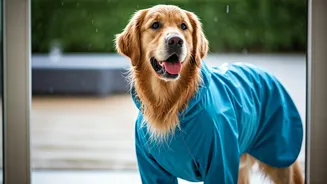
Let's be clear: a pet raincoat isn't just about making your dog look cute, though that can be a happy side effect. It’s a practical tool with real benefits. First, it keeps your dog more comfortable and, in some cases, healthier. Small breeds, senior
dogs, and those with short fur can lose body heat quickly when wet, making them susceptible to chills. A raincoat provides a crucial barrier. Second, it drastically reduces the post-walk cleanup. Instead of a full-body towel-down and a cloud of wet-dog smell, you’re dealing with just four muddy paws. This protects your floors, furniture, and car interiors from water damage and that lingering damp odor.
Decoding Waterproof vs. Water-Resistant
The most important feature of a raincoat is, of course, its ability to repel water. However, not all materials are created equal. You’ll often see terms like "water-resistant" and "waterproof." Water-resistant fabrics can handle a light drizzle but will eventually soak through in a heavy downpour. For true monsoon-level storms or persistent rain, you need a genuinely waterproof material. Look for coats made from PVC (vinyl), coated nylon, or polyester with sealed seams. These materials create an impermeable barrier that keeps the rain out and your dog’s fur dry, even during a deluge. A water-resistant jacket may be cheaper, but it will fail you when you need it most.
The Perfect Fit for Comfort and Coverage
A poorly fitting raincoat is useless. If it’s too tight, it will restrict your dog’s movement and cause chafing. If it’s too loose, water will seep in, and the coat might snag on branches or other obstacles. A good raincoat should offer adjustable straps, usually around the chest and belly, to create a snug but comfortable fit. Look for designs that provide excellent belly coverage to protect your dog’s underside from splashes and mud. Before buying, measure your dog’s length (from the base of the neck to the base of the tail), chest girth (the widest part of the ribcage), and neck. Compare these measurements to the manufacturer's size chart, and don't assume a "Large" in one brand is the same as another.
Why "Quick-Dry" Matters for You
The headline emphasizes "quick-dry," and for good reason. This feature is less about the dog and more about the owner's convenience. After a walk, you can simply shake the water off a good quality quick-dry coat, give it a quick wipe, and hang it up. Within a short time, it’s dry and ready for the next outing. This prevents the coat itself from developing a mildewy, musty smell, which can happen with absorbent fabrics that are stored while damp. A raincoat that dries fast means less mess and less hassle, encouraging you to stick with your walk routine even when the weather is miserable.
Essential Safety and Practical Features
Beyond fit and material, a few key design elements separate a great raincoat from a mediocre one. Reflective strips or piping are non-negotiable. Rain often means low visibility, and reflective details make your dog much more visible to cars and cyclists during dawn, dusk, or stormy afternoon walks. Another crucial feature is a leash portal—a small, covered opening on the back of the coat that allows you to clip a leash to your dog’s collar or harness. This ensures the coat doesn’t interfere with your leash. Finally, consider a hood. While some dogs hate them, an adjustable hood can offer extra protection for your dog's head and ears, which is especially helpful in driving rain.