



From Mood Board to Mockup in Minutes
Imagine an interior designer sitting with a client. Instead of spending hours pulling fabric swatches and furniture photos for a mood board, they type a few sentences into a laptop: “A bright, airy kitchen with soapstone countertops, shaker cabinets in a sage
green, brass hardware, and a vintage runner on a light oak floor.” Within a minute, several photorealistic images appear on the screen, each a plausible version of that exact vision. This isn't science fiction; it's the new reality powered by generative AI styling platforms. Tools like Midjourney, DALL-E 3, and specialized platforms are essentially text-to-image engines on steroids. They’ve been trained on billions of images, allowing them to understand and synthesize concepts—from architectural styles like “Brutalist” to aesthetic vibes like “coastal grandmother”—and render them into high-fidelity visuals almost instantly.
The New Creative Workflow
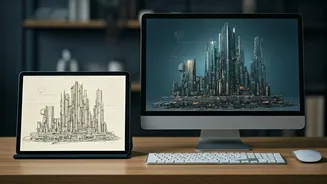
For decades, the creative process has been linear and often slow. It started with a concept, moved to a sketch or wireframe, then to a more detailed mockup, and finally to a polished render or prototype. Each step required time, specialized skills, and a round of client feedback that could send the whole process back to square one. Generative AI shatters this linear model. It creates a rapid, iterative loop of ideation and visualization. A brand strategist can now generate dozens of logo concepts or packaging mockups in an afternoon. An architect can show a client what a proposed extension will look like during different seasons or times of day. This immediacy dramatically speeds up client alignment. Instead of trying to interpret abstract language or a messy mood board, the client sees a concrete visual from the very first meeting. This “show, don’t tell” approach leads to clearer communication, fewer misunderstandings, and faster approvals.
The Business Case Is About Speed and Volume
While the technology is impressive, the business case is what’s driving adoption. The primary benefit is a massive increase in efficiency. Tasks that once took a junior designer days can now be completed in minutes, freeing up senior talent to focus on strategy, client relationships, and refining the final product. This allows creative firms to take on more projects without increasing headcount. Furthermore, AI enables a far wider range of creative exploration. When the cost of generating a new idea is near zero, designers can afford to experiment with wilder concepts that might have been too time-consuming to mock up traditionally. This can lead to more innovative and satisfying final outcomes. For clients, the experience is transformed. They feel more involved in the creative process, can provide more specific feedback earlier, and are ultimately more confident in the final direction.
The Human Touch Is Still the Secret Sauce
So, are designers and creatives about to be replaced by a prompt-writing robot? Not so fast. While these platforms are incredible for ideation and visualization, they have significant limitations. They often struggle with fine details, like rendering text correctly or creating anatomically correct hands. They can lack true originality, sometimes producing work that feels generic or derivative of their training data—the dreaded “AI sameness.” More importantly, AI cannot understand a client’s business goals, strategic needs, or brand essence. It can’t build a relationship or navigate a tricky feedback session. The role of the human creative is shifting from being a “maker of things” to a “curator of ideas” and a strategic partner. A skilled professional is needed to write the perfect prompt, sift through the AI-generated options, identify the one with a spark of brilliance, and then use their expertise to refine, customize, and execute it into a finished product that truly serves the client’s needs. The AI is a powerful new paintbrush, but the artist still decides what to paint.