





The Perfect Antidote to Summer's Glare
There is a unique, almost magical transformation that occurs when a cantaloupe is properly chilled. What sits on the counter as a humble, netted gourd becomes something else entirely in the refrigerators’ cool dark. The flesh firms up, the sugars concentrate,
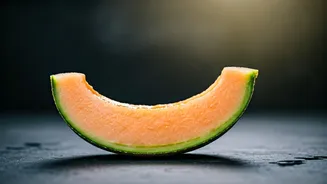
and its pale orange color seems to glow with a quiet, promising energy. The act of slicing it open releases a fragrant, floral-musk scent that is the very essence of summer abundance. The first bite is a study in contrasts. The initial shock of cold against your tongue gives way to a yielding, soft texture and a wave of clean, honeyed sweetness. It's not a cloying, candy-like sugar, but something more natural and refreshing. It’s a sweetness that quenches rather than creates thirst, a simple, profound pleasure that cuts directly through the oppressive heat and humidity of a deep summer afternoon.
Nature’s Most Delicious Hydration
While the sensory experience is sublime, there’s a reason your body craves this particular fruit when the temperatures soar. Cantaloupe is, to put it simply, a delicious, edible canteen. Composed of about 90% water, each bite is a significant contribution to your hydration efforts on a day when you’re sweating out moisture faster than you can replace it. But it's more than just water. Cantaloupe is also an excellent source of potassium, an essential electrolyte that plays a crucial role in maintaining fluid balance, muscle contractions, and nerve signals—all of which are taxed during periods of heat and dehydration. Add in a healthy dose of Vitamin C and Vitamin A (in the form of beta-carotene), and you have a snack that’s not just surviving the heat, but actively fortifying your body against it. It’s nature’s sports drink, only prettier and infinitely more satisfying.
A Slice of American Nostalgia
For many Americans, cantaloupe is inextricably linked to the core memories of summer. It’s the star of the potluck fruit salad, nestled in a giant Tupperware bowl alongside less-exciting honeydew and a few scattered grapes. It's the pre-sliced wedges laid out on a paper plate at a family barbecue, sweating little beads of condensation. It's the half-moon crescents served with a scoop of cottage cheese for a light summer lunch—a retro combination that persists for a reason. This connection to community, family, and simple seasonal rituals elevates the cantaloupe beyond mere fruit. Eating it is a nostalgic act, a way of tapping into a collective memory of simpler, sunnier times. It’s a taste of childhood picnics, poolside snacks, and the slow, easy pace of a vacation that felt like it would last forever.
The Art of Choosing Your Champion
Of course, this entire experience hinges on one critical factor: a good cantaloupe. A watery, hard, or flavorless melon is one of summer’s great disappointments. But picking a winner is less a mystery than an art form. First, look for a melon that feels heavy for its size—this often indicates a high water content and juicy flesh. The skin should have a raised, well-defined netting over a creamy, beige-colored background; avoid those with large smooth patches or a decidedly green tint. Next, engage your other senses. Press gently on the “blossom end” (the one opposite the stem scar). It should yield slightly to pressure. If it’s rock hard, it’s not ripe; if it’s mushy, it’s past its prime. Finally, and most importantly, smell it. A ripe cantaloupe will have a distinctly sweet, musky fragrance at the blossom end. If you have to put your nose right on the skin to smell anything, it’s probably not ready.