




The Golden Hour Spectacle
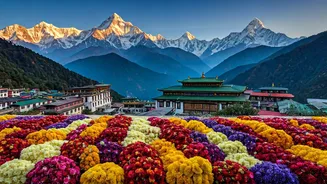
For most visitors to Gangtok, the day begins before dawn with a singular purpose: to witness the sunrise over Kanchenjunga. As the world’s third-highest peak, it doesn’t just sit on the horizon; it commands it. From viewpoints like Tashi or from a hotel
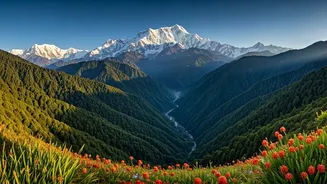
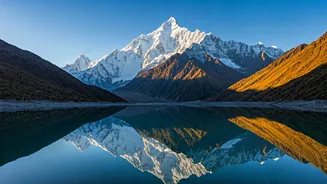
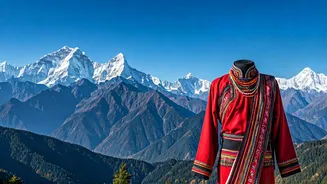
balcony facing the right direction, the experience is a slow, dramatic reveal. First, a faint outline emerges from the pre-dawn gloom. Then, as the sun begins its ascent, the tip of the peak catches fire, glowing a surreal shade of pink, then orange, then brilliant gold. The light cascades down the mountain’s face, illuminating the massive ridges and glaciers of the range known as the “Sleeping Buddha.” This isn’t just a pretty view; it’s a daily spectacle that feels both grand and deeply personal, a quiet moment of communion with one of Earth’s most formidable natural wonders. It sets the tone for a day in a city where the sublime is never far away.
A City Built on a Ridge
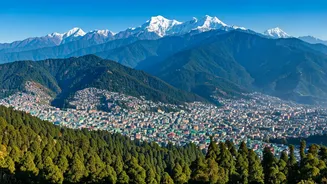
What makes Gangtok’s relationship with the mountains so unique is its geography. The city isn’t built in a valley looking up, but sprawls across a steep ridge at over 5,400 feet. This verticality means that stunning views aren't reserved for exclusive lookouts. They are an integral, democratic part of the urban landscape. You’ll be walking down a bustling market street, turn a corner, and suddenly the entire Kanchenjunga range fills the gap between two buildings. You’ll sit down for momos in a tiny, unassuming cafe and find its back window opens onto a dizzying drop with a Himalayan panorama. The city’s famous MG Marg, a clean, pedestrian-only boulevard lined with shops and benches, offers moments to simply sit and stare at the distant peaks. In Gangtok, mountain-gazing isn’t an activity you schedule; it’s an ambient state of being, a constant and welcome interruption to everyday life.
Gaining a Higher Perspective
While accidental views are part of Gangtok’s charm, the purpose-built viewpoints offer a sense of scale that’s hard to comprehend otherwise. The Gangtok Ropeway is a perfect example. Gliding in a small cable car from one end of the city to another, you float above the terraced buildings, watching the entire town unfold beneath you against the colossal backdrop of the mountains. It transforms the city into a miniature model set. For an even more expansive vista, a short drive to Ganesh Tok, a small temple perched on a high hill, provides a 360-degree panorama of the city, the winding Teesta river in the valley below, and the snow-capped giants in the distance. These spots re-center your perspective, reminding you that for all its vibrant energy, Gangtok is a small human outpost in a landscape of almost unimaginable grandeur.
Where Spirit Meets the Sky
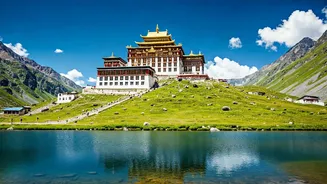
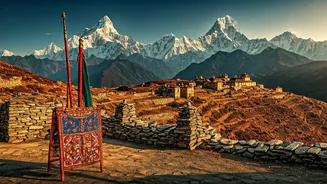
The mountains surrounding Gangtok are not just a visual spectacle; they are sacred. For the local population, largely of Tibetan Buddhist heritage, these peaks are deities and protectors. This reverence is woven into the cultural fabric of the region. Many of the monasteries in and around Gangtok, like the serene Enchey Monastery or the grand Rumtek Monastery, are strategically positioned to face the holy peaks. Their prayer flags don't just flutter in the wind; they send blessings toward the mountains. Looking out from a monastery courtyard, with the sound of chanting monks in the background and the formidable face of Kanchenjunga in the distance, you begin to understand that the view is a form of spiritual dialogue. It’s a connection that transcends simple aesthetics, framing the landscape as a source of peace, power, and profound spiritual meaning.