




The Capital of Rain
Imagine a place that receives over 450 inches of rain a year. For context, Seattle gets about 38 inches. This isn’t a typo; it’s the meteorological reality of Cherrapunji, a town perched on the edge of a plateau in India’s Meghalaya state. For years,
it held the title of the wettest place on Earth. While the nearby village of Mawsynram now often claims the official record, the distinction is academic. Both are drenched by the same powerful monsoon winds that sweep up from the Bay of Bengal, get trapped by the Khasi Hills, and are forced to release their moisture in a relentless, season-long deluge. But this isn’t a dreary, miserable rain. It’s a force of nature that defines life, sculpting the landscape and creating a unique, moody aesthetic that feels tailor-made for a camera.
A World Washed Anew
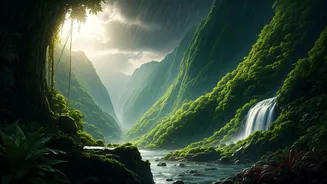
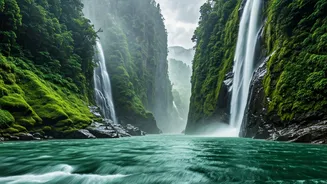
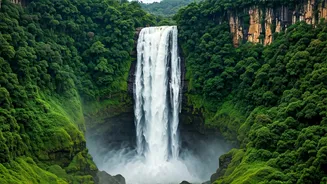
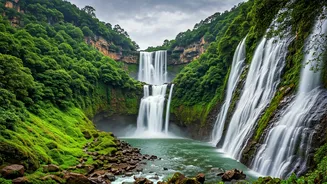
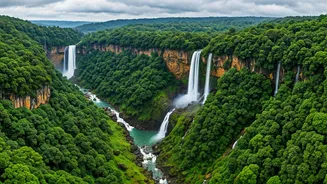
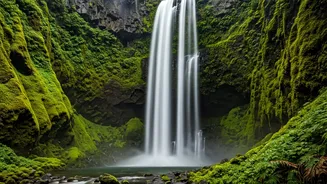
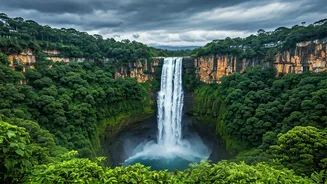
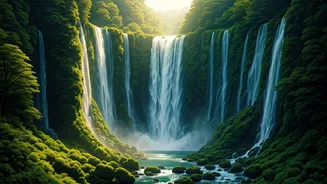
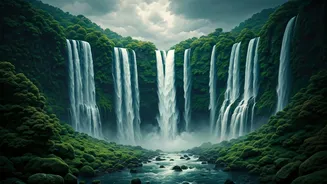
The result of all this water is a landscape that operates on a different scale of dramatic. During the monsoon, from roughly June to September, the entire region transforms. Hills that were dry just weeks before erupt with countless waterfalls, some appearing for only a few hours. The most famous, Nohkalikai Falls, plunges over 1,100 feet from a verdant cliff into a turquoise pool below, often shrouded in a cinematic veil of mist. The soundscape is a constant symphony of dripping, rushing, and roaring water. The air is thick, clean, and smells of wet earth and lush vegetation. It’s a world painted in a thousand shades of green, where sunlight filters through clouds to create an ethereal, almost otherworldly glow. This is the visual drama that social media feeds crave: raw, powerful, and utterly captivating.
The Living Root Bridges
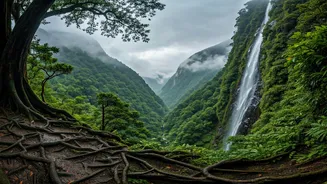
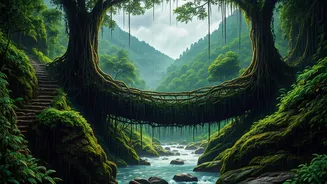
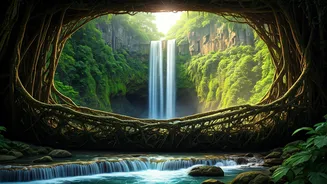
Perhaps the most iconic symbol of Cherrapunji’s unique culture is its living root bridges. In a place where conventional wooden or bamboo bridges would quickly rot and be washed away by flash floods, the indigenous Khasi people developed an ingenious solution. Over generations, they have learned to guide the aerial roots of the rubber fig tree (Ficus elastica) across rivers and streams. Using hollowed-out betel nut trunks as guides, they patiently weave and nurture the roots until they grow into a strong, living structure. These bridges, which can take 15 to 30 years to become fully functional, get stronger over time as the roots thicken. Walking across one of these intricate, moss-covered marvels—like the famous double-decker bridge in Nongriat—is like stepping into a fantasy novel. They are a testament to a patient, symbiotic relationship between humanity and a powerful environment.
Capturing the Monsoon Mood
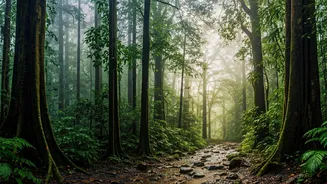
This is where the headline comes to life. A 30-second Reel can perfectly capture the slow-motion drip of water from a giant fern, the steam rising from a hot cup of chai against a backdrop of gray sky, or the hypnotic flow of a waterfall. The aesthetic is pure “moody travel.” It’s about embracing the coziness of a downpour from a window seat, the thrill of walking through mist so thick you can’t see ten feet ahead, and the deep, saturated colors that pop when everything is wet. Cherrapunji provides the ultimate setting for content that feels authentic and profound. It’s not just about a pretty view; it’s about capturing a feeling—the feeling of being in a place where nature is still unequivocally in charge.