





1. Meghalaya: Walk Across Living Bridges
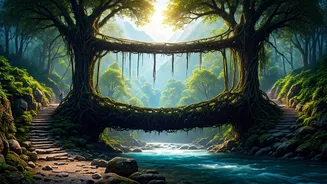
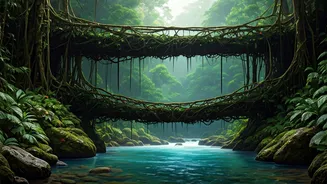
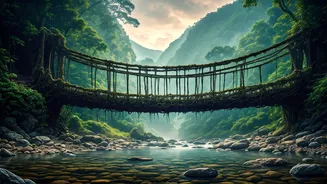
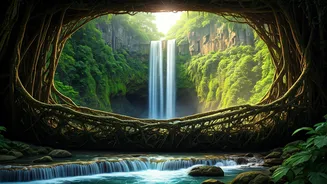
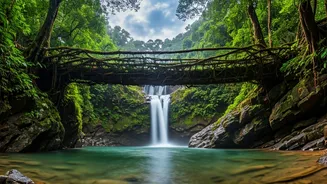
Imagine a bridge not built, but grown. This is the reality in Meghalaya, the “abode of the clouds.” For centuries, the Indigenous Khasi and Jaintia peoples have guided the aerial roots of rubber fig trees across rivers, weaving them into solid, living
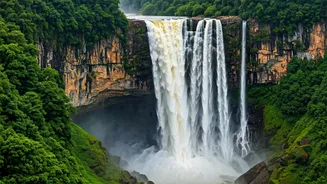
structures. The most famous of these, the Umshiang Double-Decker Root Bridge, is a surreal sight that feels pulled from a fantasy novel. But Meghalaya is more than its bridges. It’s a land of dramatic waterfalls, the wettest place on earth (Mawsynram), and a unique matrilineal society where lineage and inheritance are passed through women. Getting here once required a rugged spirit, but improved roads from Guwahati’s airport in neighboring Assam have made the journey to the state capital, Shillong—often called the “Scotland of the East”—far more accessible. It offers a combination of natural wonder and cultural depth that’s hard to find.
2. Assam: Rhinos, Tea, and River Islands
Assam serves as the gateway to the Northeast, and it’s a world-class destination in its own right. The main draw is Kaziranga National Park, a UNESCO World Heritage site and a monumental conservation success story. It’s home to two-thirds of the world's great one-horned rhinoceroses. A jeep or elephant-back safari at dawn, with rhinos grazing in the misty grasslands, is an unforgettable experience. Beyond the wildlife, Assam is synonymous with tea. Driving through the state, you’ll see endless, manicured hills of green, and a stay at a colonial-era tea bungalow offers a taste of a bygone era. For something truly unique, take a ferry to Majuli, one of the world’s largest river islands, located on the mighty Brahmaputra River. It’s a center of neo-Vaishnavite culture, with serene monasteries (sattras) and a slow pace of life that feels like a journey back in time.
3. Nagaland: A Festival of Fierce Pride
For the culturally curious, Nagaland is the ultimate destination. Home to 16 major Indigenous tribes, each with its own distinct customs, dress, and language, this is one of the most diverse cultural hotspots in Asia. While its history is complex, modern Nagaland is a vibrant place where ancient traditions coexist with a youthful, creative energy. The best time to visit is during the first week of December for the Hornbill Festival. Dubbed the “Festival of Festivals,” it brings together all the Naga tribes for a massive celebration of their cultural heritage. You’ll witness traditional dances, hear ancient songs, see incredible artisanship, and taste local delicacies. It’s a powerful, immersive experience that provides a stunning window into the soul of these proud warrior communities. While tourism infrastructure is still developing, the warmth and hospitality of the Naga people make any journey here deeply rewarding.
4. Arunachal Pradesh: The Last Shangri-La
This is truly the final frontier of Indian travel. A sparsely populated state of soaring Himalayan peaks and dense forests, Arunachal Pradesh is often called the “land of the dawn-lit mountains.” Due to its sensitive border with China, it remains one of the most protected regions in India, requiring special permits for visitors—a hurdle that only adds to its mystique. The reward for navigating the bureaucracy is access to a world seen by very few outsiders. The main attraction is the Tawang Monastery, the second-largest Buddhist monastery in the world, perched at 10,000 feet with breathtaking views of the valley. The journey to Tawang over the Sela Pass is an adventure in itself. The state is a mosaic of different tribal groups and offers incredible opportunities for trekking, rafting, and simply disconnecting from the modern world. For those seeking raw, untouched beauty and a sense of genuine exploration, Arunachal is as close to Shangri-La as you can get.