
The Roof of the World
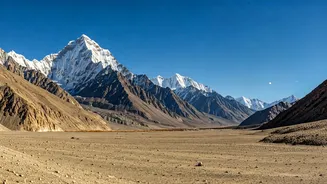
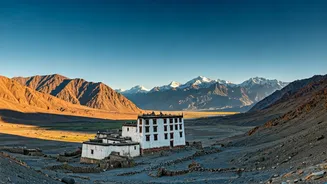
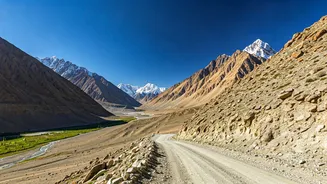
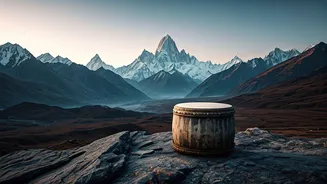
Before you hear the drums, you must understand the quiet. To get to Hemis Monastery, you travel through Ladakh, India's remote “Land of High Passes.” This is a landscape stripped to its essentials: jagged brown peaks clawing at a piercingly blue sky,
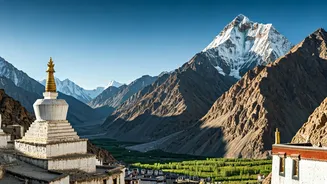
thin air that makes each breath a conscious effort, and a silence that fills your ears. It’s a profound emptiness, a natural cathedral of rock and light where the scale of the mountains makes you feel impossibly small. Winding roads snake through valleys carved by the Indus River, past whitewashed stupas and fluttering prayer flags that offer the only flickers of man-made color in an otherwise monochromatic world. The journey itself is a pilgrimage into stillness, preparing you for an experience that is anything but.
The Walls of Hemis Gompa
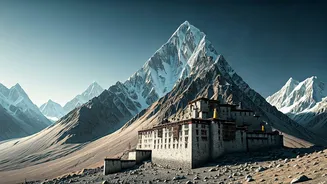
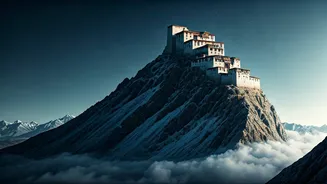
Tucked away in a gorge, invisible from the main road, Hemis Monastery—or Hemis Gompa—reveals itself suddenly. It’s the largest and wealthiest monastery in Ladakh, a sprawling complex of Tibetan Buddhist architecture that seems to grow organically from the mountainside. Founded in the 17th century, its stone walls hold centuries of devotion. As you enter the main courtyard, the sun feels warmer, shielded from the high-altitude winds. The space is framed by intricately carved wooden balconies and decorated with vibrant murals depicting Buddhist deities. There’s a low hum of activity: monks in maroon robes moving with quiet purpose, pilgrims spinning prayer wheels, and a palpable sense of anticipation that settles over the stones.
The Sacred Pageant Begins
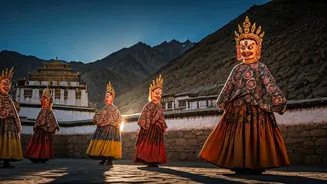
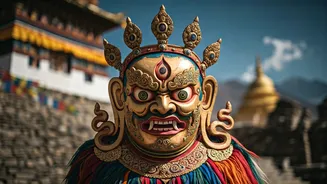
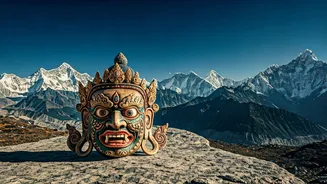
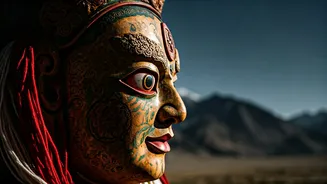
The Hemis Tsechu, an annual festival commemorating the birth of Guru Padmasambhava, the founder of Tibetan Buddhism, transforms this tranquil space into a riot of color and sound. Locals and travelers from across the globe pack the courtyard, their faces turned toward the monastery’s main entrance. The air, once still, now crackles with energy. Then, a long, mournful note from a dungchen, a ceremonial Tibetan horn, slices through the chatter. It’s a signal. The moment has arrived. Monks emerge, not in their simple robes, but in elaborate silk costumes and fearsome, oversized masks. These are the Cham dancers, and they are not merely performing; they are embodying gods and demons in a spiritual drama that has been enacted for centuries.
When the Drums Speak
And then you hear it. The sound that breaks the infinite silence. It isn’t a sharp crack, but a deep, resonant boom that seems to emanate from the earth itself. The beat comes from the *nga*, large, frame-mounted drums struck with curved mallets. They are accompanied by the clash of cymbals and the skirl of oboes, but the drums are the heartbeat of the ceremony. Each beat is deliberate, powerful. It’s a sound you feel in your chest, a vibration that travels up your spine. The masked figures dance in slow, swirling patterns, their movements perfectly synchronized to the rhythm. The drums are not just keeping time; they are clearing the space of negative energy, invoking protective deities, and telling the story of the triumph of good over evil without a single word being spoken. The sound fills the courtyard, bounces off the ancient walls, and rolls out into the silent valley beyond.