


Echoes of the Raj on Mall Road
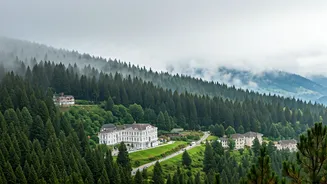
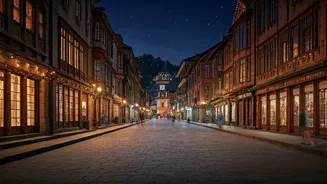
To walk through Shimla is to step into a historical diorama. Once the summer capital of British India, this Himalayan town is a living museum of colonial architecture. Grand buildings with Tudor-style timber framing and neo-Gothic spires line the winding
roads. The heart of this experience is Mall Road, a pedestrian-only thoroughfare that feels blissfully preserved in time. Strolling past the iconic Gaiety Theatre, where Rudyard Kipling once performed, or the stately Town Hall, you half expect to see ladies with parasols and officers in starched uniforms. But instead of a stuffy relic, Shimla has repurposed its past. These historic storefronts now house modern cafes serving hot, spiced chai, bookstores filled with local and international literature, and shops selling intricately woven Himachali shawls. The absence of cars, replaced by the gentle murmur of conversation and the occasional clang of a service bell, creates a tranquil atmosphere that is the town’s defining charm.
A Journey Through the Clouds
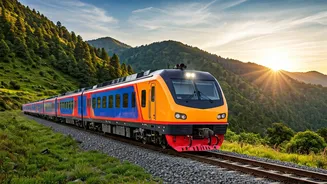
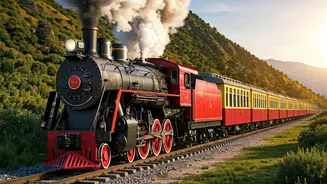
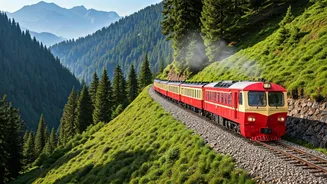
For many, the pilgrimage to Shimla starts long before they arrive, aboard the Kalka-Shimla Railway. Affectionately known as the “toy train,” this narrow-gauge railway is a UNESCO World Heritage site and an engineering marvel. Over a leisurely six-hour journey, the train climbs nearly 5,000 feet, navigating more than 100 tunnels, 800 bridges, and 900 sharp curves. The experience is anything but a mere commute. As the tiny blue carriages chug rhythmically upward, the landscape transforms. Lush, terraced fields give way to dense pine forests, and wide-open valleys suddenly appear through gaps in the foliage. Fellow passengers—a mix of excited Indian families, solo backpackers, and contemplative locals—hang out of the windows, pointing at waterfalls and tiny hilltop villages. It’s a slow-motion introduction to the Himalayas, a deliberate, almost meditative ascent that prepares you for the slower pace of life you’re about to embrace.
Beyond the Colonial Facade
While the British legacy provides Shimla’s framework, its soul is purely Indian. To find it, you need only wander downhill from the polished Mall Road into the chaotic, vibrant embrace of the Lower Bazaar. Here, the orderly colonial grid dissolves into a labyrinth of narrow, winding alleyways. The air grows thick with the scent of sizzling street food and fragrant spices. Vendors call out, advertising everything from fresh produce and gleaming brassware to colorful textiles and handcrafted wooden toys. This is where the real life of the town unfolds. You can sample local delicacies like *siddu* (a steamed bread stuffed with poppy seeds or walnuts) or haggle for a souvenir at a tiny, cluttered shop. It’s a sensory overload in the best possible way, a reminder that beneath Shimla's serene, pine-scented surface beats the vibrant, irrepressible heart of modern India.
The View from Scandal Point
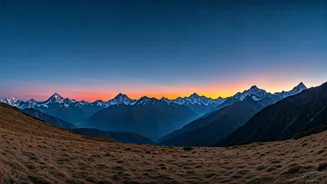
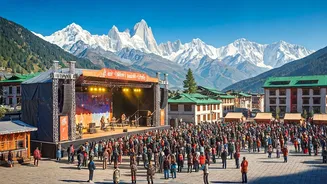
All roads in Shimla eventually lead to The Ridge, a vast open space offering breathtaking, panoramic views of the snow-capped Himalayan peaks. At its western end lies the curiously named Scandal Point, reputedly the spot where a British viceroy’s daughter eloped with an Indian maharaja. Today, it’s the town's social epicenter. As the sun begins to set, casting a golden glow across the mountains, the area fills with people. Families stroll, children chase pigeons, and vendors sell roasted corn and balloons. Looking out at the endless mountain ranges, you feel both infinitesimally small and profoundly connected to the world. This is the “cultural special” in its purest form: not a single event, but the daily ritual of a community coming together to witness the majesty of nature, a moment of shared awe that transcends history and time.