



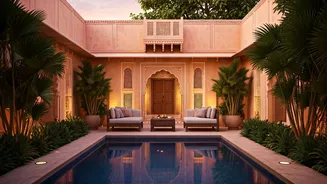


The Haveli: A Private Sanctuary
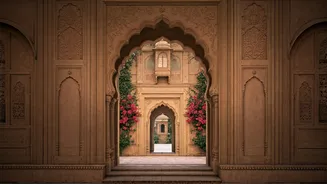
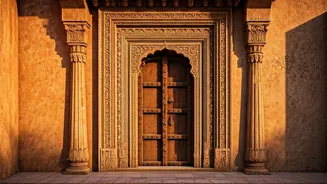
Many of Jaipur's most stunning villas are modern interpretations of the traditional Indian haveli, or mansion. Historically, these homes were designed to look inward, presenting a formidable, often simple, facade to the street while saving the intricate
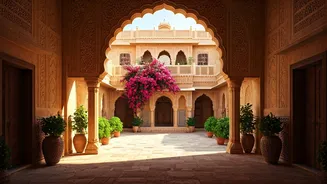
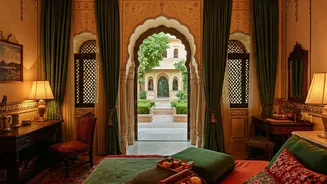
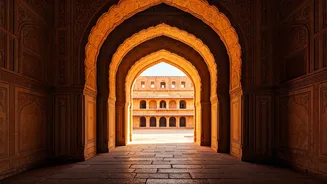
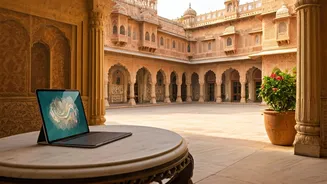
beauty for the residents. A central courtyard, or angan, acts as the heart of the home, with rooms and balconies opening onto it. This creates an immediate sense of entering a private, hidden world. The architecture isn't just a structure; it’s a narrative that unfolds as you move from the public street to the serene, protected interior, instantly disconnecting you from the city's bustle.
Jharokhas: Windows with a Story
One of the most iconic features of Rajasthani architecture is the jharokha, an ornate, overhanging enclosed balcony. Originally, these windows allowed royal women to observe street life and court proceedings without being seen, adhering to the custom of purdah. In today’s villas, they serve a new purpose. They become enchanting private nooks for reading, sipping chai, or simply gazing at the gardens below. Framed in intricately carved sandstone or marble, a jharokha is more than a window; it’s a picture frame for the world outside and a cozy, semi-private space that connects you to the building’s history.
Jaalis: The Play of Light and Shadow
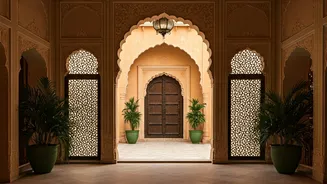
Step into any Jaipur villa, and you’ll be mesmerized by the delicate dance of light filtering through jaalis, or latticed screens. These intricate patterns, carved from stone or wood, are a masterstroke of climate-responsive design. They break up the harsh Indian sun, casting cooling shadows and allowing breezes to flow through the building, naturally lowering the temperature. But their function is matched by their beauty. As the sun moves across the sky, the patterns of light and shadow shift across the floors and walls, creating a living, breathing work of art that changes throughout the day. It’s an architectural element that is both practical and deeply poetic.
Chhatris and Courtyards: Social Hearts
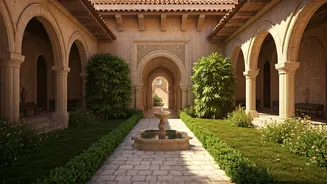
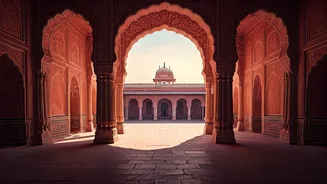
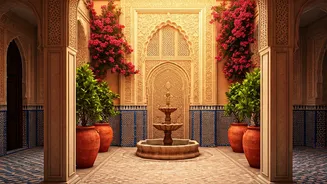
On the rooftops, you'll often find chhatris—elevated, dome-shaped pavilions that are another signature of Rajput architecture. These provide shade and a high vantage point, making them perfect spots for sunset cocktails or morning yoga. Down below, the central courtyard isn't just an empty space; it's the villa's main social artery. Often featuring a small fountain, lush plants, and comfortable seating, the courtyard is where guests gather, where meals are served, and where the air stays cool. It reinforces the idea of the villa as a self-contained oasis, a community within four walls.
A Masterclass in Color and Craft
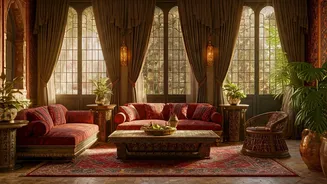
While Jaipur is the “Pink City,” its interior architecture bursts with a richer palette. Villa walls are often adorned with frescoes depicting scenes from mythology, nature, and royal history. You’ll find walls of deep indigo, floors of brilliant turquoise tile, and accents of mirror work (sheesh mahal) that glitter in the candlelight. This isn’t minimalist luxury. It’s a maximalist celebration of craftsmanship, where every surface tells a story. The use of local materials, like pink sandstone and smooth, cool marble, further grounds the buildings in their environment, creating a style that could exist nowhere else.