





Why Saturn Is Worth the Early Wake-Up Call
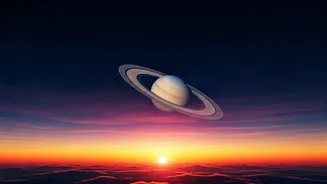
Let's be honest: waking up before the sun isn't always appealing. But this is different. Seeing another planet with your own eyes is a profound experience that connects you to the vastness of the cosmos. Saturn, the sixth planet from the sun, is a gas
giant so large you could fit 764 Earths inside it. It’s famously adorned with a spectacular system of icy rings, a feature that has captivated humans since Galileo first observed them as strange 'handles' in 1610. While you won't see those rings without a telescope, the simple act of spotting its steady, distant light is a reminder of the incredible scale of our solar system. You're not just looking at a point of light; you're looking at a world nearly a billion miles away. That's a story worth getting out of bed for.
The Simple 'When' and 'Where' to Look
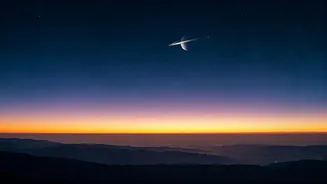
This is the most important part: timing and direction. For observers across the United States, the viewing window is roughly 60 to 90 minutes before your local sunrise. Any earlier, and it might not have cleared the horizon; any later, and the dawn sky will wash it out. Your target direction is the eastern, or more specifically, the southeastern sky. As we move through the summer, Saturn will appear progressively higher and more centrally in the east each morning. A good rule of thumb is to face the direction where the sun will eventually rise and look up and slightly to the right. It will be high enough to clear most trees and buildings, making it an accessible target even from a suburban backyard or apartment balcony.
How to Identify the Ringed Planet
The pre-dawn sky can have a few bright objects, so how do you know you've found Saturn? Look for a point of light that isn't twinkling. Stars, which are immensely distant suns, twinkle because their light is distorted by Earth's atmosphere. Planets in our solar system are much closer (relatively speaking), so their light appears as a steadier, more solid dot. Saturn glows with a characteristic pale, yellowish-white light. It won't be the brightest object in the sky—that honor often goes to Venus or Jupiter when they are visible—but it will be distinctly noticeable. Currently, you might also spot the reddish glow of Mars nearby, lower and to the left of Saturn. This cosmic pairing makes identification even easier: find the reddish dot (Mars), then look up and to the right for the steady, yellowish one (Saturn).
Gear Up: From Naked Eye to Binoculars
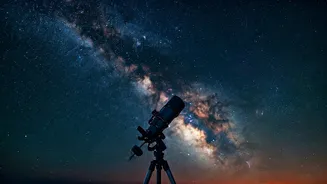
The best part about this celestial event is its accessibility. You don't need expensive equipment to enjoy it. With just your eyes, you can easily spot Saturn as a bright, star-like object and appreciate the simple thrill of planet-gazing. If you have a pair of binoculars, even a standard bird-watching set, you'll get a better view. While binoculars won't resolve the rings, they will make Saturn appear as a tiny, distinct, non-circular disc, which helps differentiate it from stars. This can be surprisingly exciting, as you're seeing its shape, not just its light. If you or a friend has a small backyard telescope, this is where the real magic happens. Even a basic telescope at low magnification can reveal the iconic rings, transforming that dot of light into the planet you know from pictures. It’s a breathtaking sight.
Tips for the Best Viewing Experience
To make your pre-dawn excursion a success, a little preparation goes a long way. First, give your eyes time to adjust. It takes about 15-20 minutes for your pupils to fully dilate and see faint objects in the dark, so avoid looking at your bright phone screen. If you need a light, use a red flashlight, which preserves your night vision. Second, consider using a free stargazing app on your phone (like SkyView Lite, Star Walk, or Stellarium). You can point your phone at the sky, and it will label the planets and constellations for you—just be sure to turn on the app's 'red light mode.' Finally, check the weather forecast. A clear, cloudless morning is essential. A little haze is okay, but a solid bank of clouds will spoil the show.