




Start with Your Bag’s First Defense
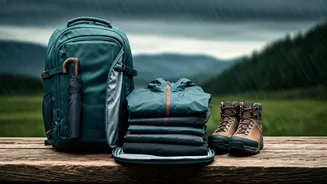
Before you even think about what goes inside your bag, consider the bag itself. Many modern backpacks and suitcases are labeled “water-resistant,” but this is not the same as “waterproof.” Water-resistant materials, often treated with a Durable Water Repellent
(DWR) coating, can handle a light drizzle or a quick splash, but they will eventually soak through in a sustained downpour. True waterproof luggage is rarer and more expensive, often featuring sealed seams and specialized zippers. For most travelers, the most practical solution is a pack cover. These lightweight, elastic-edged nylon shells stretch over your entire backpack, providing a surprisingly effective shield against even the heaviest rain. They pack down to the size of an apple and are an inexpensive, essential piece of gear for anyone traveling to a place where showers are a possibility.
The Inner Sanctum: Dry Bags
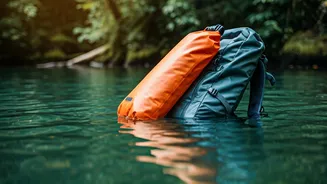
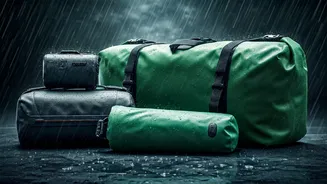
This is where you gain your real superpower. A dry bag is a flexible, waterproof sack, typically with a roll-top closure that creates an airtight seal. Originally the domain of kayakers and rafters, they are a traveler’s best friend. The principle is simple: place your items inside, squeeze out the excess air, and roll the top down three or four times before clipping the buckle shut. Water simply cannot get in. Use a large dry bag (20-30 liters) to line your entire main compartment, creating a waterproof barrier for all your clothes. Alternatively, use smaller dry bags (2-10 liters) to compartmentalize. Dedicate one to all your electronics—laptop, chargers, power bank—and another to your must-stay-dry items like a change of clothes, your passport, and medication. This method guarantees that even if your entire backpack falls into a river, your most critical gear will emerge perfectly dry.
Organize and Protect with Waterproof Cubes
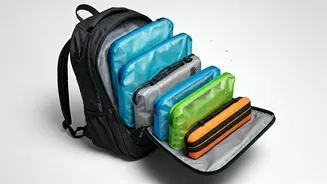
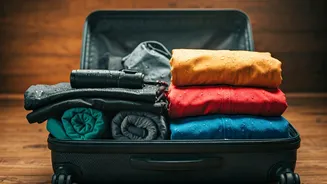
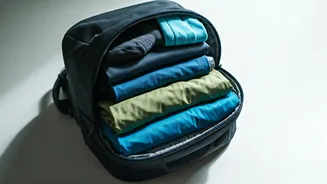
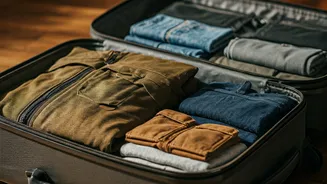
Packing cubes have already revolutionized how we organize our luggage, but their waterproof counterparts take it to the next level. While standard nylon cubes are great for sorting shirts from socks, waterproof or highly water-resistant cubes add a crucial layer of protection. They are typically made from lighter-weight silnylon or similar fabrics with coated zippers. This strategy is less about total submersion and more about managing internal moisture. If you have to pack a damp towel or a rain-soaked jacket, you can isolate it in one cube without it making everything else in your suitcase smell like mildew. They’re also perfect for protecting clean, dry clothes from an accidental shampoo explosion. By separating your gear into protected modules, you build a system of redundant safety.
The Low-Cost, High-Impact Hacks
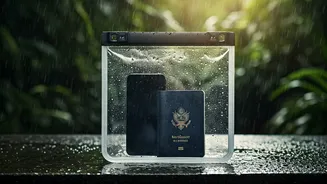
You don’t need to spend a fortune on specialized gear to achieve travel-day peace of mind. Some of the most effective waterproofing methods are also the cheapest. The number one budget champion is a heavy-duty trash compactor bag. They are tougher, thicker, and more puncture-resistant than standard kitchen trash bags, making them perfect for lining the inside of a backpack. Just place the bag in your pack, fill it with your clothes and gear, and twist the top shut. It’s an incredibly effective, sub-one-dollar solution. For smaller items, the humble Ziploc-style freezer bag is a hero. Use them for toiletries that might leak, to protect your phone and wallet during a sudden storm, or to keep a small first-aid kit dry. It’s a simple system, but it works.