





1. The Tadka: An Aromatic Flash Flood
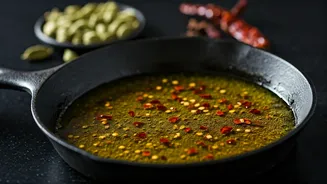
Let’s start with the grand finale of many Desi dishes: the tadka (also known as chhaunk or vaghar). This is the step where whole or ground spices are briefly fried in hot oil or ghee and then poured over a finished dish, like dal, yogurt, or vegetables.
That sizzling sound isn't just for show. Most of the aromatic compounds in spices like cumin, mustard seeds, and dried chilies are oil-soluble. Dropping them in water or a sauce won't unlock their full potential. But by 'blooming' them in hot fat, you’re extracting their essential oils and infusing the fat with a powerful layer of flavor. This newly created flavor bomb then gets poured over the dish, instantly transforming it from flat to fragrant and multi-dimensional. It’s the culinary equivalent of switching from standard definition to 4K.
2. The Bhunao: Building Flavor Brick by Brick
If tadka is the finishing touch, bhunao is the foundation. This is the patient, essential process of slowly sautéing your aromatics—typically onions, ginger, and garlic—and spices in oil until they break down and the oil begins to separate from the mixture. Rushing this step is the number one reason homemade curries can taste raw or one-note. What you’re doing is coaxing out layers of flavor through caramelization (of the onions' natural sugars) and the Maillard reaction, a chemical process between amino acids and reducing sugars that creates deep, savory, roasted notes. When you see that shimmer of oil separating at the edges of the pan, you know you’ve successfully built a complex, deeply browned flavor base, or ‘masala,’ that will serve as the backbone for your entire dish.
3. The Yogurt Marinade: A Lesson in Tenderizing
Why do so many tandoori and kebab recipes call for a yogurt-based marinade? It's not just for that tangy flavor. Yogurt is a gentle powerhouse of food science. Unlike harsh acidic marinades made with vinegar or pure citrus juice (which can 'cook' the outside of meat and make it tough), yogurt works its magic slowly. It contains lactic acid, a much milder acid that works in tandem with calcium and live enzymes in the yogurt to gently break down the protein structures in meat. This process, called enzymatic tenderization, results in chicken, lamb, or paneer that is incredibly moist and succulent, never rubbery. The thick yogurt also helps the spices cling to the surface, ensuring every bite is seasoned perfectly.
4. The Art of Layering: A Symphony of Spices
In much of Western cooking, spices are often thrown in all at once. Desi cooking, however, treats spices like different sections of an orchestra, bringing them in at precise moments. The sequence is critical. Whole spices like cinnamon sticks and cardamom pods often go into the hot oil first to release their foundational aromas. Powdered spices like turmeric and coriander come next, but they burn quickly, so they’re often added with a splash of water or after the onions have released moisture. Finally, delicate 'finishing' spices like garam masala or fresh herbs like cilantro are added at the very end, off the heat, to preserve their bright, volatile aromas. This careful layering ensures that no single flavor is lost or overpowered, creating a final dish with incredible complexity, where you can taste the low, middle, and high notes of every ingredient.