



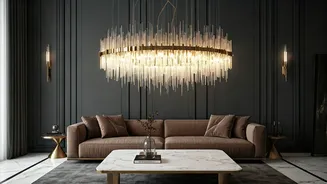


Go Beyond the ‘Big Light’
For decades, the standard American home was built with one central, ceiling-mounted fixture per room—often called the “big light.” While functional for basic visibility, this single, downward-casting light source is the enemy of atmosphere. It creates
harsh shadows, flattens textures, and casts a uniform, often sterile, glow over everything. It’s the lighting equivalent of shouting when a whisper will do. Truly changing a room’s mood means thinking like a designer and treating light as a flexible tool, not a blunt instrument. The goal isn’t just to illuminate a space, but to shape the experience within it. This starts by embracing the concept of layered lighting.
The Three Essential Layers of Light
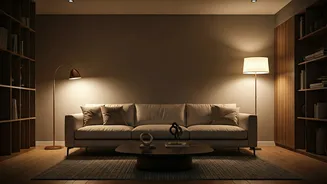
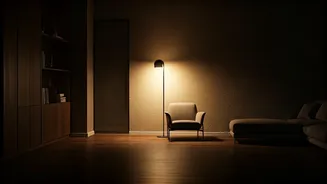
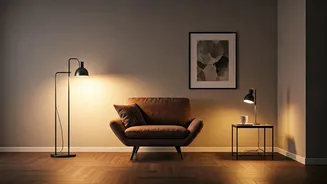
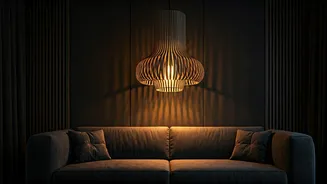
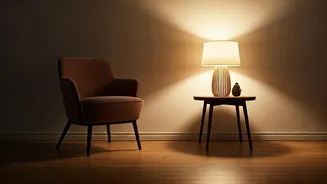
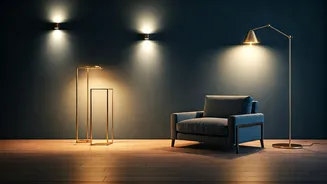
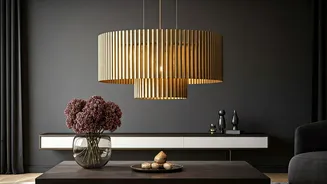
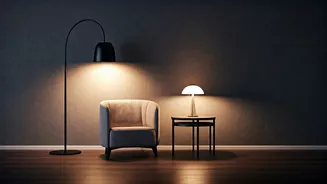
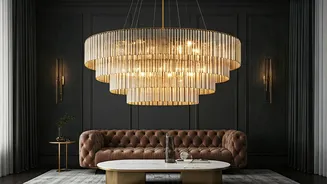
Professional designers build atmosphere by weaving together three distinct types of lighting. Think of it as a recipe where each ingredient plays a crucial role. 1. **Ambient Light:** This is your foundation. It’s the general, overall illumination that fills the room and allows you to navigate safely. This can come from that central fixture, but it’s often softer and more pleasant when bounced off the ceiling from recessed cans, a chandelier with shaded bulbs, or cove lighting. 2. **Task Light:** This is focused, functional light for specific activities. A reading lamp by your favorite armchair, under-cabinet lighting in the kitchen for chopping vegetables, or a desk lamp for paying bills are all examples. Task lighting prevents eye strain and creates pockets of purpose within a room. 3. **Accent Light:** This is the fun part—the personality. Accent lighting is used to highlight architectural features, artwork, or decorative objects. A picture light over a painting, an uplight behind a plant, or track lighting aimed at a textured brick wall all add depth, drama, and visual interest. It’s what makes a room feel curated and complete.
Warm Up or Cool Down
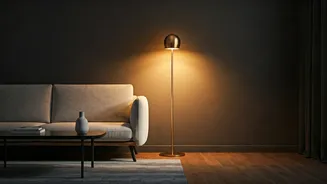
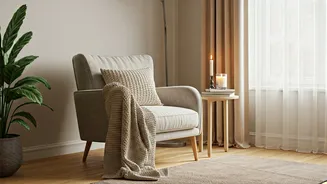
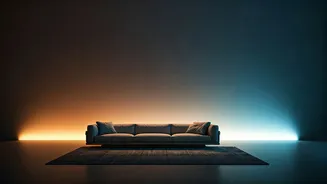
Not all light bulbs are created equal. The color of the light, measured on the Kelvin (K) scale, has a profound psychological impact. Lower Kelvin numbers (around 2700K) produce a warm, yellowish, candle-like glow that we associate with relaxation, intimacy, and comfort. This is ideal for bedrooms and living rooms where you want to unwind. As you move up the scale, the light becomes cooler and more energizing. A neutral white (around 3000K-3500K) is great for kitchens and bathrooms where you need clarity. A cool, blue-toned light (4000K and above) mimics daylight and can boost alertness, making it suitable for home offices, garages, or workout areas. Mixing temperatures can be jarring, so try to keep the bulbs within a single room consistent for a cohesive feel.
The Unsung Hero: The Dimmer Switch
If there is one single, affordable upgrade that provides the biggest bang for your buck in mood creation, it’s the dimmer switch. Installing dimmers on your main light sources gives you instantaneous control over a room’s intensity. The same living room can go from bright and energetic for a game night with friends to a soft, intimate glow for a quiet evening with a movie, all with a simple slide or turn. Dimmers allow your ambient and accent lighting to adapt to the time of day and the desired function of the space. They empower you to paint with light, adjusting the brightness to create the perfect scene for any occasion. They are, without a doubt, the most essential tool in the mood lighting toolkit.