








Secret #1: Go Beyond the Scale with Live Data
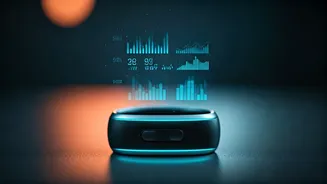
Top biohackers have largely moved on from obsessing over the number on the scale. Their primary tool for real-time metabolic feedback is the Continuous Glucose Monitor (CGM). Originally designed for diabetics, these small wearable sensors track your blood
sugar levels 24/7. The “secret” isn’t just avoiding sugar; it’s about understanding your personal response to every meal. You might discover that your “healthy” oatmeal spikes your blood sugar more than a protein-rich breakfast, or that a stressful meeting has a measurable impact. This live data stream allows for immediate lifestyle adjustments, turning the abstract concept of “eating right” into a concrete, data-driven practice. It’s about managing your energy, inflammation, and long-term health by seeing cause and effect in real time.
Secret #2: Know Your Body’s Preferred Fuel
Ever wonder if your body is burning fat or carbs for energy? A Resting Metabolic Rate (RMR) test, often done in a clinical or performance lab setting, can tell you exactly that. By analyzing the oxygen you consume and the carbon dioxide you exhale, the test calculates your Respiratory Exchange Ratio (RER). An RER of 0.7 indicates you’re primarily burning fat, while a 1.0 means you’re burning pure carbohydrates. Biohackers use this information to fine-tune their nutrition and workouts. For example, if your RER is high even at rest, it suggests your body is metabolically “stuck” in sugar-burning mode. This insight can guide strategies like targeted low-carb eating or specific types of exercise to teach the body to become more efficient at using its own fat stores for fuel.
Secret #3: Train for Metabolic Flexibility
This is the holy grail for many health optimizers. Metabolic flexibility is your body’s ability to efficiently switch between fuel sources—carbs and fats—depending on what’s available. A person with poor metabolic flexibility might feel sluggish after a meal or get “hangry” if they miss one. Biohackers test and train this ability. How? By using data from their CGM and RMR tests, they can see how quickly their body returns to a fat-burning state after a carb-heavy meal. They improve it through practices like intermittent fasting, which forces the body to tap into fat stores, and varied workouts that challenge different energy systems. The goal isn’t to eliminate carbs forever, but to build a resilient metabolism that can handle whatever you throw at it.
Secret #4: Look Deeper With Advanced Blood Panels
A standard physical’s blood work is a good start, but biohackers want the full story. They invest in advanced panels that go far beyond basic cholesterol numbers. Key markers they obsess over include ApoB (a more accurate predictor of cardiovascular risk than LDL cholesterol), hs-CRP (a measure of systemic inflammation), and fasting insulin (a crucial indicator of metabolic dysfunction long before blood sugar becomes problematic). They also track a comprehensive range of hormones and micronutrients. The “secret” here is proactivity. Instead of waiting for a number to cross a “disease” threshold, they track trends over time, making small adjustments to diet, supplements, and lifestyle to keep all their biomarkers in an optimal, not just “normal,” range.
Secret #5: Use Stress to Build Resilience
It sounds counterintuitive, but elite bio-optimizers strategically use stress to make their metabolism stronger. This concept, known as hormesis, involves exposing the body to short, intense bursts of environmental stress, which triggers powerful adaptive responses. The most popular examples are cold plunges and sauna sessions. Deliberate cold exposure has been shown to increase the activation of brown adipose tissue (BAT), a type of fat that burns calories to generate heat, effectively revving up your metabolic engine. Similarly, heat stress from a sauna can improve cardiovascular function and insulin sensitivity. It’s not about chronic, damaging stress; it’s about controlled, therapeutic doses that push your body to become more efficient and resilient on a cellular level.