
The Original Balanced Meal
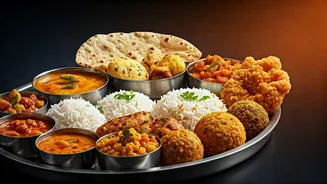
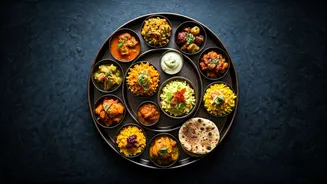
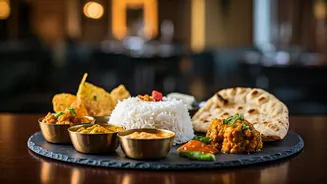
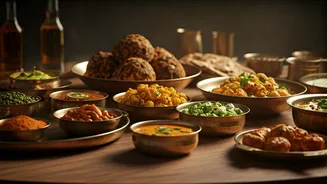
Before we get to the fusion, let’s talk about the foundation. A thali (Hindi for “plate”) is a cornerstone of Indian dining. It’s a complete meal served on a single, often round, platter. The genius of the thali is its built-in balance. Arranged in small
bowls called katoris, you’ll typically find a harmonious selection of flavors and textures: a creamy dal (lentils), a seasonal vegetable preparation (sabzi), a meat or paneer curry, fluffy rice or pilaf, warm flatbread like roti or naan, a cooling yogurt (raita), a sharp pickle (achar), and a small sweet treat to finish. Every region in India has its own version, from the vegetarian Gujarati thali with its sweet and savory notes to the fiery Rajasthani thali featuring robust curries. It’s not just a meal; it’s a nutritional and culinary philosophy, ensuring you get a little bit of everything your palate—and body—craves.
Not Your Grandmother's Thali
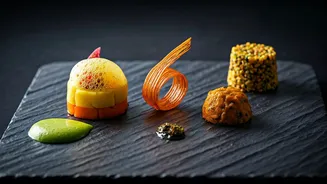
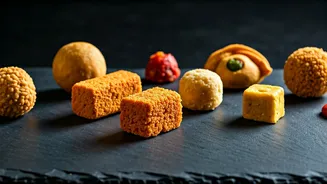
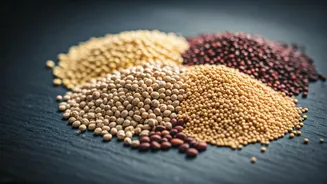
So, what happens when you take this time-honored concept and hand it to a generation of chefs trained in global techniques? You get the fusion thali. This isn’t about carelessly mashing cultures together; it’s a thoughtful reinterpretation. The *form* of the thali remains, but the *contents* are remixed with surprising and delightful results. Imagine a thali where the traditional lentil dal is infused with smoky chipotle, the chicken curry is replaced with a five-spice duck confit, the plain rice becomes a quinoa pilaf with edamame, and the raita is whipped with avocado and lime. Chefs might swap a puri for a miniature bao bun or serve a tamarind-glazed pork belly bite alongside a classic vegetable stir-fry. It’s a culinary playground where the structure of the thali provides a familiar framework for wild creativity, honoring tradition while unapologetically breaking the rules.
A Feast for the Eyes (and the Feed)
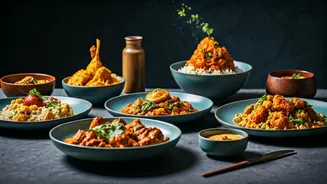
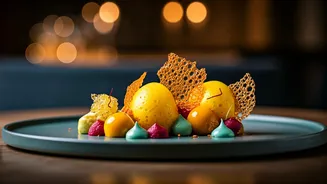
Let’s be honest: in the age of Instagram, we eat with our eyes first. And this is where the fusion thali truly becomes a “flex.” A traditional thali is already beautiful—a vibrant mosaic of colors and textures. But the fusion version dials it up. Modern plating, unexpected garnishes, and the sheer novelty of the combinations make it irresistible to photograph. Each little katori holds a jewel-like creation, coming together to form a stunning, edible tableau. Posting a photo of a fusion thali signals more than just a good meal; it tells your followers you’re in-the-know, adventurous, and appreciate culinary artistry. It’s a conversation starter, a visual brag that says you’ve moved beyond the usual tasting menus and discovered something more interesting and culturally rich.
A New Generation Tells Its Story
This trend is more than just a gimmick; it’s a powerful expression of identity. Many of the chefs pioneering the fusion thali are second- or third-generation immigrants. They grew up with the flavors of their parents’ and grandparents’ kitchens but were professionally trained in French, Italian, or Japanese culinary arts. For them, the fusion thali is a canvas to tell their own story. It’s a way to reconcile the different parts of their identity—their heritage and their contemporary reality—on a single plate. It’s a confident declaration that Indian cuisine is not a static relic but a living, breathing tradition that can absorb new influences and evolve. By reinterpreting the thali, these chefs are claiming their space in the fine-dining world and introducing American palates to the incredible diversity of Indian food in a format that feels both exciting and new.