







The Old, Expensive Way of Roaming
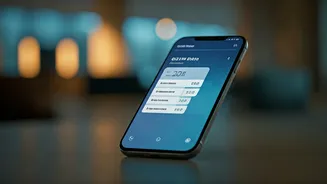
For years, American travelers faced a frustrating choice when flying internationally. Option one: Pay your domestic carrier—like Verizon, AT&T, or T-Mobile—for an international day pass. At around $10 per day, this adds up quickly. A two-week trip could
easily mean an extra $140 on your bill for limited, often slow, data. Option two: Spend the first hour of your vacation hunting down a local mobile shop, navigating language barriers, and physically swapping your tiny SIM card, hoping you don’t lose your original one. Both options are a hassle, costing you either too much money or too much time.
Enter the eSIM: Your Phone’s Digital Passport
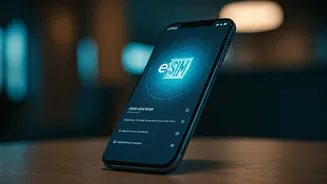
An eSIM, or embedded SIM, is a digital version of the physical SIM card you're used to. Most smartphones manufactured since 2018 (like the iPhone XS/XR and newer, Google Pixel 3 and newer, and recent Samsung Galaxy models) have one built-in. This tiny chip can be programmed remotely. Instead of inserting a piece of plastic, you simply download a data plan, often by scanning a QR code. This allows your phone to hold multiple “SIM cards” at once. You can keep your primary U.S. number active for calls and texts while using a secondary eSIM for affordable data in the country you're visiting. It's the best of both worlds: you remain reachable on your main number while browsing maps, posting photos, and using apps at local data rates.
What Are eSIM Marketplaces?
This is where the magic happens. eSIM marketplaces are apps and websites that act like an App Store for international data plans. Instead of dealing directly with a foreign telecom company, you browse plans from dozens of countries in one convenient place. Companies like Airalo, Holafly, and Nomad have become leaders in this space. You can search for the country you’re visiting (e.g., “Italy”) or an entire region (e.g., “Europe”) and see a list of available data packages. These plans are transparently priced, showing you exactly how many gigabytes of data you get, for how long the plan is valid, and how much it will cost. There are no hidden fees or surprise charges.
How to Get Started in Minutes
Using an eSIM marketplace is surprisingly straightforward. The first step is to confirm your phone is eSIM-compatible and unlocked (if you bought it directly from your carrier, you may need to ask them to unlock it for international use). Once that’s confirmed, the process is simple: 1. **Download a Marketplace App:** Choose a provider like Airalo or Nomad and create an account before you leave home. 2. **Shop for a Plan:** Search for your destination and select a data package that fits the length of your trip. A 5GB plan for 30 days in Spain, for instance, might cost around $10. 3. **Install the eSIM:** After purchase, the app will guide you through installation. This usually involves scanning a QR code or tapping a button within the app. Your phone will add it as a “cellular plan.” 4. **Activate Upon Arrival:** Keep the eSIM turned off until you land at your destination. Once you arrive, go into your phone’s cellular settings, turn on the eSIM, and designate it for cellular data. Within moments, you’ll be connected to a local network.
The Real-World Savings and Freedom
The cost difference is staggering. A 10-day trip to Japan using a carrier’s day pass would cost $100. On an eSIM marketplace, a 10GB plan for Japan valid for 30 days might cost $15. That’s an 85% savings. For a family of four, the savings can easily reach several hundred dollars per trip. But beyond the money, it’s about control and convenience. You can have data connectivity the second your plane touches the tarmac, allowing you to order a ride-share or message family immediately. There’s no more anxiety about data usage, no more searching for spotty public Wi-Fi. It’s seamless connectivity that makes modern travel safer, easier, and far more enjoyable.