




The Real Culprit Behind Frizz and Breakage
For decades, we’ve seen it in movies and commercials: the aggressive, turban-twisting towel dry. It’s a near-universal post-shower ritual. But dermatologists, trichologists (hair scientists), and top-tier stylists all agree this is the number one habit
you need to break. The friction created by roughly drying your hair with a standard bath towel is a primary cause of frizz, split ends, and overall hair damage. While a fluffy terrycloth towel feels luxurious on your skin, its looped, abrasive texture is a nightmare for your hair, especially when it’s at its most vulnerable.
The Science: Why Wet Hair Is So Fragile
To understand why this matters, you need to know what happens to hair when it gets wet. Each strand of hair is covered in a protective layer of overlapping scales called the cuticle. When hair is dry, these scales lie flat, giving hair its smooth, shiny appearance. When you wash your hair, water penetrates the hair shaft, causing it to swell. This process lifts the cuticle scales, leaving the delicate inner core of the hair exposed and vulnerable. At this moment, your hair's tensile strength is significantly reduced. Rubbing it with a coarse towel catches these raised scales, tearing and fraying them. This damage to the cuticle is what we perceive as frizz, and over time, it leads to chronic weakness and breakage.
The Recommended Habit: Squeeze, Don’t Rub
So, what’s the expert-approved alternative? It’s beautifully simple: stop rubbing and start squeezing. Instead of attacking your hair with a towel, you should gently blot or squeeze the water out. The goal is to remove excess moisture without creating friction or disrupting the hair's delicate cuticle layer. You can do this by sectioning your hair and pressing it with a soft material. This method works for all hair types, from pin-straight to coily. For those with curly hair, this technique is often called "micro-plopping," and it’s a game-changer for defining curl patterns and preventing the dreaded halo of frizz.
Your New Tools: Microfiber and Cotton
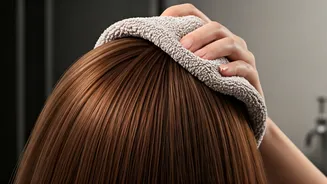
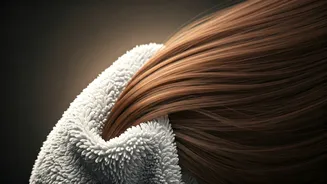
The habit isn't just about technique; it’s also about the tool. Ditch the standard bath towel for something gentler. The two best options are a microfiber hair towel or a simple, clean cotton t-shirt. Microfiber towels are designed with a super-fine, smooth weave that absorbs a remarkable amount of water through capillary action, rather than friction. They effectively wick moisture away without roughing up the hair shaft. A soft, old cotton t-shirt works on the same principle. Its flat, non-looped surface is far less damaging than terrycloth. Simply use either of these to gently squeeze and blot your hair section by section until it’s no longer dripping.
Putting It Into Practice
Incorporating this into your routine is easy. The next time you wash your hair, follow these steps. First, gently squeeze out as much water as possible with your hands before you even get out of the shower. Next, instead of flipping your head over and creating a tight turban, lean forward and gather your hair into your microfiber towel or t-shirt. Gently squeeze upward toward the scalp, pressing the water out. Work in sections if you have thick hair. Your hair doesn’t need to be bone-dry—just damp enough that it’s not dripping. From here, you can apply your leave-in conditioners and styling products before letting it air-dry or using a diffuser on low heat.