






A Familiar Friend, Far From Home
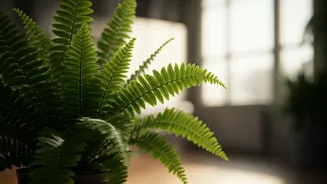
For many Americans, the Boston fern (Nephrolepis exaltata) is the quintessential houseplant. It’s the green waterfall cascading from a pot in a Victorian-era parlor, the dependable resident of a shady front porch, or the retro star of a 1970s macrame
hanger. Native to tropical regions of the Americas, its journey into our homes is a long-established one. Yet, this American classic has quietly embarked on a second life as an adopted favorite in the homes and apartments of urban India. From Mumbai to Delhi, the same feathery fronds are finding a place, not as a nostalgic throwback, but as a practical, modern solution to indoor living. It’s a fascinating bit of horticultural globalization, where a plant from one continent becomes a symbol of domestic tranquility on another.
The Promise of 'Safe Greenery'
The single most important factor driving the Boston fern’s popularity is safety. In a country where multigenerational households are common and families often share space with children and, increasingly, pets, the question of toxicity is paramount. Unlike popular but poisonous plants like oleander or diffenbachia, the Boston fern is completely non-toxic. According to the ASPCA, it’s safe for dogs, cats, and horses. This 'worry-free' status is a massive selling point. A toddler can grab a frond or a curious cat can chew on a leaf without a frantic call to a poison control center. This peace of mind allows it to be placed anywhere—on a low stool, a bedroom floor, or a living room table—making it far more versatile than its more dangerous botanical cousins. In the dense, often compact, living spaces of India's booming cities, a plant that is both beautiful and benign is a domestic superstar.
Thriving in the Indian Climate
Beyond its safety, the Boston fern is simply well-suited to the environment. While it can be a diva in the dry, centrally-heated air of an American winter, it thrives in the high humidity common across much of India, especially during the monsoon season. This alignment with the climate means the fern is less of a high-maintenance project and more of a forgiving companion. It doesn't demand a humidifier or constant misting to look its best. It tolerates the lower light conditions of an apartment balcony or a north-facing window, common scenarios in crowded residential buildings. For a new generation of Indian plant enthusiasts, who may be juggling busy careers and family lives, a plant that offers maximum visual impact for relatively minimal effort is a welcome addition.
The Air-Purifying Appeal
Then there's the wellness factor. The Boston fern was famously included in NASA's 1989 Clean Air Study, which identified it as effective at removing indoor air pollutants like formaldehyde and xylene. Now, it's crucial to contextualize this: you would need a veritable jungle in your living room to replicate the lab conditions of that study. The air-purifying effect of a single plant is negligible. However, the *idea* of a plant that cleans the air is incredibly powerful, especially in Indian cities that often grapple with high levels of air pollution. The fern has become a symbol of creating a personal, clean-air sanctuary. It represents a small act of control over one's immediate environment. Buying a Boston fern feels like an investment in health and well-being, making the psychological benefit just as important as the biological one.
A Global Symbol of Home
Ultimately, the story of the Boston fern in India is a story about the universality of home. The desire to soften our living spaces, connect with nature, and create a safe, beautiful environment for our families transcends borders. This plant, which began its journey in the forests of Florida and Mexico, has proven to be remarkably adaptable, not just to different climates, but to different cultures. It shows how a simple, living thing can be imbued with new meaning—from a symbol of American southern charm to a beacon of safety and wellness in a modern Indian apartment. It’s a quiet reminder that the language of greenery is understood everywhere.