





The Blue City at Golden Hour
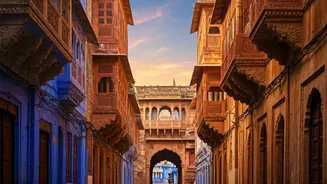
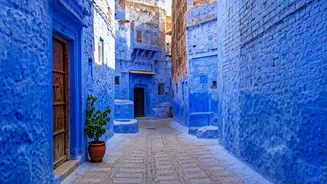
Before you can appreciate the view from the fort, you have to understand what you’re looking at. Jodhpur, known as the “Blue City,” isn’t a clever nickname; it’s a literal description. From a high vantage point, the old city unfolds as a sprawling labyrinth
of boxy buildings washed in a brilliant, almost startling, shade of indigo. The color, historically used by Brahmin families to distinguish their homes, is said to keep dwellings cool and repel termites. As the sun begins its descent, this sea of blue is bathed in a warm, golden light, creating a painterly contrast that feels almost surreal. The city, which can feel like a chaotic buzz of auto-rickshaws and market stalls at street level, transforms into a tranquil, glowing landscape when viewed from above.
A Fortress Above the Fray
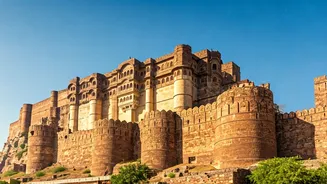
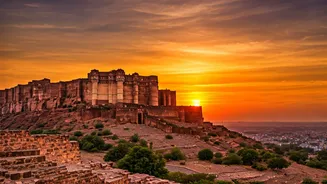
Mehrangarh Fort is not just a viewpoint; it’s an architectural marvel and a monument to India's formidable past. Carved from a colossal rocky outcrop that rises 400 feet above the city, its walls seem to grow organically from the stone itself. Founded in the 15th century, the fort is one of the largest in India, its immense ramparts enclosing palaces, courtyards, and a museum filled with royal artifacts. Walking its grounds is a journey through history, but its most commanding feature is its perspective. The fort was built for strategic dominance, and that strategic high ground now offers visitors an unparalleled panoramic view. Its sheer scale and imposing presence make it the undisputed king of the Jodhpur skyline, and the perfect stage for the daily celestial show.
Finding Your Perfect Sunset Perch
While any spot on the fort’s western-facing walls offers a great view, there are a few prime locations for the ultimate sunset experience. After you’ve explored the inner palaces and the museum, head toward the ramparts. Many visitors gravitate towards the areas with antique cannons on display, as they provide a dramatic foreground for photos. The pathway leading towards the Chamunda Mataji Temple, located at the southern end of the fort, is another excellent spot. From here, you get a sweeping view of both the old city’s blue houses and the newer parts of Jodhpur stretching towards the horizon. Don’t rush. Arrive at least an hour before sunset to claim a comfortable spot along the stone walls, watch the light begin to change, and soak in the atmosphere without feeling hurried.
The Main Event: Light and Sound
As the sun dips lower, the magic truly begins. The sky cycles through a brilliant palette of orange, pink, and violet. The sandstone of the fort itself glows a fiery red, earning Jodhpur its other nickname, the “Sun City.” But the experience is more than just visual. As the day cools, the sounds from the city below begin to drift up: the distant call to prayer from a mosque, the faint ringing of temple bells, the hum of evening traffic, and the cheerful sounds of children playing on rooftops. It’s an immersive symphony that connects you to the life of the city you’re gazing down upon. You’re not just watching a sunset; you’re observing the rhythm of an ancient city winding down for the day from a seat of immense historical power.
Know Before You Go: Practical Tips
To make the most of your visit, timing is everything. The Mehrangarh Museum Trust sets the fort’s opening hours, which typically run from morning until 5:00 PM. However, access to certain viewpoints on the ramparts often extends past the museum’s closing time, specifically to accommodate sunset viewers. It’s essential to check the official website for the most current timings and ticket prices before you go. A composite ticket often includes access to the museum and other sites. Wear comfortable walking shoes, as the terrain is uneven and involves a fair bit of climbing. While the fort has an elevator for an additional fee, exploring the best viewpoints requires walking. Lastly, bring a light jacket, as it can get breezy on the ramparts once the sun goes down.