





The Setting: India's Konkan Coast
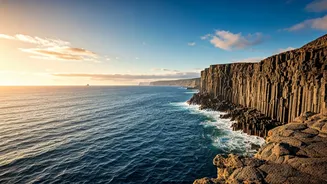
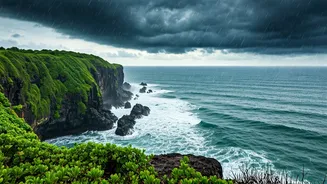
For most of the year, the Konkan Coast, a rugged stretch of shoreline in the Indian state of Maharashtra, is a place of sun-baked beauty. Its cliffs and plateaus, part of a mountain range called the Western Ghats (or Sahyadri), overlook the Arabian Sea.
But when summer reaches its peak, a dramatic transformation begins. This isn't just any coastline; it's a giant natural wall waiting for a collision with the most powerful weather system on earth. For an American traveler accustomed to the shores of California or Maine, the scale and drama of this landscape during the monsoon is a complete paradigm shift. It’s a region where ancient forts perch on hilltops and tiny villages nestle in valleys, all bracing for the annual deluge.
The Arrival of the Monsoon
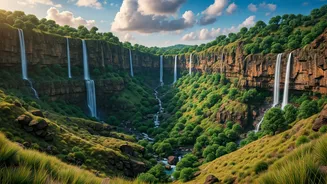
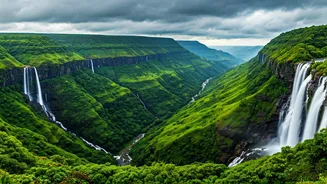
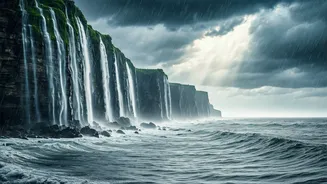
The arrival of the Southwest Monsoon in June is the most anticipated event of the year. It doesn't tiptoe in; it crashes ashore. The sky, once a pale, hazy blue, turns a bruised purple-gray. The wind picks up, carrying the salty scent of the sea mixed with the smell of approaching rain. Then, it hits. This isn't a simple downpour. It is a relentless, horizontal assault of water, driven by winds that roar and howl. Within days, the parched, brownish landscape undergoes a miraculous revival. A vibrant, almost fluorescent green blanket of vegetation covers every inch of the soil, creating a stark and stunning contrast with the dark, churning sea below.
Where Geology Meets Meteorology
So, why here? The magic lies in a perfect convergence of geography and weather. The Western Ghats rise abruptly from the coastal plain, some reaching heights of over 4,000 feet. As the moisture-heavy monsoon clouds roll in from the Arabian Sea, this massive mountain range acts as an impenetrable barrier. The clouds have nowhere to go but up. As they are forced to ascend rapidly, they cool and condense, dumping colossal amounts of rain on the western-facing slopes. This phenomenon, known as orographic lift, is the engine that drives the entire spectacle. It’s the reason this region receives some of the heaviest rainfall in the country, turning the cliffs into a water world.
The Magic of Reverse Waterfalls
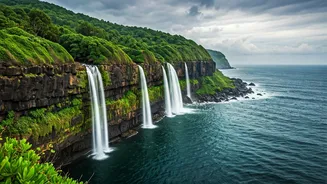
This intense weather creates a phenomenon that feels like it defies physics: the reverse waterfall. During the peak of the monsoon, the wind blowing in from the sea is so powerful that when it hits the sheer cliffs, it's forced upwards with incredible force. Dozens of temporary waterfalls, created by the torrential rain, cascade down the cliff faces. But as the water tumbles over the edge, the gale-force updraft catches it, blasting the entire stream back up into the air in a spray of mist. The visual is surreal and breathtaking. You stand on a cliff edge, watching water flow *up* instead of down, feeling the immense, raw power of nature. It’s this singular, almost unbelievable sight that solidifies the region’s claim to rain-viewing greatness.
A Symphony for the Senses
While the reverse waterfalls are the star attraction, the full experience is a symphony for all five senses. It’s the thunderous sound of wind and rain, a constant roar that drowns out everything else. It’s the invigorating feel of cool, atomized mist on your face, even when you’re standing far from the cliff's edge. It's the deep, earthy smell of petrichor—the scent of rain hitting dry soil—mixed with the fragrance of wet foliage. And it’s the visual feast of a thousand shades of green set against the moody gray sky. You don't just watch the monsoon here; you are fully immersed in it.