



The British Raj's Summer Escape
To understand Shimla's unique character, you have to go back to the 19th century. During the British Raj, the colonial administrators sought refuge from the scorching summer heat of the Indian plains. They found their sanctuary in the Himalayan foothills,
transforming a quiet village into Shimla, the official summer capital of British India. For months every year, the entire government would relocate here, creating a bustling hub of power designed to feel like a slice of England. They built everything needed to sustain this illusion: neo-Gothic churches, Tudorbethan-style cottages, grand administrative buildings, and a magnificent theater. This architectural foundation wasn't just for function; it was a statement of permanence and cultural identity, and it remains the city's defining feature today.
A Pedestrian-Only Time Capsule
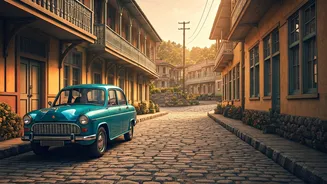
One of the most critical decisions that helped preserve Shimla's atmosphere was the strict regulation of traffic on its main arteries. The Mall Road and the Ridge, the town's social and commercial heart, are almost entirely pedestrian-only. This single policy has had a profound effect. Without the noise, pollution, and congestion of modern traffic, the experience of walking here feels remarkably anachronistic. Visitors and locals stroll past heritage storefronts, stopping for coffee at old-world cafes or browsing books in decades-old shops. The iconic Gaiety Theatre, which has been hosting plays since 1887, still stands proudly on The Mall. This enforced slowness forces you to engage with the city on a human scale, just as people did a century ago, allowing its historic character to shine through.
The Enduring Spirit of the Sixties
While the British laid the groundwork, the “Sixties vibe” is a distinctly post-independence phenomenon. After India gained independence in 1947, Shimla transitioned from a colonial seat of power to a beloved Indian holiday destination. For the burgeoning Indian middle class of the 1960s and 70s, it became the quintessential mountain getaway, a place for honeymoons, family vacations, and romantic escapades. This era was immortalized in classic Bollywood films, which used Shimla’s picturesque slopes and charming streets as a backdrop for countless song-and-dance numbers. This cemented Shimla in the national imagination not as a relic of the Raj, but as a place of romance, leisure, and Indian nostalgia. The “vibe” is this layered identity: the colonial architecture filled with the spirit of post-independence Indian optimism and holiday-making.
Where Colonial Christmas Meets Indian Festivity
The “festive vibe” reaches its peak in winter. The British brought with them the tradition of a grand Christmas and New Year celebration, and Shimla, often blanketed in snow, was the perfect setting. These traditions never left. Christ Church, a landmark on the Ridge, holds a packed midnight mass on Christmas Eve, drawing people of all backgrounds. The Mall Road becomes a carnival of lights, food stalls, and holiday cheer. But it’s not just a Western holiday; it’s been adopted and woven into the local cultural fabric. It's a season when families from across India flock to the town to experience a 'white Christmas,' creating a vibrant, multicultural festive atmosphere that feels both historic and alive. This unique blend of a colonial winter wonderland and exuberant Indian celebration is a key part of what makes Shimla's holiday mood so special and enduring.