




Welcome to the Abode of the Clouds
Meghalaya, a name that translates from Sanskrit to “the abode of the clouds,” more than lives up to its title. Tucked away between Bangladesh and the Assam plains, this lush, hilly state is home to some of the wettest places on Earth. The towns of Mawsynram
and Cherrapunji (now officially Sohra) hold records for staggering annual rainfall, measured not in inches, but in feet. For most of the world, a monsoon means shuttering windows and waiting it out. For the Khasi and Garo people of Meghalaya, it’s the season when their homeland is most vibrantly alive. The rain is the engine of the entire ecosystem, a force that sculpts the landscape, feeds the waterfalls, and paints every surface in a thousand shades of green.
A World Washed in Mist and Green
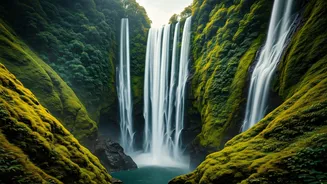
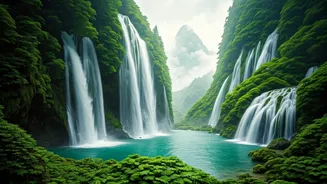
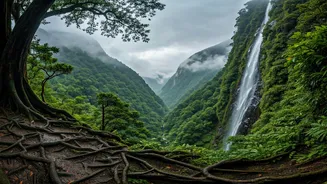
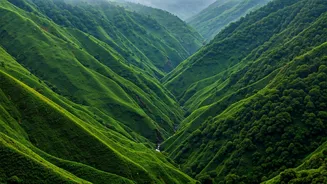
The “cinematic” quality of Meghalaya’s trails comes from this profound saturation. The air grows heavy with moisture, and a low-hanging mist drifts through the valleys, obscuring and then revealing emerald-green cliffs like a slow-motion scene from a fantasy epic. Every rock, tree trunk, and forgotten stone wall is upholstered in a thick, velvety layer of moss. Water drips from oversized fern fronds and collects on spiderwebs, turning them into glistening nets of jewels. The constant drizzle softens the edges of the world, muting distant sounds and focusing your attention on the immediate, magical details: the brilliant orange mushrooms sprouting from a decaying log, the steady trickle of a newly formed stream across your path, the impossibly dark, rich soil under your feet. It’s less a hike and more an immersion into a world that feels ancient and deeply mysterious.
Walking on Living Bridges
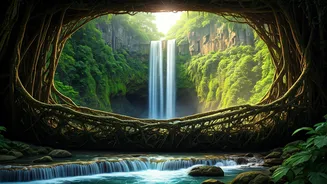
Nowhere is this cinematic atmosphere more tangible than on the trail to the region's famed living root bridges. For centuries, the Khasi people have guided the aerial roots of rubber fig trees across rivers and ravines, patiently weaving and training them until they form strong, durable bridges. To reach the most spectacular of them, like the Jingkieng Nongriat (Double Decker Root Bridge), involves a steep descent down thousands of stone steps. The journey is a full sensory experience. The air is thick with the scent of wet earth and decomposing leaves. The roar of a nearby waterfall grows louder with every step. When you finally set foot on one of these bridges, a tangled mesh of living roots beneath your boots, you feel like an extra in a Guillermo del Toro film. They are organic, otherworldly structures, suspended over turquoise-blue river pools that glow even in the muted light of a rainy day.
The Soundtrack of the Monsoon
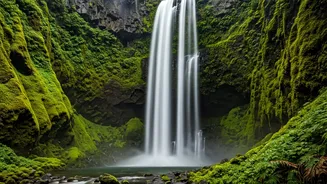
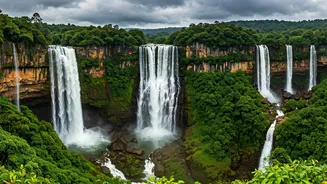
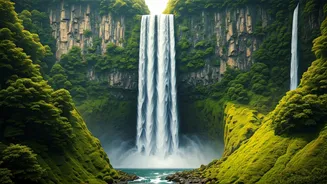
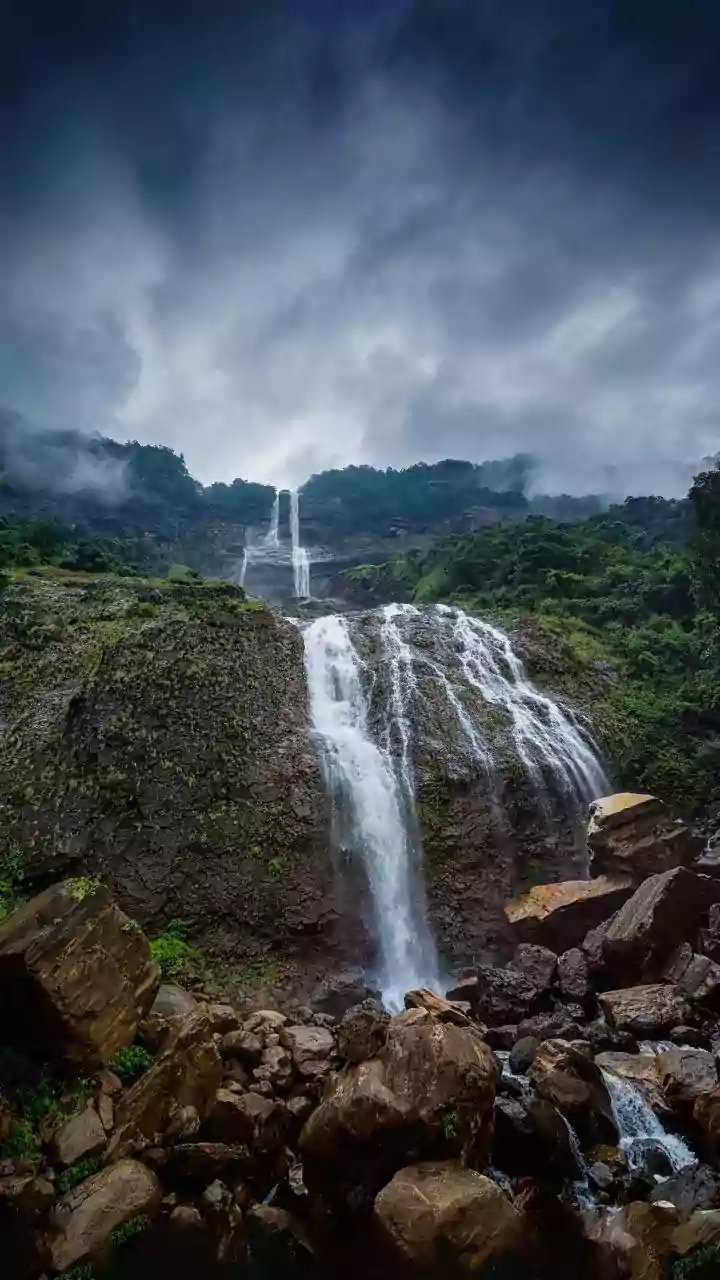
A film is more than its visuals; it’s the score. And a trek through Meghalaya during the monsoon has a powerful, constant soundtrack. It begins with the percussive drumming of rain on broad leaves—a sound that ranges from a gentle patter to a deafening downpour. This is layered with the deep, resonant roar of waterfalls, which swell from gentle cascades into thundering torrents. The Seven Sisters Falls and Nohkalikai Falls, among India’s tallest, are at their most awesome and terrifying during this season. Beneath it all is the hum of the rainforest: the chirping of insects, the croak of hidden frogs, and the calls of birds that seem unfazed by the wet. This symphony of natural sounds creates a profound sense of isolation and wonder, amplifying the feeling that you’ve stepped away from the ordinary world and into a story.