



10. Zinedine Zidane
The French maestro was less a player and more a ballet dancer with studs on. Zidane played the game with an almost tranquil elegance, gliding past opponents and controlling the tempo with effortless grace. His big-game mentality was legendary, evidenced
by his masterful performances in the 1998 World Cup final and the 2002 Champions League final, where he scored one of the greatest goals in the competition's history. While his career ended in infamy with a headbutt, 'Zizou' remains the benchmark for midfield artistry and poise under pressure.
9. Ronaldo Nazário
Before Cristiano, there was another Ronaldo, and for a period in the late 1990s, he was the most terrifying force in football. A hurricane of speed, power, and skill, 'O Fenômeno' (The Phenomenon) was virtually unstoppable at his peak. He combined the physique of a heavyweight boxer with the nimble feet of a dancer, making elite defenders look like amateurs. Devastating knee injuries stole some of his explosive pace, but he still managed to lead Brazil to a World Cup victory in 2002, a testament to his incredible talent and resilience.
8. Franz Beckenbauer
'Der Kaiser' (The Emperor) invented a position. Before Beckenbauer, defenders defended. He created the role of the 'libero' or sweeper, stepping out of the backline to join the attack with elegance and vision. He was the complete footballer: technically gifted, intelligent, and a natural leader. He captained West Germany to World Cup glory in 1974 and then managed them to the title in 1990, one of only three men to win it as both a player and a coach. His influence on how the game is played is immeasurable.
7. Johan Cruyff
Few individuals have shaped modern soccer more than Johan Cruyff. As the on-field conductor of the Netherlands' 'Total Football' system in the 1970s, he was a revolutionary thinker and player. Players weren't locked into positions; they were interchangeable, creating a fluid, dynamic style that bewildered opponents. Cruyff, with his iconic turn and cerebral approach, was the system's brain. His philosophy laid the groundwork for the style of play later perfected at Barcelona, the club he both starred for and managed, creating a legacy that lives on today.
6. Alfredo Di Stéfano
Many modern fans may not know his name, but Alfredo Di Stéfano was the original complete footballer and Real Madrid's first global superstar. In the 1950s, he was the engine of the team that won the first five European Cups. He could be found defending in his own penalty box one minute and scoring in the opposition's the next. A relentless force of nature with immense skill and tactical intelligence, Di Stéfano set the template for what a modern, all-action superstar could be. Pelé himself once called him the most complete player ever.
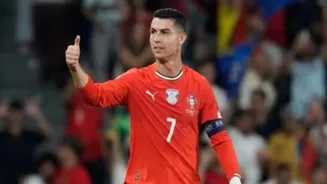
5. Cristiano Ronaldo
A monument to physical perfection, relentless ambition, and sheer willpower. Cristiano Ronaldo transformed himself from a tricky winger into the most prolific goalscorer in history. His athletic prowess—the towering headers, the explosive sprints, the powerful shots—is unmatched. For over a decade, he has defied age and redefined what is possible in terms of longevity at the highest level. Five Ballon d'Or awards and five Champions League titles are just a fraction of the hardware that proves his status as an all-time great.
4. Diego Maradona
If football is an art, Diego Maradona was its most flawed, brilliant, and passionate artist. A force of nature packed into a 5'5" frame, he played with a fire and fury that bordered on the divine. His performance at the 1986 World Cup is the single greatest individual campaign in the tournament's history, dragging a good-but-not-great Argentina team to glory. He was a master of the ball, a leader of men, and a rebellious icon whose genius on the pitch was as breathtaking as his life off it was chaotic.
3. Pelé
For decades, he was simply 'The King.' Pelé is the only man to win three World Cups, and he did it with a combination of breathtaking skill, athleticism, and a joy for the game that made him soccer's first global icon. He scored over 1,000 goals in his career and was a complete forward who could score with either foot, his head, or create for others. He transcended the sport, becoming a symbol of Brazil's cultural identity and a name recognized in every corner of the planet, even by those who had never seen a soccer match.
2. Lionel Messi
For many, he is the perfect footballer. Lionel Messi is a player of impossible talent, a low-gravity magician who has the ball permanently glued to his feet. He has shattered nearly every goalscoring record imaginable while also being one of the greatest playmakers the sport has ever seen. For years, the only argument against him was his lack of international success. He silenced that by leading Argentina to a Copa América and, finally, the 2022 World Cup in a storybook ending, cementing his place in the pantheon of gods.
1. The Argument is the Point
Placing one man at the top is an impossible task. So, who's number one? You decide. The truth is, the greatest player of all time is a subjective title. Is it Pelé's three World Cups? Maradona's singular '86 genius? Ronaldo's relentless goal machine? Or Messi's blend of scoring and creating? Each era has its hero, and each fan has their favorite. The debate itself is a testament to the rich history and passion that makes this the beautiful game. Our list is designed to start the conversation, not end it. The real #1 is the argument itself.