









The 'Chandrayaan Effect'
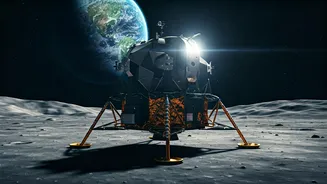
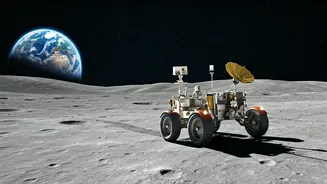
For decades, the American dream of space was defined by NASA, Neil Armstrong, and the Apollo missions. In 2023, India created its own defining moment. The successful landing of the Chandrayaan-3 mission—making India only the fourth country to land on the Moon
and the first to reach its unexplored south pole—was broadcast live in classrooms, offices, and town squares across the nation. For hundreds of millions of young people, it was more than a news event; it was a profound statement of national capability and future possibility. This “Chandrayaan effect” has triggered a massive surge in interest in science, technology, engineering, and math (STEM) fields, specifically those connected to aerospace. Suddenly, working for the Indian Space Research Organisation (ISRO) or a related tech firm has become one of the most aspirational career paths for India’s youth, a cohort that represents the largest population of young people in the world.
More Than Just Astronauts
The dream of a future in space is far broader than the classic ambition of becoming an astronaut. While India’s upcoming Gaganyaan mission aims to send its own astronauts into orbit, the real boom is happening on the ground. The country is witnessing explosive growth in its private space-tech sector. As of early 2024, India is home to over 150 space-tech startups, attracting hundreds of millions in investment. These companies aren't just building rockets; they're developing satellites for earth observation, creating software for mission control, designing propulsion systems, and analyzing astronomical data. For young Indian engineers, software developers, and entrepreneurs, this means the space industry is no longer a distant government-run monolith. It’s a dynamic, accessible ecosystem where they can build a company, invent a new technology, or join a fast-moving team right out of university.
The Power of Frugal Innovation
A key part of the appeal, both nationally and for aspiring engineers, is India’s signature approach: “jugaad,” or frugal innovation. India’s space program has become globally famous for achieving incredible feats on shockingly small budgets. The Mars Orbiter Mission (Mangalyaan) in 2014 cost just $74 million, less than the production budget for the movie “Gravity.” The triumphant Chandrayaan-3 mission cost around $75 million, a fraction of the cost of similar missions from NASA or other space agencies. This ethos is a powerful draw for a generation that values efficiency and impact. It proves that ingenuity can triumph over unlimited resources, transforming financial constraints into an engineering advantage. For American observers, this model presents a fascinating alternative to the multi-billion-dollar programs that have long dominated the space industry, suggesting a new, more accessible path to the cosmos.
A New Global Space Hub?
The convergence of youth ambition, government support, and private investment is rapidly positioning India as a new global hub for space. The Indian government has actively encouraged this shift, opening up the sector to private companies and setting a goal to increase its share of the global space economy fivefold. For the United States and its allies, this development is both a challenge and an opportunity. India’s rise adds a new, formidable player to the global space landscape, one with a massive, highly-skilled, and cost-effective talent pool. This could lead to increased competition for talent, launch contracts, and technological leadership. However, it also opens the door for deeper collaboration. NASA is already partnering with ISRO on several projects, including a joint Earth-observing satellite. As a democratic partner in Asia, a technologically advanced India is a valuable collaborator in an era of growing geopolitical competition in space, particularly with China.