
The Sound of Rain, The Craving for Crunch
There’s a universal language to a rainy day. It’s the rhythmic drumming on the windowpane, the cool draft that slips under the door, and the general sense that all outdoor plans are officially canceled. This enforced pause creates a unique domestic theater.
The world outside is dramatic and chaotic, while inside, we seek comfort, warmth, and a little drama of our own. In the United States, this might translate to a pot of chili, a grilled cheese sandwich, or a batch of chocolate chip cookies. It’s a culinary reflex, a way to build a cozy fortress against the storm. But in many parts of India, this specific weather pattern triggers an immediate, almost Pavlovian response for one thing: pakoras. These savory, deep-fried fritters are the undisputed kings of monsoon snacking. And while you can make a pakora out of almost anything—potato, onion, spinach—the most theatrical version, the one truly worthy of a tempest, is the mirchi pakora.
A Fritter with a Fiery Secret
So, what exactly is a mirchi pakora? At its heart, it’s a study in contrasts. The star is a relatively large, mild-to-medium-hot chili pepper, often a variety like the Bhavnagri chili, which is similar in size and heat to a poblano or a large jalapeño. The pepper is slit lengthwise, deseeded (usually), and sometimes filled with a tangy, spiced mixture of potatoes, tamarind, or paneer.
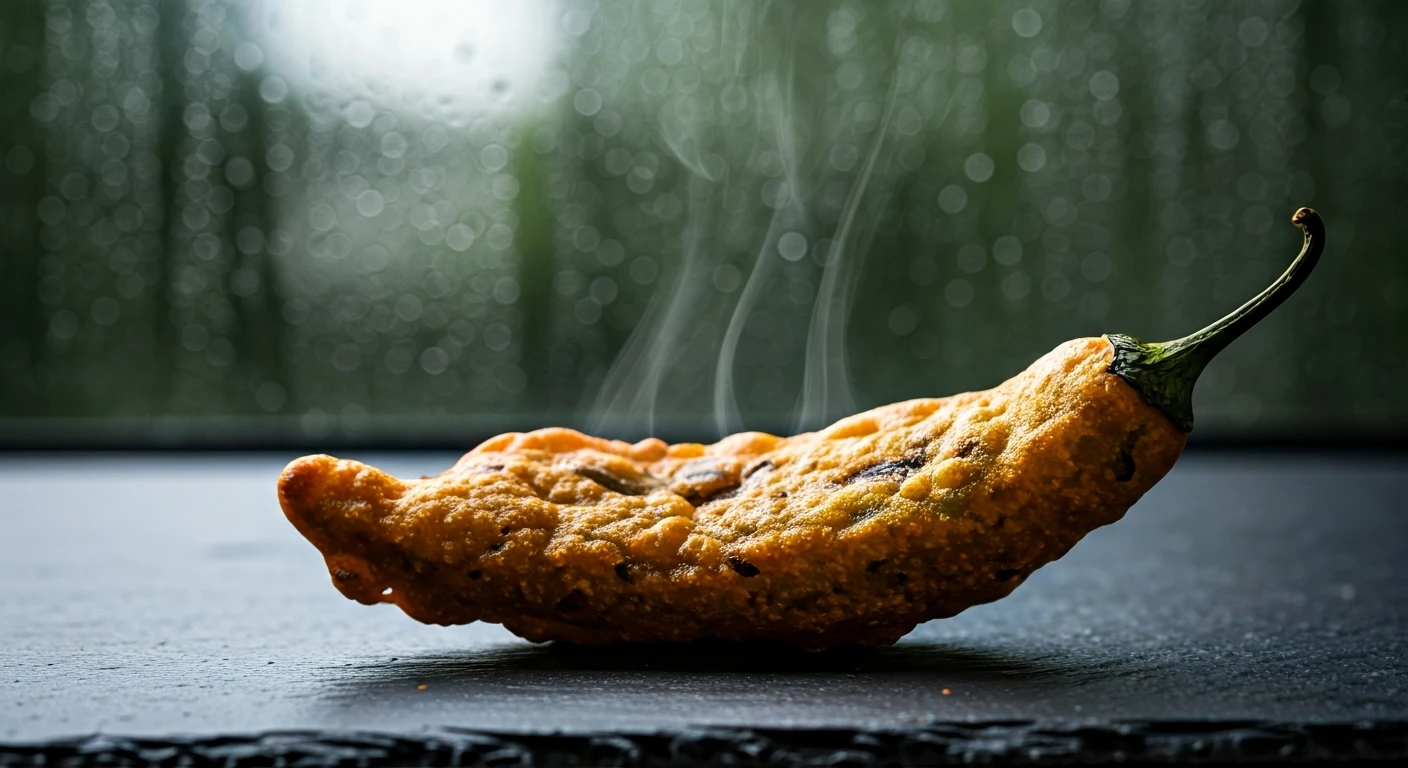
This prepared chili is then dunked into a thick, seasoned batter made from besan, or chickpea flour. This isn’t just any batter; it’s typically flavored with turmeric for color, ajwain (carom seeds) for a distinctive, pungent bite, and a pinch of red chili powder for an extra layer of warmth. Plunged into hot oil, the batter puffs up into a golden, crispy shell, encasing the now-steamed, tender chili within. It emerges from the fryer as a substantial, torpedo-shaped parcel, glistening and impossibly tempting.
A Monsoon Ritual
The connection between pakoras and rain in India isn’t just a preference; it’s a cultural institution. The monsoon season brings relief from scorching summer heat but also a damp, gray mood. The act of frying and eating pakoras, often accompanied by a steaming cup of sweet, milky chai, is a ritual that punctuates the gloom. It’s a social activity. The sizzle of the pakoras hitting the oil becomes the soundtrack of the afternoon. Families gather, friends drop by, and street-side vendors do their briskest business under makeshift tarps, handing over paper cones of hot fritters to eager customers sheltering from the downpour.
This isn't quiet, contemplative comfort food. It’s loud. The crunch of the batter is assertive. The shared experience is lively. It’s about creating a moment of vibrant, flavorful joy to actively push back against the somber weather. It’s a delicious, edible defiance of the dreary sky.
The Dramatic Payoff
The “drama” of a mirchi pakora unfolds in the eating. The first bite is all about the exterior: the satisfying, audible crunch of the chickpea batter, savory and slightly nutty. Then you hit the second act. Your teeth sink into the soft, yielding flesh of the steamed pepper, which releases a puff of fragrant steam. And then comes the climax: the heat. It’s not an immediate, scorching assault. Instead, it’s a slow-burn warmth that blossoms in the back of your throat, a pleasant fire that feels perfectly calibrated to the cool, damp air.
This is where the supporting cast becomes essential. A cool, herbaceous mint-coriander chutney provides a refreshing counterpoint, cutting through the richness of the fried batter. A sweet and sour tamarind chutney adds another layer of complexity. And of course, there’s the chai, its sweet, spiced creaminess serving to both enhance the flavors and soothe the palate before you inevitably reach for another pakora. Each bite is a complete narrative arc—a crispy beginning, a soft middle, and a fiery, lingering end.