





Welcome to the Scotland of India
Deep in the Western Ghats mountain range of southern India lies Kodagu, a district more affectionately known by its anglicized name, Coorg. Often called the “Scotland of India” for its rolling green hills, misty climate, and lush landscapes, Coorg is the country’s
largest coffee-producing region. But between June and October, it’s not just about the coffee. This is monsoon season, a time when the entire region undergoes a dramatic and beautiful transformation. The rain, which can be relentless, breathes life into the landscape. Rivers swell, the emerald canopy of the forests deepens, and the air becomes thick with the scent of wet earth, spice blossoms, and fresh coffee leaves. For travelers willing to embrace the downpour, the monsoon unlocks a different side of Coorg—one that is more wild, powerful, and intensely alive. It's in this setting that Abbey Falls sheds its gentle, off-season demeanor and puts on its most spectacular show.
A Symphony of Water and Sound
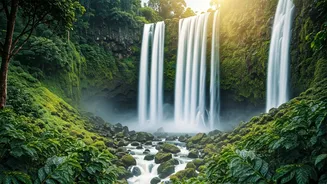
Located just a few miles from the main town of Madikeri, Abbey Falls (also known as Abbi Falls) isn't the tallest or widest waterfall in the world. Its magic lies in its context and its seasonal power. During the dry months, it can be a relatively placid stream trickling over rocks. But when the monsoon arrives, it becomes an entirely different beast. Multiple streams converge and swell with rainwater, funneling into a powerful cascade that crashes down a 70-foot rock face into a pool below. The name “Abbey” is a bit of a historical misnomer; it was reportedly named by a British official after the daughter of the area's first British chaplain, but the local name “Abbi” simply means “waterfall” in the Kodava language. During peak flow, the sound is immense—a deafening roar that fills the entire valley, overpowering conversation and creating a visceral sense of nature’s force. The fine mist kicked up by the cascade blankets the area, clinging to your skin and clothes long before you even see the falls themselves.
The Perfect Vantage Point
Experiencing Abbey Falls is as much about the journey as the destination. From the parking area, a path of well-maintained steps leads you down through a private estate of coffee and spice plantations. Towering trees form a dense canopy overhead, and the air is fragrant with the smell of cardamom, pepper, and coffee blossoms. The descent builds anticipation, as the roar of the falls grows louder with each step. The best view is from the hanging bridge built directly opposite the cascade. This vantage point offers a panoramic, unobstructed view, allowing you to take in the full scale of the spectacle. You can feel the vibrations of the water hitting the rocks through the floor of the bridge. It’s a sensory overload in the best possible way: the thunderous sound, the cool spray on your face, and the awe-inspiring sight of millions of gallons of water carving its path through the lush greenery. Swimming is prohibited due to the powerful currents and rocky base, but the experience from the bridge is more than enough to leave a lasting impression.
An Essential Monsoon Experience
While some tourist destinations wind down during the rainy season, Coorg comes into its own. Visiting Abbey Falls during this time is to see it as nature intended—at its most raw and magnificent. It’s a powerful reminder that some of the world’s greatest sights are not static monuments but dynamic, seasonal events. The falls are a focal point, but they represent the spirit of the entire region during the monsoon: vibrant, untamed, and overflowing with life. For any traveler in southern India during the rains, a detour to Coorg to witness this phenomenon is a worthwhile adventure. It’s an experience that engages all the senses and connects you directly to the powerful rhythms of the natural world. The coffee can wait; the falls, in their full rainy-season glory, demand to be seen.