



From 'Smart' to 'Intuitive'
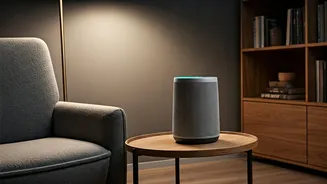
For years, the 'smart home' has been a clunky affair. It’s a collection of disparate devices—speakers, plugs, cameras, and thermostats—that we actively manage through apps and voice commands. It’s functional, sure, but it’s not exactly seamless. Now,
a fundamental shift is underway, moving from an active, command-based system to a passive, intuitive one. This is the world of the sensor-driven space. Instead of telling your home what to do, your home senses what you need. It’s the difference between a helpful butler you have to constantly direct and one who quietly anticipates your every move, ensuring the environment is always perfect without ever being asked.
The Invisible Intelligence
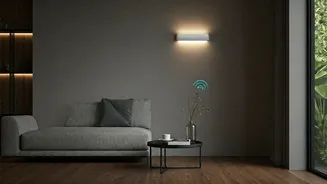
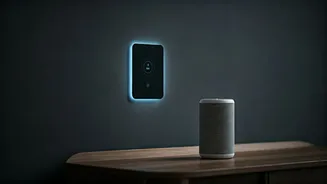
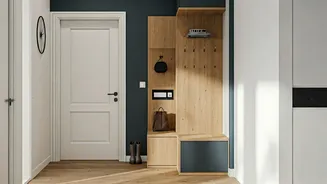
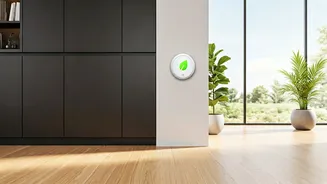
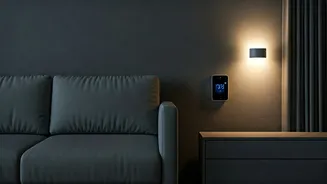
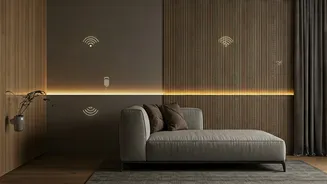
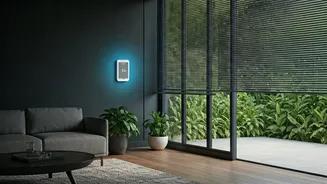
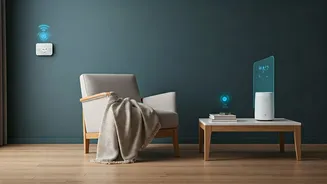
So, what makes a space 'sensor-driven'? The magic lies in a network of tiny, often invisible sensors embedded directly into the home’s architecture. We're not talking about a motion detector bolted to the ceiling. Think presence sensors that can distinguish between a person lingering and one just passing through, or light sensors that measure not just brightness but also the color temperature of the natural light pouring in. These sensors for temperature, humidity, air quality (CO2 and VOCs), and even sound are integrated discreetly behind walls, within light fixtures, or underneath floorboards. The 'decor edge' comes from this invisibility. The technology disappears completely, leaving behind only its effect: a perfectly calibrated environment. The focus shifts from the tech object itself to the atmosphere it creates.
A Day in a Sensor-Driven Home
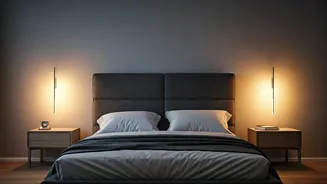
Imagine this: Your bedroom's blackout shades slowly rise as your sleep cycle ends, synchronized with lights that mimic a gentle sunrise to wake you naturally. As you walk into the kitchen, the lights subtly brighten, and the thermostat adjusts because the house knows you're starting your day. In the afternoon, as the sun shifts, the shades on the west-facing windows lower just enough to prevent glare on your laptop screen, all without you touching a thing. Later, when you have guests over, the system detects more people in the living room. It automatically lowers the music volume for conversation, brightens the 'social' lighting zones, and ramps up the ventilation to keep the air fresh. This isn't science fiction; it’s a choreographed experience, orchestrated by an intelligence that’s felt but not seen.
The Edge Is Wellness and Simplicity
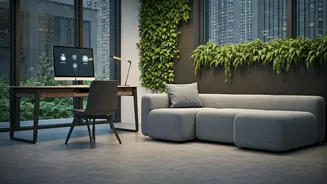
This evolution is about more than just convenience; it’s a new form of luxury rooted in wellness and aesthetic simplicity. The ability to automate circadian rhythm lighting—using cooler, brighter light during the day and warm, dim light in the evening—has proven benefits for sleep and well-being. An environment that constantly monitors and purifies its own air quality contributes to better health. From a design perspective, the ultimate goal is to remove clutter, both physical and cognitive. When you don’t need to think about flipping switches, adjusting thermostats, or even closing blinds, the home becomes a truly serene sanctuary. This is the 'edge' the headline promises: a living space that actively cares for you while demanding nothing from you, achieving a level of minimalist elegance that visible tech can never offer.
Why the 2026 Horizon?
The technology for this has existed for a while in high-end commercial buildings and super-yachts. So why 2026 for the home? It's a convergence of factors. The cost of sophisticated sensors is dropping, and the software platforms that integrate them (like those from Lutron, Crestron, and Savant) are becoming more powerful and user-friendly. Furthermore, architects and interior designers are increasingly fluent in this technology, specifying these systems at the blueprint stage of high-end custom homes and luxury renovations. While it won’t be standard in every suburban tract home by then, 2026 marks the point where a sensor-driven environment is expected to become a key differentiator in the premium market—a coveted feature that defines a modern, forward-thinking property.