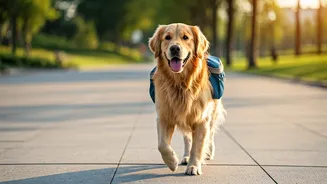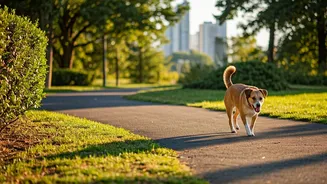






The Mandatory Mental Reset
In a world of endless notifications and back-to-back Zoom calls, the pet walk is a forced, glorious interruption. You can’t scroll through emails when you’re trying to prevent your beagle from investigating a discarded slice of pizza. You can’t ruminate
on a work problem when you’re navigating a squirrel standoff. For 15 or 30 minutes, you are pulled from the digital ether and planted firmly in the physical world. This isn’t just an escape; it’s a form of non-negotiable mindfulness. Research has consistently shown that spending time in nature and engaging in light physical activity, like walking, can significantly reduce stress, lower cortisol levels, and improve mood. The pet walk bundles these benefits into a single, recurring appointment. It’s not just a walk for the dog; it's a scheduled reset for the human mind, a brief, restorative vacation from the tyranny of the urgent.
A Journey Through the ‘Sniff-Verse’
For us, a walk is visual. We see the trees, the cars, the other people. For a dog, the walk is an olfactory masterpiece. Their sense of smell is estimated to be 10,000 to 100,000 times more acute than ours, and their brain’s olfactory cortex is about 40 times larger than a human’s. When your dog is stopping to sniff a single patch of grass for an eternity, they aren't being stubborn; they are reading the morning paper. They can tell which dogs have been there, their mood, their health, and what they had for breakfast. Modern trainers call this a ‘sniffari,’ and allowing your dog to indulge is one of the greatest gifts you can give them. It provides crucial mental stimulation that tires them out more effectively than simple physical exertion. By letting them lead with their nose, you’re not just taking them on a walk; you’re co-piloting their journey through a rich, invisible world of information and stories. You’re trading your destination-focused mindset for their sensory-based exploration, which is a lesson in itself.
The Neighborhood’s Social Lubricant
A pet, particularly a dog, is the ultimate social lubricant. Walking alone, you might offer a polite nod to a neighbor. Walking with a dog, you’re suddenly part of a club. You learn the names of dogs before you learn the names of their owners. You have a built-in, neutral topic of conversation: “He’s a rescue,” “She loves the cold,” “Is that a corgi mix?” These small, low-stakes interactions are the bedrock of community. They weave a subtle fabric of familiarity and belonging in an era where many people feel increasingly isolated. Your dog becomes an ambassador, breaking down social barriers and prompting connections you might never have made otherwise. That quick chat with the guy who owns the rambunctious golden retriever or the wave from the woman with the three tiny poodles—these moments stitch you into the life of your neighborhood, transforming anonymous houses into a collection of familiar faces.
Discovering the World in a Four-Block Radius
How well do you really know your own street? The daily walk forces you to become an expert micro-explorer. You are the first to notice the crocuses pushing through the dirt in spring, the precise day the neighborhood maple tree hits its peak autumn color, or the new wind chimes a neighbor hung on their porch. You develop an intimate, block-by-block knowledge that’s impossible to gain from a car window. This isn't about grand expeditions; it's about finding the adventure in the mundane. It’s the small thrill of finding a new shortcut through an alley, watching a hawk circle overhead, or simply feeling the weather change on your skin. These walks are small trips, but they are trips nonetheless. They teach us to find novelty and wonder in the familiar, reminding us that a rich life isn’t always about where you go, but how deeply you are willing to pay attention to where you already are.