


It’s Not the Fireball, It’s the Swarm
When you wish upon a shooting star during the Perseids or Leonids, you’re seeing a pebble-sized piece of cosmic debris burning up in our atmosphere. It’s dramatic and beautiful. But the real danger to a space mission isn’t the visible fireball; it’s the invisible
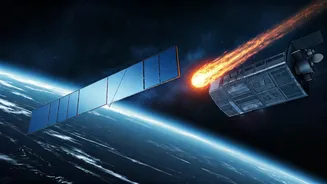
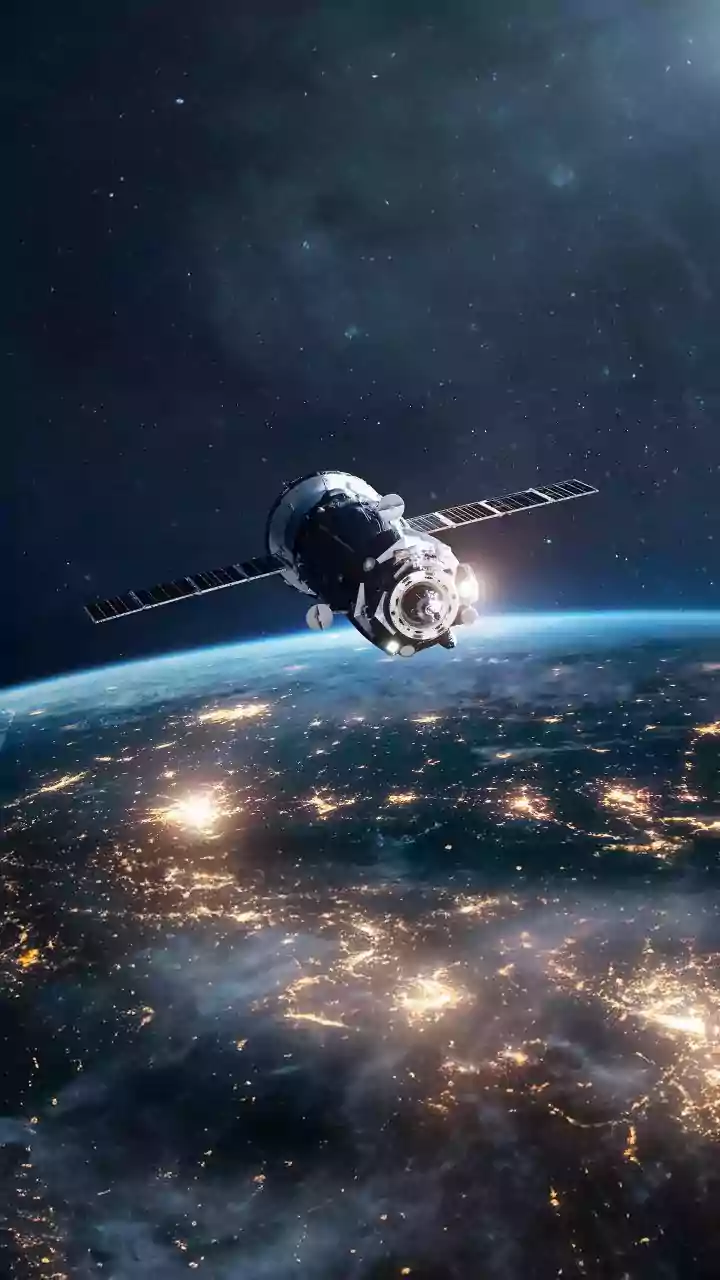
cloud of material it’s flying through. Think of it this way: Earth is plowing through a river of debris left behind by a comet. This river is mostly made of dust and sand-sized particles. While the bigger, visible meteors are relatively rare, the spacecraft is moving through a cosmic sandstorm. On Earth, we’re protected by miles of atmosphere that incinerates this stuff. In the vacuum of space, a rocket or satellite has no such shield. It’s flying naked through a field of microscopic bullets.
A Grain of Sand at 40,000 MPH
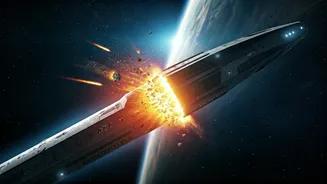
Physics in space is unforgiving. Down here, a grain of sand hitting your car is meaningless. But in low Earth orbit, everything is moving at extreme speeds. A spacecraft travels at roughly 17,500 miles per hour. A meteoroid stream can be moving at 40,000 mph or more in the opposite direction. When the two meet, the relative impact velocity is astronomical. The kinetic energy of an object is based on its mass and the square of its velocity. Because the velocity is so high, even a tiny particle—like a flake of paint or a grain of sand—hits with the force of a much larger object on Earth. A one-millimeter aluminum sphere traveling at orbital speeds has the same impact energy as a bowling ball dropped from a five-story building. This is more than enough to puncture a sensitive solar panel, sever a critical cable, or, in a worst-case scenario, pierce the hull of a crewed capsule.
The Art of the Cosmic Dodge
So, what do mission planners do? They don’t just cross their fingers. They treat meteor showers like celestial weather forecasts. NASA’s Meteoroid Environment Office (MEO) models the density and trajectory of these debris streams with incredible precision. They know when the “weather” will be riskiest. This is where the delays come in. If a major mission—like an Artemis launch to the moon or a critical satellite deployment—is scheduled during the peak of a dense meteor shower, planners will almost certainly adjust the timeline. They might shift a launch window by a few days to wait for Earth to pass through the densest part of the stream. For astronauts already in space, a spacewalk (or Extra-Vehicular Activity) might be postponed. It’s all about risk mitigation. You wouldn’t fly a plane into a hurricane, and you don’t launch a billion-dollar rocket into a predictable meteoroid storm.
Building Armor for the Void
Of course, you can’t dodge everything. Space is full of sporadic micrometeoroids that aren’t part of any predictable shower. For this constant, low-grade threat, spacecraft are equipped with armor. The most common type is called a Whipple shield, named after its inventor, Fred Whipple. It’s not a single, thick plate. Instead, it’s a series of thin, spaced-out layers. The outer layer is sacrificial; it’s designed to be hit. When a particle strikes it, the impact vaporizes the particle and shatters it into a cloud of smaller, less dangerous fragments. This cloud then spreads out before hitting the second layer, distributing the impact energy over a wider area. It’s an incredibly clever and lightweight way to protect the critical systems and crew compartments behind it. The International Space Station and crew capsules like SpaceX's Dragon are covered in this type of shielding, which is constantly being improved to handle the known risks of orbital travel.