



First, An Ode to Rasam
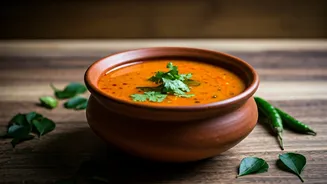
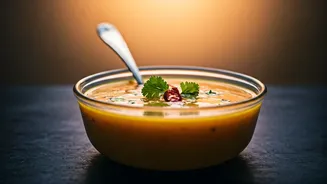
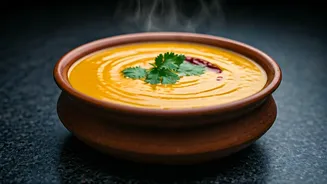
Before we get to the mango, let’s talk about rasam. For the uninitiated, rasam is a cornerstone of South Indian cuisine. It’s not quite a soup in the Western sense, and it’s not a thick curry; it lives in a delicious, watery world of its own. Served with
rice or sipped on its own as a comforting broth, its primary job is to wake up your palate and aid digestion. The traditional flavor profile is a masterclass in balance: the sour punch of tamarind, the subtle sweetness of ripe tomatoes, the sharp heat of black pepper and chili, and the earthy aroma of cumin, coriander, and mustard seeds. It’s thin, brothy, and unapologetically bold. In many South Indian homes, it's a non-negotiable part of the daily meal, a comforting ritual in a bowl that can soothe a cold, settle a stomach, or simply bring a meal to a perfect close.
Enter the Mango: The 'Weird' Twist
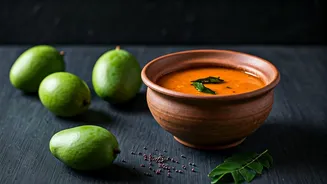
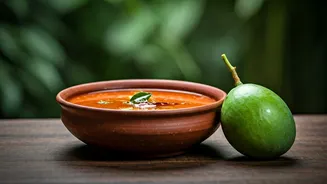
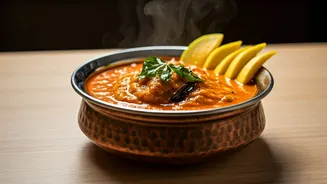
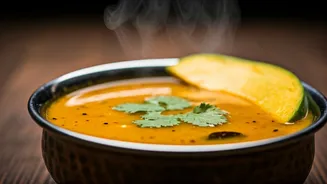
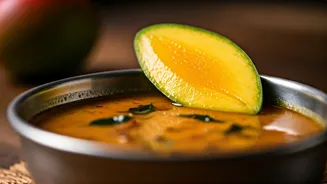
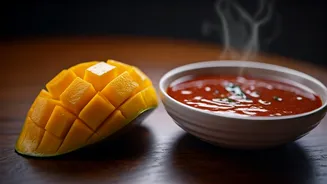
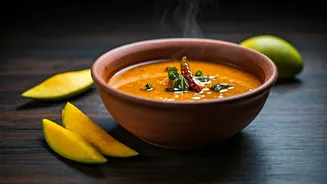
Now, let's introduce the agent of chaos—or is it genius?—the mango. Traditional rasam recipes are often held as sacred texts. The tamarind-tomato base is the foundation upon which the entire dish is built. Swapping or adding a major flavor element isn't done lightly. This is what makes the idea of mango rasam so intriguing. It’s a deliberate, almost mischievous, break from convention. The concept typically unfolds in two ways. The more logical version uses firm, sour green mangoes. Here, the raw mango’s tartness acts as a direct substitute for the tamarind, providing the essential sour note while adding its own fruity, raw fragrance. It’s a smart swap. But the truly “weirdly perfect” version, the one that makes you tilt your head before your eyes widen with delight, uses ripe, sweet mango. This is where the rules get thrown out the window.
The Delicious Science of 'Perfect'
So why does it work? Why doesn't sweet mango turn this savory, spicy soup into a confusing mess? It’s all about a beautiful collision of flavor chemistry. That intense sweetness from the ripe mango pulp doesn't overpower the rasam; it tames it. The peppery heat and the kick from dried red chilies are suddenly met with a soothing, fruity counterpoint. It's the same principle that makes a spicy mango salsa so addictive. The sweetness cuts through the fire, allowing you to appreciate the complexity of the spices without being overwhelmed by the burn. Furthermore, even ripe mangoes retain a hint of acidity, which helps carry the sour notes the dish requires. The fruit's floral aroma weaves itself through the steam, blending with the toasted spices in a way that feels both new and strangely familiar. The result is a rasam that is simultaneously comforting and exhilarating, with layers of flavor that unfold with every sip: first heat, then sweet, then tangy, with a fragrant finish.
A Modern Classic in the Making?
Mango rasam isn't a betrayal of tradition but a celebration of it. It takes the core philosophy of rasam—a balanced, flavorful, and restorative broth—and applies it to a new star ingredient. It's a dish that could only exist with a deep understanding of the original. You have to know the rules to break them this effectively. It’s become a seasonal specialty, a way to celebrate the fleeting joy of mango season in a form that’s both novel and deeply rooted in culinary heritage. This isn't about fusion for fusion's sake; it’s a thoughtful evolution. It proves that even the most established recipes have room for creativity, and that sometimes the weirdest ideas are the ones that were just waiting for the right season to become perfect.