








The New Secret Weapon
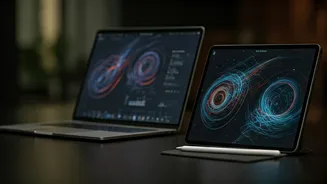
First, let's be clear about what we mean by 'AI styling tools.' This isn't about asking ChatGPT to write your pitch. Instead, think of a super-powered design assistant. Platforms like Tome, Gamma, and Beautiful.ai use generative AI to do the heavy lifting
of presentation design. You provide the raw text, data, and a few prompts—'create a slide about market growth with a professional, blue-themed layout'—and the AI instantly generates a fully formatted, visually coherent slide with icons, stock imagery, and clean typography. It's the design equivalent of going from a pile of ingredients to a plated meal, skipping most of the tedious chopping and arranging.
The Efficiency Imperative
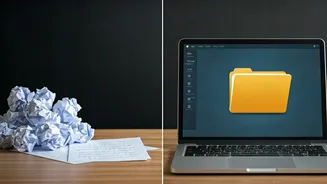
The most immediate benefit is, without a doubt, speed. A freelancer who once lost half a day wrestling with PowerPoint templates or aligning text boxes in Google Slides can now generate a strong first draft of a 15-page deck in under 30 minutes. This isn't just about saving time; it's about reallocating it. Those saved hours can be invested back into the core work the client is actually paying for: the strategy, the creative concept, or the data analysis. For solo practitioners juggling multiple projects, this efficiency boost is a form of leverage, allowing them to operate with the agility and polish of a much larger team.
Leveling the Playing Field
Not every talented writer, strategist, or consultant is also a gifted graphic designer. In the past, a brilliant proposal could be let down by a clunky, amateurish presentation. AI styling tools democratize good design. They enforce visual consistency, suggest compelling layouts, and provide access to a vast library of high-quality assets. This allows freelancers to present their ideas with a level of professionalism that might have previously been out of reach without hiring a designer. When your deck looks as sharp as your ideas, it builds instant credibility and helps you compete against bigger agencies with in-house design departments.
Avoiding the AI 'Sameness'
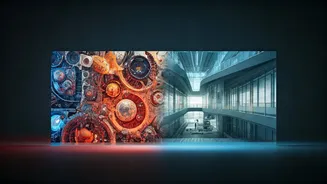
Here’s the crucial caveat: relying on AI too heavily can result in a deck that looks generic. As these tools become more popular, a recognizable 'AI aesthetic' is emerging—clean, minimalist, but often lacking a unique point of view. The smartest freelancers aren't using these tools to replace their judgment, but to augment it. They use the AI-generated deck as a starting point, a 'Version 1.0.' From there, they inject their own personality and the client's specific brand identity. This means swapping out stock photos for custom images, tweaking color palettes to match brand guidelines, and refining the AI-generated copy to ensure it has a human, authentic voice. The goal is to use AI for the 80% of grunt work, freeing up human creativity for the critical 20% that makes the deck truly stand out.
The Human Touch Still Wins
Ultimately, no client hires a deck; they hire the person or team behind it. Generative AI can't understand a client's unspoken anxieties, build personal rapport, or develop a breakthrough strategic insight. These tools are exceptionally good at packaging information, but the information itself—the ideas, the strategy, the solution to the client’s problem—remains a fundamentally human task. Freelancers who embrace AI styling tools aren't outsourcing their thinking. They're outsourcing the tedious work of formatting so they can focus more deeply on the thinking itself. They understand the technology is a powerful co-pilot, but they know they still have to fly the plane.