





The Financially Smart Staple
In an era of skyrocketing grocery bills, legumes are a clear financial win. A one-pound bag of dried beans, which can yield anywhere from six to eight cups once cooked, often costs less than a single pound of ground beef. Canned beans are an even more
convenient and still incredibly affordable option. When you compare the price per serving, legumes offer high-quality plant-based protein and fiber for pennies on the dollar. They are the ultimate tool for stretching a food budget without sacrificing satisfaction. A can of black beans can bulk up taco meat, a handful of lentils can turn a simple soup into a hearty meal, and chickpeas can become the star of a cost-effective curry, proving that eating well doesn't have to break the bank.
The Nutritional Powerhouse
Calling legumes a “smart” food isn’t just about economics; it’s a nutritional fact. They are uniquely packed with a combination of nutrients our bodies crave. Legumes are an excellent source of plant-based protein, essential for muscle repair and growth. They are also loaded with dietary fiber, which aids digestion, promotes a feeling of fullness (helping with weight management), and can help regulate blood sugar levels. Beyond protein and fiber, they are rich in important micronutrients like folate, iron, magnesium, and potassium. This dense nutritional profile makes them a powerful ingredient for supporting overall health, from your heart to your gut.
The Sustainable Superstar
Making a smart choice for your dinner plate can also be a smart choice for the planet. Legumes are one of the most environmentally friendly food sources available. Many varieties, like lentils and chickpeas, have a very low water footprint, requiring significantly less water to grow compared to animal proteins. Furthermore, legumes have a remarkable ability to perform “nitrogen fixation.” They pull nitrogen from the air and convert it into a natural fertilizer in the soil, which reduces the need for synthetic fertilizers and improves soil health for future crops. By incorporating more legumes into your diet, you're not just feeding yourself well—you're participating in a more sustainable food system.
The Kitchen's Secret Weapon
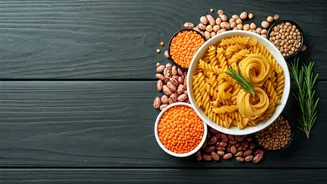
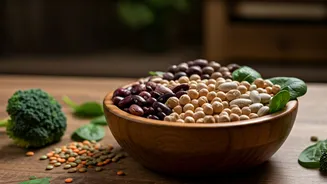
For the modern home cook, the true genius of legumes lies in their sheer versatility. They are a culinary blank canvas, ready to absorb whatever flavors you throw at them. Creamy white beans can be blended into a luxurious dip or puréed into a velvety soup. Hearty kidney beans hold their shape perfectly in a slow-cooked chili. Earthy lentils can be transformed into a savory salad or a satisfying vegetarian burger patty. Crispy roasted chickpeas make for an addictive snack or a crunchy salad topper. From the smooth hummus of the Middle East to the robust feijoada of Brazil, cultures around the world have long understood the power of the legume. They can be a side dish, a main course, or a secret ingredient that adds texture and depth.
The Quick-Fix for Busy Nights
The idea that cooking with dried beans is a weekend-only, multi-hour affair is outdated. While a slow-simmered pot of beans is a joy, modern kitchens need faster solutions. This is where canned legumes and quick-cooking varieties shine. A can of beans, rinsed and drained, is a meal-starter that’s ready in 60 seconds. You can toss them with greens for an instant salad, mash them with avocado for a quick toast-topper, or stir them into pasta sauce for a protein boost. Red and yellow lentils, unlike many other dried legumes, require no pre-soaking and cook in just 15-20 minutes, making them one of the fastest whole-food ingredients you can find. Legumes prove that a healthy, satisfying, and smart meal is always within reach, even on the busiest weeknights.