




1. The Humble Draft Stopper
The Old Hack: You’ve seen them—those quaint, snake-like fabric tubes placed at the bottom of a door. Or maybe you just remember your dad stuffing a rolled-up towel into the gap. The goal was simple: block the cold air from creeping in. It felt like a low-tech,
almost desperate measure against the winter winds. The Science Energy: That simple fabric tube is a warrior in the battle against two major forms of heat loss: air infiltration and convection. The Department of Energy estimates that drafts can account for up to 30% of a home’s heating energy use. When cold air seeps in (infiltration), it displaces the warm air you’ve paid to heat. Furthermore, it creates convection loops—cold air sinks, pushing warm air up, creating a constant, chilly cycle. By physically blocking that gap, a draft stopper effectively seals the breach, keeping your warm air stable and your cold air outside where it belongs. It’s not just a cute decoration; it’s a frontline defense in home thermodynamics.
2. Strategic Curtain Management
The Old Hack: “Open the curtains on the sunny side of the house! And close them all as soon as the sun goes down!” This was the daily refrain in many households, a ritual as regular as making coffee. It seemed like common sense, but the actual impact felt hard to measure. The Science Energy: This daily routine is a masterclass in passive solar management. During the day, sunlight enters through windows as shortwave radiation, which is then absorbed by floors and furniture and re-radiated as heat (longwave radiation). This is “passive solar gain,” and it’s free heat from the sun. At night, however, windows become thermal holes, radiating your home’s precious heat back into the cold outdoors. A standard double-pane window loses heat many times faster than an insulated wall. Closing your curtains, especially thermal ones, creates a pocket of trapped air that acts as an additional layer of insulation. This dramatically reduces radiant heat loss, keeping the warmth from your heating system inside the room.
3. The Power of a Good Rug
The Old Hack: When autumn arrived, out came the thick wool or shag rugs to be laid over cold hardwood or linoleum floors. It just *felt* cozier to have something warm underfoot, a simple upgrade for seasonal comfort. The Science Energy: Your feet weren’t lying to you. A rug’s power comes from its ability to combat conductive heat loss. When you stand on a cold, hard floor, the heat from your body is conducted directly into the floor, making you feel cold. A rug acts as an insulator, or a “thermal break.” The trapped air within its fibers is a poor conductor of heat, slowing down that transfer. This means the surface you’re standing on stays warmer, and your body retains its heat. It doesn’t just make your feet feel warmer; by reducing the rate of heat loss to a large surface area (the floor), it can make the entire room feel more comfortable at a lower thermostat setting.
4. The Radiator's Secret Weapon
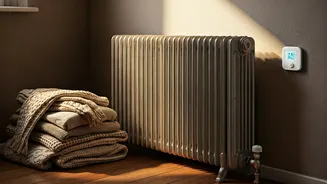
The Old Hack: If you grew up in an older home with cast-iron radiators, you might have seen a strange sight: a sheet of aluminum foil wedged between the radiator and the wall. It looked a bit odd, but the claim was that it made the room warmer. The Science Energy: This is a brilliant, low-cost application of physics. Radiators heat a room through two primary methods: convection (heating the air that circulates around it) and radiation (emitting thermal energy as infrared waves). When a radiator is placed against an exterior wall, a significant portion of that radiant heat is simply absorbed by the cold wall and lost to the outside. A sheet of reflective material, like aluminum foil, acts as a radiant barrier. It reflects those infrared waves back into the room, directing the heat toward you instead of letting it escape through the wall. Modern, specialized radiator reflector panels work even better, but the principle is exactly the same as Grandma’s tin foil.
5. Close the Door, Old-School Style
The Old Hack: “We’re not heating the whole neighborhood! Close the door!” This classic parental command was about more than just keeping the heat in one room—it was about consolidating it. The logic was to only heat the spaces you were actually using. The Science Energy: This is the original concept of “zone heating.” Your central furnace is designed to heat the entire volume of air in your house. By closing doors to unused bedrooms, storage areas, or formal living rooms, you are effectively reducing the total square footage that needs active heating. This contains the warm air in the occupied spaces, allowing them to reach and maintain the target temperature more quickly and efficiently. It prevents the warm air from circulating into colder, unoccupied rooms where it would rapidly cool down, forcing your heating system to work harder. In an era of smart thermostats and complex HVAC zoning, simply closing a door remains one of the most effective and cheapest ways to manage your home’s climate.