




What You Are Actually Seeing
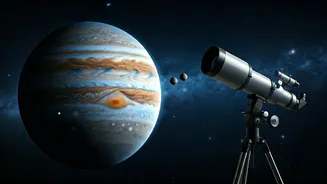
When we talk about a 'transit,' we're describing a mini-eclipse where one of Jupiter’s four largest moons, known as the Galilean moons, passes directly between the planet and Earth. From our perspective, the moon appears as a tiny, slow-moving dot crossing
Jupiter’s cloudy surface. Even more dramatic is a 'shadow transit,' which occurs when the moon’s shadow is cast onto Jupiter’s cloud tops. Because you’re seeing a stark black shadow against the planet's relatively bright canvas, these events are often easier for amateur astronomers to spot. Io, the innermost Galilean moon, orbits Jupiter in less than two days, making its transits and shadow transits frequent and dynamic. The other moons—Europa, Ganymede, and Callisto—have longer orbits, creating a constantly changing celestial schedule.
The 'Basic' Telescope You'll Need
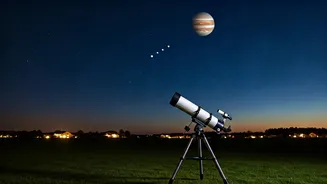
The phrase 'basic telescope' doesn't mean the flimsy department store models you might remember from childhood. It means you don't need a research-grade instrument that costs as much as a car. A quality beginner or intermediate telescope will do the trick. Look for a refractor telescope with at least a 4-inch (100mm) aperture or a reflector telescope with a 6-inch (150mm) aperture. These sizes are large enough to gather sufficient light to resolve details on Jupiter. More important than sheer power is optical quality and, crucially, a sturdy mount. A wobbly mount will make tracking a planet at high magnification impossible and frustrating. A stable equatorial or Alt-Azimuth mount will allow you to keep Jupiter in your field of view smoothly, which is essential for observing an event that can last for a couple of hours.
Meet the Stars of the Show
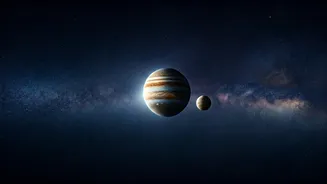
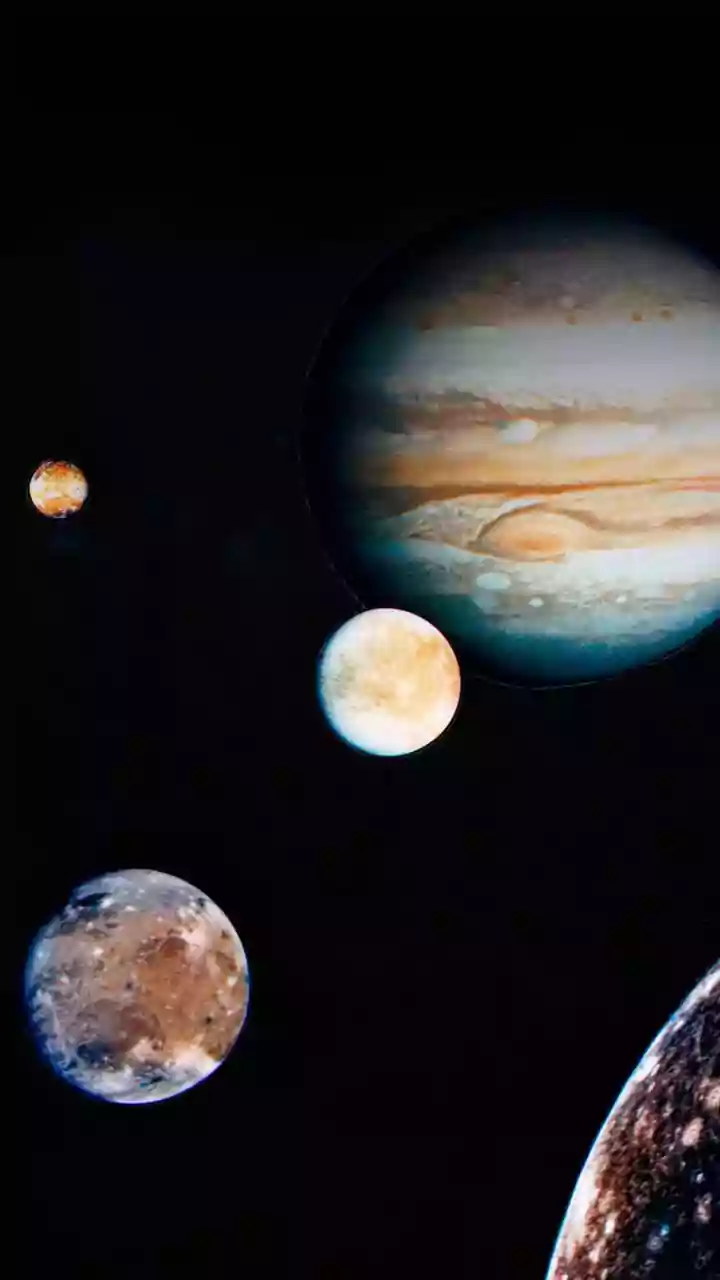
The four moons you’ll be tracking were first observed by Galileo Galilei in 1610, a discovery that helped reshape our understanding of the solar system. Each has a unique character. Io is a volcanic hellscape, and its proximity to Jupiter makes its transits fast and frequent. Europa is the famous ice-covered moon with a subsurface ocean, a prime candidate for extraterrestrial life. Ganymede is the largest moon in the entire solar system, bigger even than the planet Mercury. Callisto, the outermost of the four, is a heavily cratered, ancient world. Watching them is like having a front-row seat to a miniature solar system, each moon moving at its own pace, occasionally disappearing behind the planet (an occultation) or casting its shadow upon it.
Timing Is Everything: Plan Your Viewing
You can't just point your telescope at Jupiter and hope to see a transit. These events happen on a precise, predictable schedule. Fortunately, you don't need to do the math yourself. Dozens of free and paid resources can tell you exactly when the next transit or shadow transit will be visible from your location. Websites like Sky & Telescope and Astronomy Magazine publish weekly or monthly celestial highlights, including Jupiter's moon events. For real-time planning, astronomy apps like SkySafari, Starry Night, or the free open-source software Stellarium are indispensable. You can enter your location, select Jupiter, and advance the time to see exactly when a moon or its shadow will begin its journey across the planet's disk. Plan to start observing at least 30 minutes before the event is scheduled to begin.
Tips for a Successful Observation
First, be patient. Spotting a tiny moon or its even tinier shadow against a planet 400 million miles away is a subtle observation. Allow your telescope to acclimate to the outside temperature for at least 30 minutes to an hour to prevent distorted views. Use a moderate to high magnification—enough to make Jupiter’s disk large, but not so much that the image becomes dim or blurry. This is often a process of trial and error with different eyepieces. The best moments for viewing are often when the shadow is near the edge of the planet, where the contrast is higher. Don't be discouraged if you miss it the first time; seeing conditions, like atmospheric turbulence, play a huge role. The reward is witnessing a cosmic alignment with your own eyes, a profound connection to the grand clockwork of our solar system.