



Beyond the 'Pets Allowed' Sign
For decades, the best a pet-owning renter could hope for was a landlord who grudgingly accepted their four-legged companion, usually with a hefty deposit. The bar was on the floor: a 'pets allowed' policy was the amenity. But that standard is being completely
rewritten, especially in new luxury and mid-luxury developments in dense cities like New York, Chicago, and San Francisco. Today, it’s not enough to simply tolerate pets; buildings are actively competing to cater to them. This shift reflects a profound change in how Americans view their animals. They are no longer 'just pets' but integral members of the family. As a result, when urban families—particularly millennials and Gen Z, who comprise a huge share of the rental market—are apartment hunting, the needs of their 'fur baby' are often as important as the number of bedrooms or the kitchen countertops.
Welcome to the Pet Spa
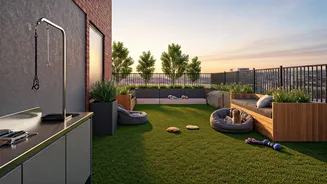
So what do these next-level amenities look like? They range from the practical to the downright decadent. At the basic end, you have conveniently located waste stations and dedicated outdoor green spaces. But the real arms race is in the premium tier. We’re talking about full-service, in-house pet spas with professional-grade grooming tables, washing stations with temperature-controlled water, and high-velocity dryers. Some buildings feature indoor playrooms for rainy days, complete with agility equipment. Rooftop dog runs—often called 'sky parks' or 'paw-s-itive' terraces—offer stunning city views for both owner and pet. Concierge services are getting in on the action, too. It’s increasingly common for high-end buildings to offer on-demand dog walkers, pet-sitting coordination, and even visiting veterinarians or 'pet-icures' as part of their service package. One Chicago development even boasted a 'pup-lounge' with treat bars and scheduled 'yappy hours' for canine socialization.
The Pandemic-Fueled Demand
This trend was already simmering, but the COVID-19 pandemic threw gasoline on the fire. The surge in pet adoptions during lockdown created a whole new cohort of devoted pet owners. Many of these new families live in apartments without private yards, making access to clean, safe, and convenient outdoor space a top priority. As remote and hybrid work became the norm, people started spending more time at home, making the quality of their immediate living environment—and their pet’s quality of life—more important than ever. A quick trip down the elevator to a rooftop dog run is infinitely more appealing than a pre-dawn walk through city streets. This demand created a clear signal to developers: investing in pet infrastructure is no longer a niche market, but a mainstream requirement for attracting and retaining tenants in a post-pandemic world.
A Smart Play for Landlords
While it may seem like extravagant pandering, there is a cold, hard business case behind the fluff. According to multiple real estate analyses, pet-friendly buildings can command higher rents—sometimes by a significant margin. More importantly, they often experience lower vacancy rates and higher tenant retention. Pet owners tend to be 'stickier' tenants; moving is a hassle for anyone, but moving with an animal adds another layer of complexity, making them more likely to renew their lease if they and their pet are happy. By creating a community that embraces pets, landlords are building a loyal customer base. These amenities are also a powerful marketing tool, helping a building stand out in a crowded market and telegraphing a message of modern, resident-focused luxury that appeals directly to the demographic with disposable income to spend on high-end rentals.