



The Kesar: A Worthy Rival
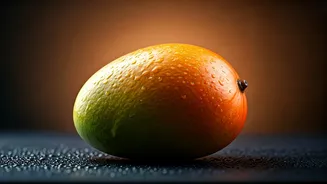
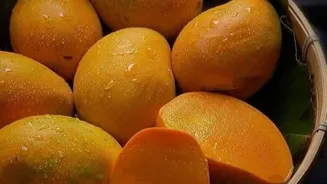
If the Alphonso is king, the Kesar is the elegant, saffron-scented queen. Originating from the foothills of Girnar in Gujarat, India, this mango is smaller and rounder than its famous cousin, with a distinctcurve at its tip. What makes it a showstopper
is its intense aroma, which has noticeable notes of saffron (kesar in Hindi). The flesh is a vibrant, deep orange and is known for being incredibly sweet without the tart undertones that some other varieties have. While it has some fiber, it’s generally considered smooth. For years, the Kesar was a well-kept secret in the U.S., available only to those who knew where to look in specialty Indian markets. Now, thanks to better import logistics and growing demand for diverse flavors, it’s becoming a sought-after alternative for those who find the Alphonso’s price tag a bit steep or its availability too fleeting.
The Ataulfo (or Honey Mango): The Accessible Star
You’ve definitely seen this one. The small, kidney-shaped yellow mango commonly sold as a “Honey Mango” in American supermarkets is the Ataulfo. Originating from Mexico, it’s the most widely available and reliable mango for most U.S. consumers. Don't let its ubiquity fool you into thinking it's inferior. A good Ataulfo is a revelation. It is completely fiberless, with a velvety, buttery texture that melts in your mouth. Its flavor is a perfect balance of sweet and tangy, with a peachy, tropical brightness. While it may lack the complex, almost resinous notes of an Alphonso, its sheer creaminess and lack of fibrous strings make it a crowd-pleaser and a fantastic gateway mango for the uninitiated.
The Chaunsa: Pakistan’s Sweetest Export
Talk to any mango connoisseur with roots in Pakistan, and their eyes will light up at the mention of the Chaunsa. This mango variety is legendary for its almost unbelievable sweetness and powerful fragrance. It has a pale to medium yellow skin, even when fully ripe, which can be deceiving. Inside, you’ll find exceptionally soft, succulent flesh with very little fiber. The flavor is pure, concentrated mango nectar—a burst of honeyed sweetness that lingers on the palate. Due to its delicate nature, it has a short season and can be harder to find, but it’s a prize worth hunting for. It’s the kind of mango you eat over the sink, juice dripping down your arms, in a state of pure bliss.
The Kent: The Florida Favorite
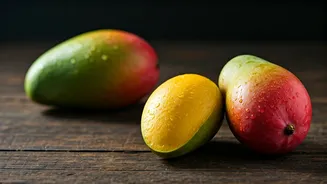
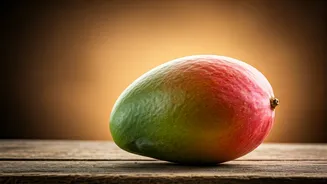
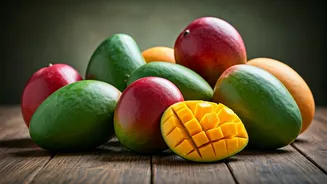
While many of the most prized mangoes are imported, the U.S. has its own star player: the Kent. Developed in Florida, this large, oval-shaped mango has a dark green skin with a reddish blush. It's a late-season variety, often peaking in July and August when other types are fading away. The Kent is prized for its rich, sweet flavor and a near-total lack of fiber, making for a very smooth eating experience. It has a classic, straightforward mango taste with hints of tropical punch and even a bit of peach. Because it’s grown domestically, it’s often fresher and more affordable than its imported counterparts, making it a dependable workhorse for everything from smoothies and salsas to simply eating with a spoon.