






A Land Drenched in Legend
Perched on the edge of the Khasi Hills, Cherrapunji (or Sohra, its traditional name) held the title of “wettest place on Earth” for decades. While the nearby village of Mawsynram now often claims the top spot by a few inches, the distinction is academic.
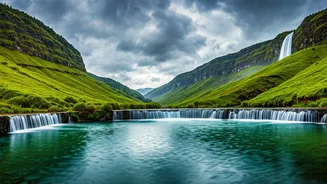
This is a land defined by water. During the monsoon season, the entire landscape transforms into a living, breathing entity. Clouds don’t just hang in the sky; they roll through the streets, wrapping villages in a damp, ethereal embrace. The air itself feels heavy with moisture, and the dominant sound is the percussive drumming of rain on every surface, a rhythm punctuated by the thunder of countless waterfalls.
The Tragic Solo: Nohkalikai Falls
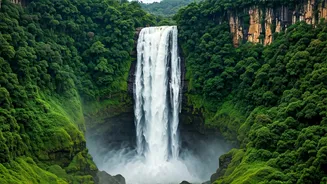
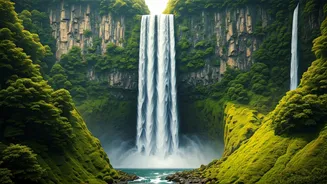
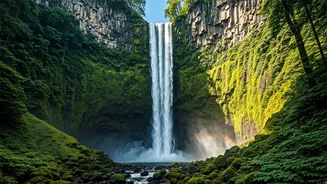
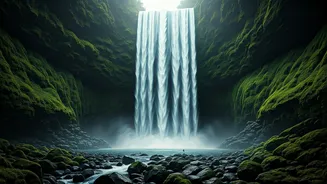
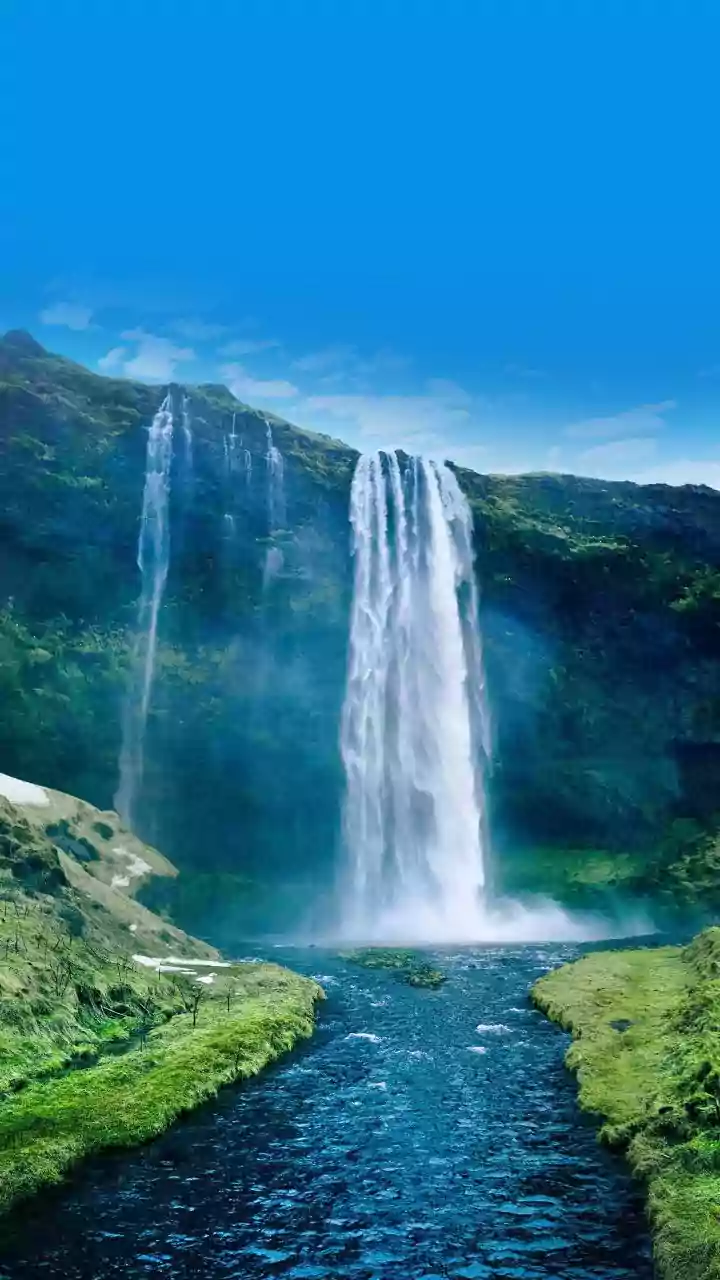
Every great mood board has a dramatic centerpiece, and for Cherrapunji, it’s Nohkalikai Falls. As India’s tallest plunge waterfall, it’s a staggering sight: a single, powerful torrent of water dropping over 1,100 feet from a verdant cliff into a turquoise pool below. The sound is not a gentle cascade but a deep, resonant crash that echoes through the valley. But its beauty is laced with sorrow. Its Khasi name translates to “Jump of Ka Likai,” referencing a local legend of a mother who, driven mad by grief, leaped from the cliff. The waterfall’s powerful, solitary plunge feels like a physical manifestation of that story—beautiful, overwhelming, and profoundly melancholic. It’s the sound of a single, heartbreaking note held indefinitely.
The Grand Chorus: Seven Sisters Falls
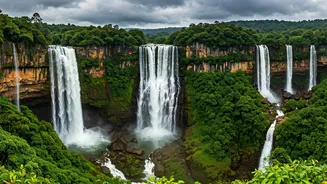
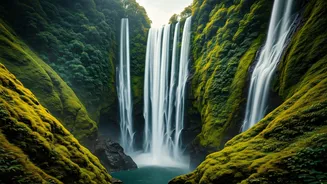
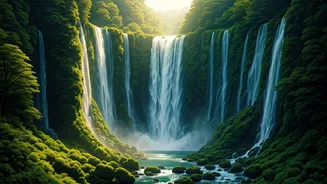
If Nohkalikai is a solo performance, the Nohsngithiang Falls, or Seven Sisters Falls, is a full orchestra. Here, seven distinct streams of water flow side-by-side over a wide limestone cliff, creating a majestic curtain of white against the green hills. The visual is breathtaking, especially during sunset when the light catches the spray. The sound is a complex, layered roar—a symphonic wall of noise that fills the air. It’s less a crash and more a constant, powerful hum, the combined voice of seven waterfalls singing in unison. This is the mood board’s panel of epic grandeur, a testament to the sheer scale of nature’s power when multiplied.
The Ethereal Mist: The Supporting Cast
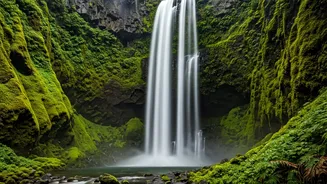
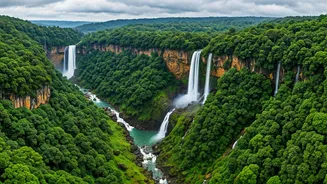
Beyond the headliners, Cherrapunji’s landscape is textured with countless other waterfalls, some permanent, others appearing only during the height of the monsoon. Kynrem Falls, a three-tiered cascade, adds another layer to the region’s acoustics. But the true mood is set by the water you can’t always see. It’s the constant drip from moss-covered rocks, the gurgle of unseen streams, and the omnipresent mist that softens every edge and muffles distant sounds. This is the ambient track of the mood board—the quiet, mysterious element that ties everything together. It’s the feeling of being inside a cloud, where the world is reduced to immediate, sensory details.
Living with the Rain
The relentless water isn’t just a spectacle; it’s a force that has shaped human life for centuries. The most stunning example is the region’s living root bridges. Instead of building structures that would rot and be washed away, the local Khasi people learned to guide the aerial roots of rubber fig trees across rivers, weaving them over years and decades into strong, living bridges. These incredible feats of organic engineering are a perfect metaphor for life here: not fighting the water, but adapting to its overwhelming presence. They represent the final panel on the mood board—one of resilience, ingenuity, and a deep, symbiotic relationship with the environment.