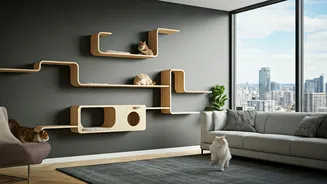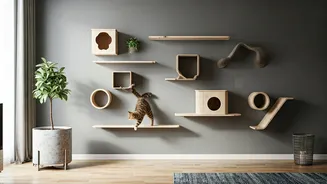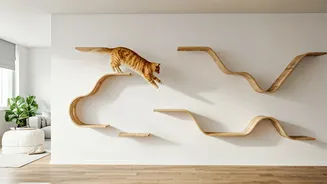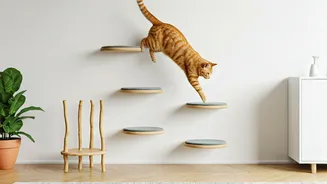




Beyond the Carpet Tree: The “Catification” Concept
The days of surrendering your living room to a bulky, carpet-covered cat tree are over. The modern approach, known as “catification,” is about thoughtfully integrating your cat's environmental needs into your own home decor. Coined by cat behaviorist
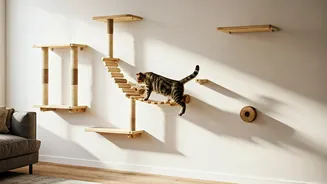
Jackson Galaxy, the concept focuses on providing felines with an environment that allows them to indulge their natural instincts to climb, perch, hunt, and survey their territory from above. In a compact high-rise apartment, this is even more crucial. Cats don't measure space horizontally like we do; they see the world in three dimensions. By utilizing vertical space with wall shelves, you effectively expand your apartment's square footage from your cat’s perspective, reducing their stress, preventing unwanted scratching, and creating a more harmonious shared living space.
Matching Shelves to Your Aesthetic
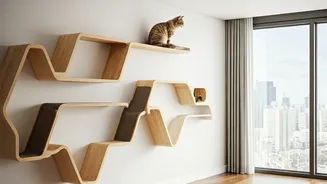
The key to successful catification is choosing shelving that complements your decor rather than clashes with it. Forget the pet store aisle and think like an interior designer. For a minimalist or Scandinavian look, opt for simple floating shelves made of light-colored wood like birch or maple. You can add discreet grip pads or small, washable fabric covers for comfort and safety. If your style is more industrial, consider shelves made from reclaimed wood and black iron piping for a rugged, yet chic, feel. For a bohemian vibe, look for shelves with macrame accents or curved, organic shapes. The goal is to select pieces that look like an intentional design choice. Many Etsy shops and specialized online retailers now offer beautifully crafted cat furniture that doubles as wall art, ensuring your vertical additions are as pleasing to your eye as they are to your cat.
Planning Your Feline Superhighway
A successful cat highway is more than just a few randomly placed shelves. It requires strategic planning to ensure it's both safe and enticing. First, map out a path. Your cat’s highway should have clear entry and exit points, ideally starting from a sturdy piece of furniture like a bookshelf or sofa and leading up the wall. This gives them an easy on-ramp. Space the shelves carefully; a good rule of thumb is no more than 12-16 inches apart vertically and horizontally, allowing for a comfortable leap. Create “destinations” along the path—a wider, deeper shelf for napping, a perch with a view out a window, or a final high point that serves as a cozy lookout. Varying the shelf depths and heights adds interest. Always ensure each shelf is securely anchored to support your cat’s weight as they leap and land.
Smart Installation for Apartment Dwellers
The biggest hurdle for renters is often the installation itself. Drilling into walls can be intimidating, but it's not impossible to do it responsibly. Before you start, carefully review your lease agreement regarding wall alterations. For most drywall, using appropriate screw-in drywall anchors is non-negotiable for safety; these create a much stronger hold than simply driving a screw into the wall. When you move out, patching these small holes is a simple and inexpensive fix that most landlords permit. If drilling is absolutely forbidden, explore alternatives. Some companies offer stylish tension-pole systems that extend from floor to ceiling, providing a climbing structure without a single screw. You can also find modular shelving units that are stable enough to incorporate into a cat-friendly path. The key is to prioritize security—a wobbly shelf is a dangerous one and will quickly be rejected by a savvy feline.