





The Mindful Upgrade
Forget staring at your phone. The new focus is on turning your walk into a moving meditation. Two popular approaches are the 'silent walk' and the 'awe walk.' The first is exactly what it sounds like: walking in silence, with no podcasts, music, or even
conversation, allowing you to simply notice your surroundings and your own thoughts. It’s a powerful tool for de-stressing in a noisy world. The 'awe walk,' a concept popularized by researchers at UC Berkeley, encourages you to actively look for things that inspire a sense of wonder—the intricate pattern of a leaf, the vastness of the sky, a striking piece of architecture. Studies suggest that actively seeking awe can significantly boost positive emotions and feelings of connection. It’s a simple mindset shift that costs nothing but pays huge mental dividends.
The Social Phenomenon
You've likely seen it on TikTok: the 'Hot Girl Walk.' Coined by influencer Mia Lind, the trend isn't about looking a certain way. Instead, it’s a framework for a 4-mile walk where you think about only three things: what you're grateful for, your personal goals, and how 'hot' you are (which is code for building self-confidence). It’s a potent mix of exercise, mindfulness, and manifestation that has resonated with millions. It reframes walking not as a chore to burn calories, but as an act of self-care and empowerment. By pairing physical movement with a structured mental routine, the Hot Girl Walk transforms a solo stroll into a powerful ritual for building both physical and mental strength.
The Full-Body Boost
If you want to turn up the intensity without breaking into a run, two methods are gaining serious traction: Nordic walking and rucking. Nordic walking involves using specialized poles, similar to ski poles, to engage your upper body and core. It turns a simple walk into a full-body workout, burning more calories and improving posture without feeling significantly more strenuous. Then there’s rucking—the practice of walking with a weighted backpack. With roots in military training, rucking is a fantastic way to build strength and cardiovascular endurance simultaneously. You can start with a small amount of weight (like a few books or water bottles) and gradually increase it. It’s a practical, low-impact way to make your daily mileage work much harder for you.
The Tech-Powered Pace
Your phone can be more than a podcast player. A new generation of apps is gamifying the walking experience to keep you motivated. Apps like 'Zombies, Run!' turn your walk into a survival story, where you have to maintain a certain pace to outrun hordes of the undead. Others, like Pikmin Bloom, reward you with cute digital creatures and flowers for the steps you take, turning your neighborhood into a virtual garden. There are also guided audio walks from services like Apple Fitness+ or Peloton that provide coaching, storytelling, and curated playlists to make the time fly. This tech-assisted approach is perfect for anyone who gets bored easily and needs an external nudge to lace up their sneakers.
The Workspace Wander
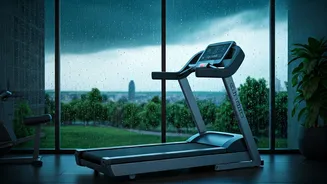
For the remote and hybrid workforce, the biggest glow-up has been the integration of walking into the workday itself. Enter the under-desk treadmill, or walking pad. These compact, motor-driven belts are designed to be used at a standing desk, allowing you to slowly stroll while answering emails, taking calls, or sitting in on Zoom meetings. It’s the ultimate form of multitasking, combatting the sedentary nature of office work without sacrificing productivity. While it won't replace a brisk outdoor walk, accumulating thousands of steps throughout the day is a game-changer for baseline health, energy levels, and focus. It’s the answer to the question, 'How can I move more when I’m stuck at my desk all day?'