





An Emerald World Reborn
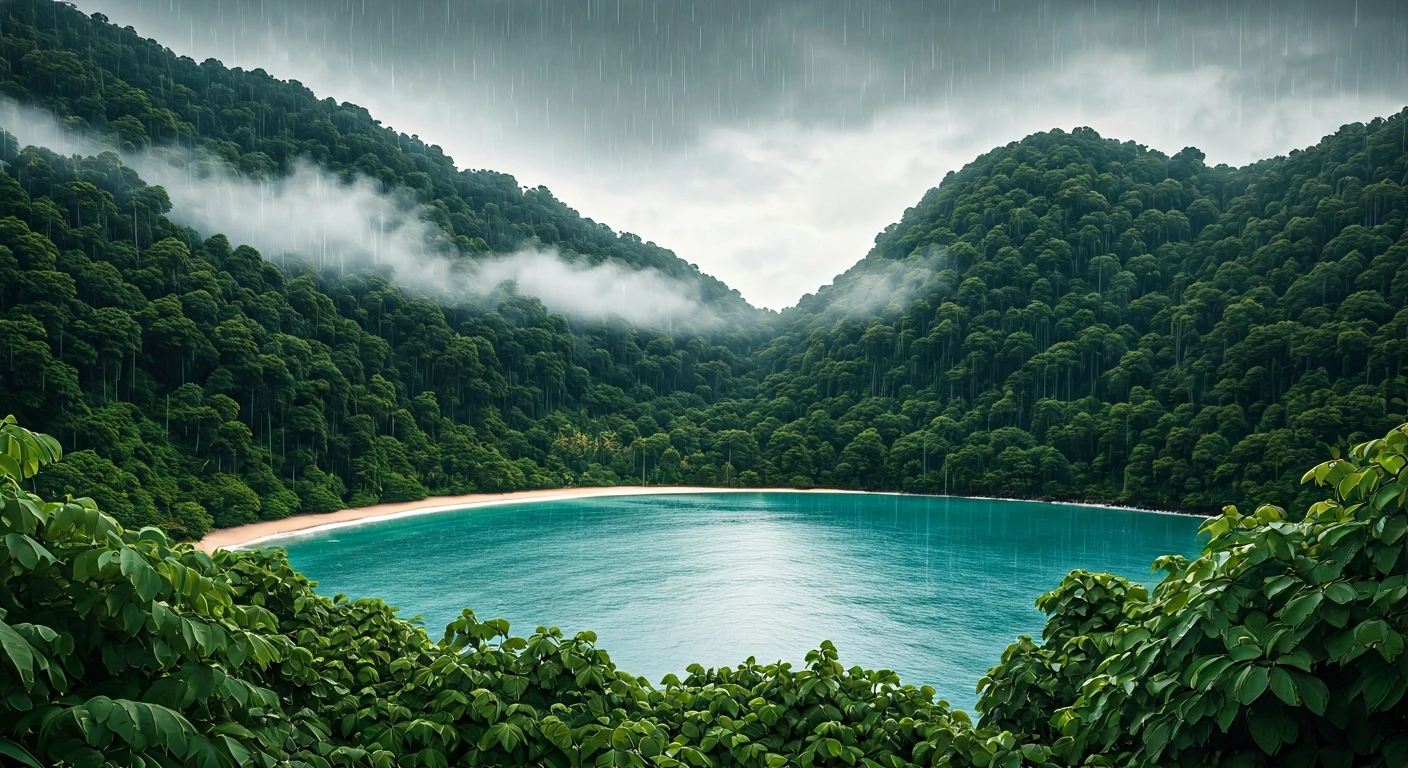
The Andaman and Nicobar Islands, a string of over 500 emeralds dropped in the Bay of Bengal, are beautiful year-round. But from May to September, the monsoon rains arrive and crank the saturation dial to an entirely new level. The landscape, already dense
with tropical rainforest, becomes electric. Every leaf, from the towering canopies to the delicate ferns on the forest floor, glistens with a vibrant, life-affirming green that feels almost CGI-enhanced. Hills that were a mix of greens and browns in the dry season are now uniformly cloaked in a lush velvet. This isn't just a touch of rain; it's a seasonal rebirth that washes the dust from the world, leaving behind a palette so intense it can feel hallucinatory. The contrast between the shockingly green foliage, the dark, brooding clouds, and the turquoise water creates a visual spectacle that sunny postcards simply cannot capture.
The Symphony of the Rain
The monsoon's performance isn't just visual. It’s an immersive sensory experience. The day is punctuated by the rhythm of the rain, from a gentle, meditative pitter-patter on a tin roof to a roaring downpour that seems to consume the world in a wall of sound and water. This is the soundtrack of the season, a constant, soothing presence that forces a slower, more contemplative pace of life. When the rain pauses, the air is thick with the scent of petrichor—that intoxicatingly earthy smell of wet soil and rejuvenated plant life. The humidity hangs heavy, but it’s a clean, tropical humidity, carrying the fragrance of salt, earth, and blooming flowers. You don’t just see the monsoon Andamans; you hear, smell, and feel them. It’s an invitation to curl up with a book and a cup of chai, watching the drama of the sky unfold from a dry, cozy veranda.
The Allure of Solitude
For the American traveler accustomed to fighting for a spot on the sand, the monsoon season offers the ultimate luxury: solitude. This is the Andamans’ off-season. The crowds that throng popular spots like Havelock Island (Swaraj Dweep) and Neil Island (Shaheed Dweep) during the peak winter months are gone. Beaches that are normally dotted with people become vast, empty stretches of pristine sand, yours alone to wander. You get a rare, intimate glimpse into the islands' local life, which ticks along at its own unhurried pace, unswayed by tourist seasons. Hotels and guesthouses, happy to see visitors, often offer significant discounts. The experience feels less like a vacation package and more like a genuine discovery. It’s a chance to connect with the place and its people on a deeper level, far from the commercialized hustle.
Navigating the Moody Paradise
Of course, this unreal beauty comes with a dose of reality. The monsoon is not for the traveler who needs a tightly packed itinerary or guaranteed sunshine. The same dramatic seas that look so stunning can also lead to ferry cancellations between islands, sometimes for days at a time. Flexibility isn't just recommended; it’s mandatory. While the rain is often in short, intense bursts followed by periods of calm, it can also settle in for a long, gray spell. Water activities like scuba diving and snorkeling, the main draw for many, are often suspended due to reduced visibility and rough conditions. This is not the trip for perfecting your tan. It's for embracing the moodiness, for finding beauty in the storm clouds, and for understanding that sometimes the most memorable journeys are the ones where nature, not your schedule, is in charge.