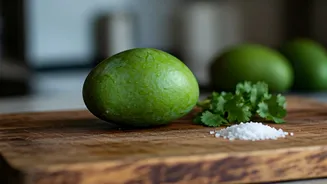


First, What Is Kairi?
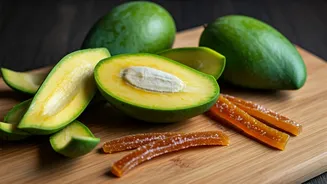
Walk into an Indian or Southeast Asian grocery store in late spring or early summer, and you’ll likely find them: firm, olive-green fruits called 'kairi.' These are simply unripe mangoes, harvested before their sugars have fully developed. While a ripe mango is
sweet, soft, and floral, kairi is its tart, crunchy, and unapologetically acidic cousin. Its flavor is a lightning bolt of sourness, perfect for cutting through richness in savory dishes or providing the backbone for pickles, chutneys, and refreshing drinks. For many Americans, the journey with a mango ends once the sweet flesh is scooped out. But in the world of kairi, that’s often just the beginning. The real magic lies in using the parts we’re conditioned to discard.
The Peel: Not Just for the Compost Bin
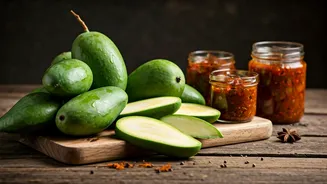
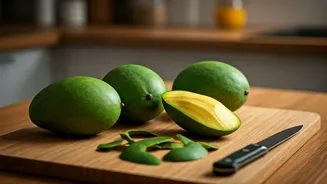
The peel of a green mango is packed with even more of that signature tart flavor and a pleasant, slightly bitter note. Instead of heading straight for the compost, resourceful cooks put it to work. One of the simplest uses is as an aromatic. Tossing a strip of peel into a pot of simmering lentils (dal) or a curry can infuse the entire dish with a subtle, bright tang. But its most celebrated role is in pickles. In many regional Indian recipes, thin slivers of the peel are included right alongside the chunks of mango flesh. They soften during the pickling process, absorbing the spices and oil while contributing their own complex flavor and texture. For a more modern, zero-waste application, you can dehydrate the peels until they’re brittle and grind them into a powder. This 'kairi peel powder' becomes a homemade souring agent, ready to be sprinkled over salads, roasted vegetables, or even the rim of a cocktail glass for a tangy twist.
The Pit: A Hidden Culinary Gem
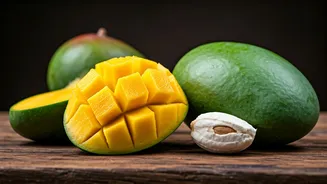
The large, woody pit, or 'gutli,' seems like the most inedible part of the fruit. But hidden inside that tough husk is a soft, almond-like kernel. This is the source of one of South Asia's most interesting and traditional snacks: 'gutli ka mukhwas.' A mukhwas is a type of mouth freshener and digestive aid, typically eaten after a heavy meal. To make it, the mango pits are boiled to soften them, then cracked open to reveal the inner kernel. These kernels are then thinly sliced, mixed with salt and sometimes other spices like turmeric, and sun-dried until they become crisp. The final product is a salty, nutty, and slightly sour chip that’s surprisingly addictive. It’s a brilliant example of culinary alchemy, transforming a rock-hard seed into a delicate, flavorful snack. While it takes some effort, the process is a testament to a food philosophy where nothing is wasted.
A Zero-Waste Mindset, Not Just a Recipe
Using kairi scraps isn't just about making one or two specific dishes; it's about embracing a mindset. This approach, often called 'root-to-stem' cooking in modern American culinary circles, has been a practical reality in many cultures for centuries. It stems from a place of respect for the ingredient and a need for resourcefulness. When you buy a green mango, you're not just buying the flesh; you're buying a bundle of culinary possibilities. The flesh can become a sour and spicy pickle. The water you soaked it in can be used to make a tangy drink called 'panha.' The peels can flavor your dinner. And the pit can become a savory snack for later. It challenges the cook to see potential where they once saw waste, turning a single ingredient into a source of multiple meals and flavors.