







The Scent of Summer Rain
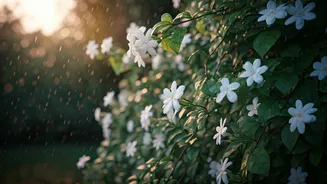
Imagine a summer evening in the American South, right after a downpour. The air is so thick you can practically drink it. This is the moment jasmine lives for. While many plants wilt and struggle in oppressive humidity, certain types of jasmine hit their
stride. This isn't just a gardener's fantasy; it’s a biological reality rooted in the plant's origins. Most of the fragrant, vining plants we call jasmine hail from the tropical and subtropical regions of Eurasia and Oceania, where seasonal monsoons and high ambient moisture are the norm. For these plants, humidity isn't an obstacle to overcome; it's a signal that conditions are perfect for growth and, more importantly, for putting on a spectacular floral display. The heavy, fragrant air is their native element, and when they sense it, they respond with an explosion of flowers.
Why Humidity Is Jasmine’s Best Friend
So, what’s the science behind this love affair with humid air? It’s all about water management. Plants, like people, are constantly losing water to the atmosphere in a process called transpiration. They draw water up through their roots and release it as vapor through tiny pores in their leaves, called stomata. In dry air, this process happens quickly, forcing the plant to work hard just to stay hydrated. But in high humidity, the air is already saturated with water vapor, which dramatically slows down transpiration. With less water escaping, the jasmine plant can keep its stomata open for longer to absorb carbon dioxide for photosynthesis without the risk of dehydrating. It’s essentially a vacation for the plant—it can relax its water-conservation efforts and pour all that saved energy into its primary mission: producing flowers to attract pollinators. This is why a humid spell often triggers the most intense and fragrant blooming period. The plant is happy, hydrated, and ready to show off.
Choosing the Right Jasmine
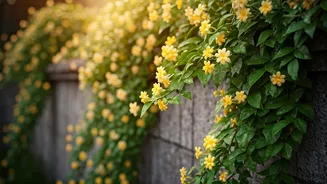
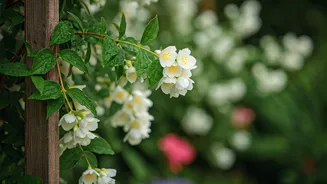
Not all 'jasmines' are created equal, and it helps to know what you’re working with. The 'true jasmines' belong to the genus *Jasminum*, part of the olive family. Popular varieties include Common Jasmine (*Jasminum officinale*) and Arabian Jasmine (*Jasminum sambac*), the latter of which is famously used for jasmine tea and leis. These varieties adore heat and humidity. Then there’s the incredibly popular Star Jasmine (*Trachelospermum jasminoides*), which isn’t a true jasmine at all but is prized for its similar star-shaped, fragrant white flowers and vigorous, climbing habit. Native to eastern and southeastern Asia, it shares that love for warm, humid conditions and is a familiar sight covering trellises and fences across the southern U.S. While their botanical families differ, their environmental preferences are strikingly similar, making them perfect candidates for gardens in balmy climates.
Creating a Humid Haven at Home
How you help your jasmine thrive depends entirely on where you live. If you’re in a naturally humid region like Florida, Louisiana, or the Carolinas, your main job is to provide good soil, adequate sun (often partial sun is best in scorching climates), and a structure to climb. The air will do the rest. For gardeners in arid or semi-arid regions like the Southwest or parts of California, you have to create a microclimate. Planting jasmine in containers is a great strategy. You can group it with other plants to collectively raise the ambient humidity as they all transpire. Placing the pot on a tray of pebbles filled with water (ensuring the pot itself isn't sitting in the water) can also create a small pocket of moisture. Regular misting, especially in the morning, can also give the plant the humidity it craves. For indoor jasmine plants, a bathroom with a shower is a perfect home, or you can use a small humidifier to mimic its favorite tropical conditions.