




The Living Fortress City
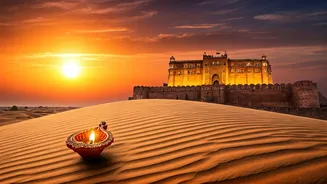
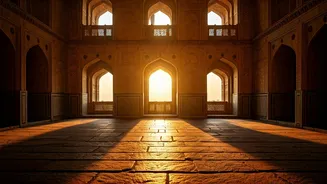
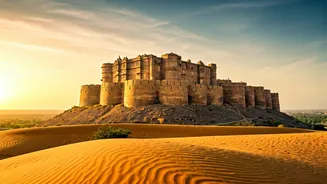
Jaisalmer’s heart is its magnificent fort, a UNESCO World Heritage site that is much more than a historical relic. Unlike many ancient citadels, Jaisalmer Fort is a living, breathing community. Roughly a quarter of the old city's population still resides
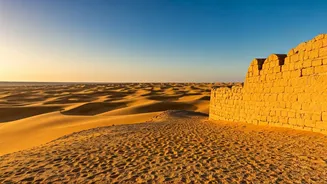
within its massive walls, their homes connected by a labyrinth of narrow, winding lanes. As you wander through, you'll pass shops selling vibrant textiles, artisan leather goods, and silver jewelry. You’ll find centuries-old temples, rooftop cafes with stunning panoramic views, and grand gateways that whisper tales of Silk Road caravans and Rajput valor. The entire structure is crafted from yellow sandstone, which glows with a lion-gold intensity at sunrise and sunset, earning Jaisalmer its moniker: “The Golden City.”
The Ornate Havelis
Stepping outside the fort’s gates reveals another of Jaisalmer’s architectural treasures: the havelis. These are opulent private mansions built by wealthy merchants in the 18th and 19th centuries, designed to showcase their immense prosperity. The most famous include Patwon Ki Haveli, a cluster of five interconnected houses with intricately carved facades, latticed windows, and over 60 balconies, each more elaborate than the last. Nathmalji Ki Haveli and Salim Singh Ki Haveli are equally impressive, featuring a blend of Rajput and Mughal architectural styles. These structures aren't just beautiful; they are a testament to the city's historical importance as a crucial hub on ancient trade routes, where fortunes were made and flaunted in stone.
Journey to the Shifting Sands
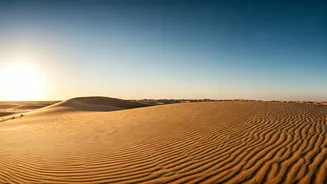
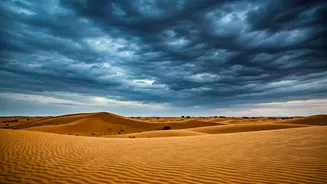
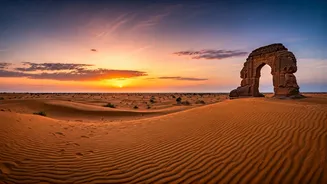
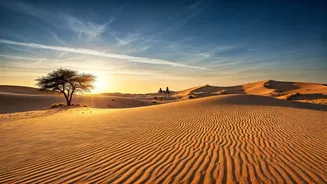
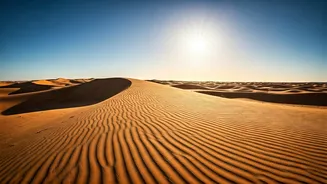
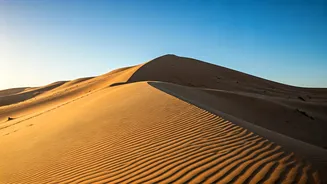
While the city offers a deep cultural dive, the “dry escape” truly finds its meaning about 25 miles away at the Sam Sand Dunes. This is the postcard image of the Thar Desert you've been dreaming of: a vast, rolling sea of golden sand. Here, the noise of the city fades, replaced by the whisper of the wind and the profound silence of the desert. The dunes, some rising over 100 feet, create a dramatic landscape that changes constantly with the wind. The experience is about surrendering to the scale of nature, feeling dwarfed by the endless expanse, and watching the sky put on a spectacular show.
The Sunset Camel Safari
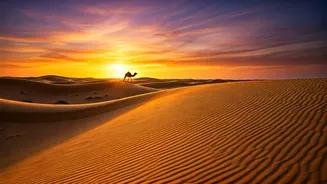
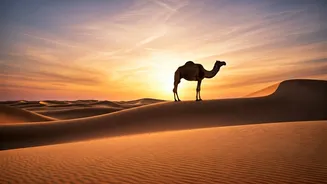
The quintessential Sam Dunes activity is the camel safari. As the afternoon sun begins to soften, you’ll mount your surprisingly gentle ride for a trek across the dunes. The rhythmic, swaying gait of the camel becomes a meditative backdrop as you venture deeper into the desert. The goal for most is to find a perfect vantage point atop a high dune to witness the sunset. As the sun dips below the horizon, it paints the sky in fiery shades of orange, pink, and purple, casting long, dramatic shadows across the sand. It’s a moment of pure, cinematic beauty and a core memory for anyone who visits.
A Night Under the Stars
To complete the experience, spend a night in a desert camp. Accommodations range from simple, rustic tents to luxurious Swiss-style cottages with modern amenities. As dusk settles, the camps come alive. You'll typically be welcomed with traditional music and watch Kalbelia dancers perform around a crackling bonfire. Dinner is often a traditional Rajasthani affair, served under a canopy of stars so brilliant and clear they seem almost within reach. The silence of the desert at night, punctuated only by the distant folk music, provides a profound sense of peace and isolation from the modern world.
Planning Your Desert Trip
The best time to visit Jaisalmer and the Sam Sand Dunes is during the cooler, drier months from October to March, when daytime temperatures are pleasant and nights are crisp. The summer months (April to June) are punishingly hot. Jaisalmer is accessible via its own airport with connections from major Indian cities, or by an overnight train from hubs like Delhi or Jaipur. When packing, think layers: light clothes for the day, but a warm jacket or sweater for the chilly desert nights. And of course, bring a hat, sunglasses, and sunscreen.