


Why Your Window Isn't Enough
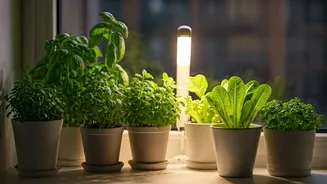
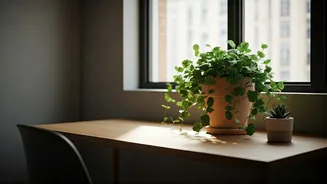
The number one rule of real estate—location, location, location—is also the number one rule of houseplants. But in an apartment, even a prized south-facing window can be a letdown. Natural light intensity plummets dramatically with every foot you move
away from the glass. A plant on a windowsill might be getting 10,000 lux (a measure of light intensity), but a plant just six feet into the room could be receiving as little as 500 lux—not enough for most plants to thrive. Factor in common urban obstacles: a neighboring building that blocks the afternoon sun, trees that leaf out in summer and create shade, or even just the film of city dust on your windows. That 'bright, indirect light' described on the plant tag becomes a vague, unachievable dream. Your apartment simply isn't a greenhouse, and relying solely on its unpredictable windows is often a recipe for botanical heartbreak.
Decoding the Language of Light
To solve the light problem, we have to speak the plant's language. It's simpler than it sounds and comes down to three key elements: intensity, duration, and spectrum. **Intensity (Brightness):** This is how strong the light is. A desert cactus needs incredibly high-intensity light, while a snake plant is content with much less. For grow lights, this is often measured in lumens, but the gold standard is Photosynthetically Active Radiation (PAR), which measures the specific light plants use for photosynthesis. The higher the number, the more 'food' you're giving your plant. **Duration (Time):** This is how many hours of light your plant gets per day. Most common houseplants need about 12-16 hours of light during their growing season. A major advantage of using a grow light is that you can put it on a simple outlet timer and provide perfect consistency that the sun, with its cloudy days and short winter hours, never can. **Spectrum (Color):** Plants don't see light like we do. They primarily 'eat' blue and red light. Blue light fuels leafy, vegetative growth, while red light encourages flowering and fruiting. A 'full-spectrum' light provides a balanced diet of all the colors your plant needs, mimicking the sun.
Your Guide to Modern Grow Lights
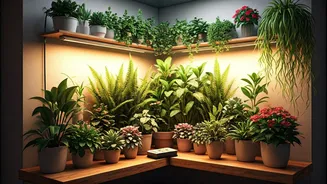
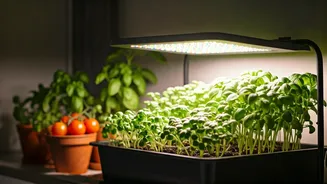
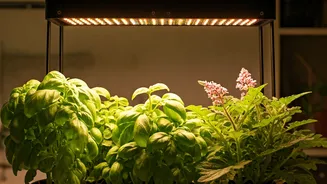
Forget the bulky, buzzing, purple-hued lights of the past. Modern grow lights are sleek, efficient, and blend right into your decor. The clear winner for most home growers is the LED. **LED (Light-Emitting Diode):** This is the default choice for a reason. LEDs are incredibly energy-efficient, produce very little heat (so you won’t scorch your plants' leaves), and have a long lifespan. Most importantly, they can be engineered to produce a perfect 'full-spectrum' light that looks like normal white light to the human eye but gives plants everything they need. You can find them as standard-base bulbs that screw into any lamp, as sleek integrated fixtures, or even as adhesive strips for under-shelf setups. **Fluorescent:** While once a popular choice, fluorescent bulbs are less efficient and have a shorter lifespan than LEDs. They are still a viable option if you find them, but for most people starting today, LED is the superior technology.
How to Choose the Right Bulb
When you're standing in the hardware store aisle, don't just grab any bulb. Look for packaging that says 'grow light' or 'full-spectrum.' Here are two key numbers to check: 1. **Lumens:** This measures brightness. For a single plant or a small group, a bulb that puts out around 1,000-2,000 lumens is a great starting point. More is not always better if your plants prefer lower light. 2. **Kelvin (K):** This measures the color temperature. For general vegetative growth (think foliage plants like pothos, monsteras, and ferns), look for a 'daylight' bulb in the 5000K to 6500K range. This cooler, bluer light promotes lush leaves and strong stems. Don't obsess over wattage. For LEDs, wattage measures energy use, not brightness, so lumens and Kelvin are far more useful metrics for picking the right light for your plants.
Putting It All Into Practice
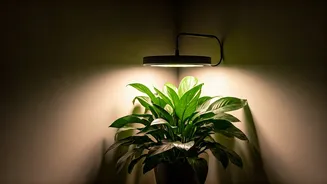
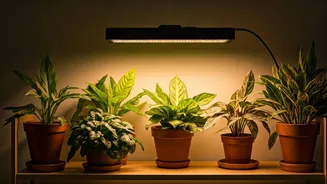
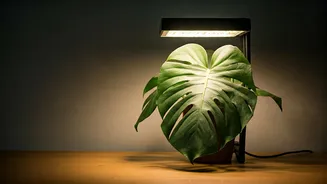
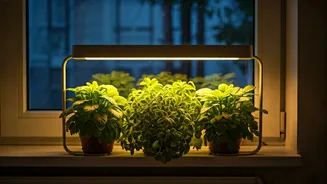
Once you have your bulb, using it is simple. Screw it into a desk lamp, a floor lamp with a gooseneck, or a simple clamp light fixture. The key is positioning. The light needs to be close enough to be effective. A good rule of thumb is to place the light 6 to 12 inches away from your plant. For high-light plants like succulents, get as close as you can without risking heat damage. For low-light plants like a ZZ plant, 12 to 18 inches is plenty. Finally, automate it. Buy a cheap mechanical outlet timer for $10. Set it to turn on for 14 hours every day—say, from 7 a.m. to 9 p.m. This consistency is the magic ingredient. Your plant will get the perfect amount of 'sun' every single day, regardless of the weather outside or how dark your apartment is. You've just created a perfect, personalized sun for your indoor jungle.