






First, Understand the Beast
Before you grab your shears, let’s get one thing straight: your bougainvillea isn't misbehaving, it's just being itself. Native to South America, this plant is a scrambler—a woody vine that uses its long, thorny branches to climb over anything and everything
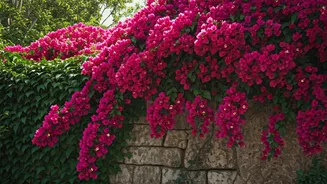
in its path to reach the sun. It's not a neat, tidy shrub, and it never will be. Trying to shear it into a perfect meatball shape is a losing battle that will only result in a thorny, flowerless tangle. The brilliant color you love doesn't come from flowers but from paper-like bracts that surround the plant’s tiny, inconspicuous white flowers. And here's the key: bougainvillea blooms on new wood. This means that every time you prune, you are setting the stage for the next explosion of color. The goal isn't to stop it from growing; it's to direct that explosive growth into a shape you love and a bloom cycle that dazzles.
Timing Is Everything
Pruning at the wrong time is the most common mistake plant parents make. If you prune in late fall or winter, especially in cooler parts of the U.S. where it might freeze, you risk stimulating tender new growth that will be immediately killed by the cold. This weakens the plant. The golden rule is to prune *after* a major bloom cycle has finished. For most of the country where bougainvillea thrives (think USDA zones 9-11: California, Arizona, Texas, Florida), this plant cycles through periods of rampant growth and spectacular blooming. Wait for the majority of the colorful bracts to fade and fall, then go in for your main prune. This allows the plant to recover and put its energy into producing the new growth that will carry the next round of blooms. Light trimming and shaping, however, can be done anytime during the growing season to tuck in a rogue branch or keep a pathway clear.
The Art of the Cut
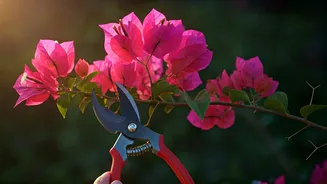
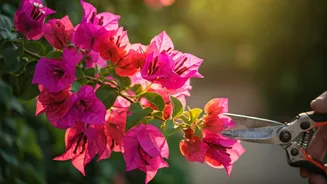
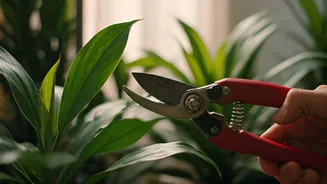
So, how aggressive should you be? It depends on your goal. For routine maintenance and encouraging blooms, a “selective prune” is your best friend. Cut back long, arching canes by about one-third of their length. Look for a leaf or a node (a small bump on the stem) and make a clean, angled cut about a quarter-inch above it. This encourages branching, and more branches mean more places for flowers to form. Also, remove any dead, damaged, or tangled wood from the interior of the plant to improve air circulation. For a seriously overgrown plant that has consumed a fence or is blocking a window, a “hard prune” might be necessary. This is a renovation. You can cut the plant back dramatically, even to just a few feet from the ground. It seems brutal, but a healthy, established bougainvillea will almost always bounce back with vigor. The best time for this is in the spring, after the last threat of frost has passed, giving it the whole season to recover.
Safety First: Respect the Thorns
Let’s not mince words: bougainvillea thorns are sharp, numerous, and can carry skin-irritating sap. Some are small and hooked, while others are like daggers. Do not attempt to prune this plant in a t-shirt and flip-flops. You will lose. Arm yourself properly for the task. This means wearing thick, preferably leather or suede, gardening gloves that go up your forearms if possible. A long-sleeved shirt (denim is great) and sturdy pants are non-negotiable. Eye protection is also a very smart idea, as a whipping branch can easily scratch an eye. Working with bougainvillea is about respecting its natural defenses. Work slowly, pull pruned branches away carefully, and you’ll finish the job without looking like you wrestled a bobcat.
Train, Don't Just Tame
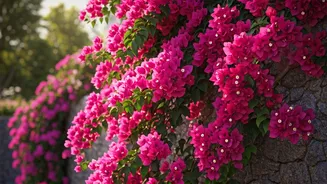
Pruning is only half the battle—and half the fun. Because bougainvillea is a vine, it needs something to climb on. Without support, its long canes will simply sprawl across the ground or cascade messily. You are the director. By providing a sturdy trellis, arbor, or even just some strong wires along a wall, you can guide its growth. As new shoots emerge, gently weave them into the support or tie them loosely with soft plant ties. This allows you to create a living wall of color, frame a doorway, or cover an unsightly fence. By training the main branches where you want them to go, your pruning tasks become much simpler—you'll mostly be trimming the lateral shoots that emerge from that main framework.