



Ignoring Your Tires and Wipers
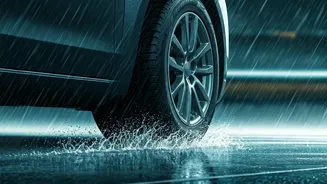
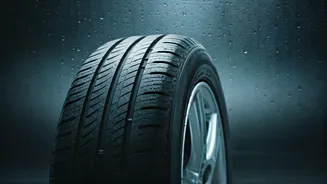
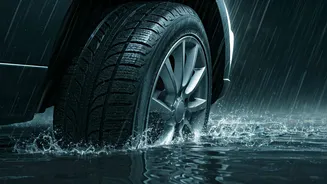
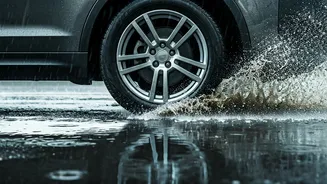
The most critical errors often happen before you even start the engine. Your tires are the only part of your vehicle in contact with the road, and in the rain, their condition is paramount. Worn-out tires with shallow tread can't effectively channel water
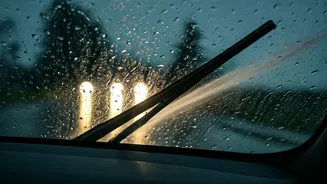
away, dramatically increasing your risk of hydroplaning. Before the rainy season hits, check your tread depth. The classic method still works: place a penny upside down in a tread groove. If you can see the top of Abe Lincoln's head, your tires are dangerously worn and need replacement. Also, check your tire pressure, as under-inflated tires can handle poorly in wet conditions. Similarly, don't wait for a downpour to discover your wiper blades are cracked and useless. They are an inexpensive but essential safety feature. Replace them every 6-12 months for a clear, streak-free view.
Using Cruise Control in the Rain
Cruise control is a fantastic feature for long, dry highway drives, but it becomes a serious liability in the rain. Here's why: if your car begins to hydroplane—losing contact with the road surface and skimming on a layer of water—cruise control will not know to reduce power. Instead, it will keep trying to maintain a constant speed, potentially causing the wheels to spin faster and making the situation worse. This can turn a momentary loss of traction into a full-blown, uncontrollable skid. When precipitation starts, your foot should be the only thing controlling the accelerator. Deactivating cruise control as soon as the roads get wet is a simple, non-negotiable rule for safe driving.
Following Other Cars Too Closely
Tailgating is always a bad idea, but in the rain, it’s downright reckless. Wet roads significantly increase your vehicle's stopping distance—sometimes by two or three times that of a dry road. The standard “three-second rule” for following distance is a bare minimum in ideal conditions. When it's raining, you should double that to at least five or six seconds. To check, watch the vehicle ahead of you pass a fixed object like a sign or an overpass, then count the seconds it takes for you to reach the same spot. If you're there before you hit “five,” you are too close. This buffer isn't just about braking; it also gives you more time and space to react to sudden hazards, spray from other vehicles, and unexpected maneuvers from the driver in front of you.
Panicking When You Hydroplane
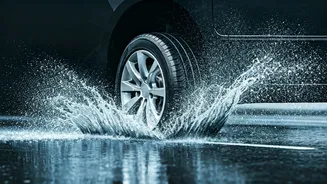
The sensation of hydroplaning can be terrifying: a sudden lightness in the steering and a feeling that you are no longer in control. The natural, but incorrect, instinct is to panic and slam on the brakes. This is the worst thing you can do, as it can lock the wheels and send you into an even more dangerous skid. The correct response is counterintuitive but crucial. First, do not brake or accelerate. Immediately take your foot off the gas pedal smoothly. Keep the steering wheel pointed straight ahead. If you have to make a slight correction, do so gently. As the car slows, the tires should regain contact with the pavement, and you will feel traction return. The key is to stay calm and make no sudden inputs.
Forgetting To Be Seen
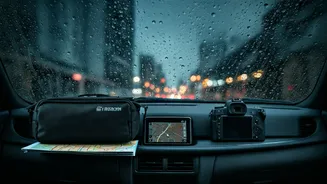
Rainy conditions drastically reduce visibility for everyone. Many drivers focus only on their own ability to see, forgetting that it's equally important for other drivers to see them. This is the simple logic behind “wipers on, lights on” laws that exist in many states. Turning on your headlights—not just your daytime running lights—makes your vehicle far more visible to other cars and pedestrians, especially during the gloomy, gray light of a storm. It illuminates your tail lights as well, giving the driver behind you a clearer target to follow and react to. Think of your headlights as a vital communication tool in bad weather, announcing your presence on the road to everyone sharing it with you.
Driving Through Standing Water
That large puddle in the dip of the road might seem harmless, but it's a massive unknown. You have no way of knowing its true depth or what lies beneath the surface. Just six inches of water can be enough to reach the bottom of most passenger cars, potentially causing loss of control or stalling. A foot of water can float many vehicles, and two feet of rushing water can sweep away most vehicles, including SUVs and pickups. Beyond the risk of being swept away, that puddle could be concealing a deep, axle-damaging pothole or debris. It could also flood your engine's air intake, leading to catastrophic and expensive damage. The official advice is simple and should always be followed: Turn Around, Don't Drown. Find an alternate route.