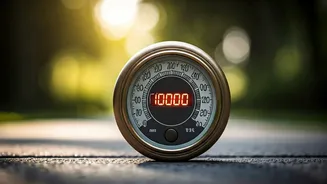









The Myth: 10,000 Steps as a Medical Mandate
For decades, 10,000 steps per day has been treated as the gold standard for a healthy, active lifestyle. It’s the default goal on countless fitness trackers and the unspoken benchmark in workplace wellness challenges. This ubiquity has given it the weight
of scientific consensus, leading many to believe it’s a medically-backed recommendation rooted in rigorous studies about cardiovascular health and longevity. It feels official, like the food pyramid or the recommendation to drink eight glasses of water a day. The number is clean, round, and ambitious enough to feel like an accomplishment, making it the perfect target for a population increasingly focused on quantifiable wellness.
The Reality: A 1960s Marketing Slogan
The truth is, the 10,000-step goal has more to do with commerce than with science. Its origin traces back to 1965 Japan, ahead of the Tokyo Olympics. A company created a pedometer called a *Manpo-kei*, which translates to “10,000 steps meter.” The name was catchy, the number was aspirational, and a marketing campaign was born. It was a brilliant piece of branding, not a prescription from a doctor. There was no specific research at the time concluding that 10,000 was the magic threshold for health benefits. The number was chosen because it sounded good and symbolized an active lifestyle, and the idea simply stuck, spreading globally over the next several decades as pedometers and, later, smartwatches became household items.
What the Science Actually Says
So, if 10,000 is just a marketing slogan, what is the right number? Modern science offers a more nuanced answer. A major 2019 study led by Harvard Medical School professor I-Min Lee found that for older women, the health benefits began to be seen at just 4,400 steps per day, with mortality rates progressively decreasing up to about 7,500 steps, where the benefits leveled off. Other studies have found similar patterns across different populations. The consensus is that moving more is almost always better, but the significant gains happen well below the 10,000-step mark. The benefits don't magically switch on at 9,999 steps. For a largely sedentary person, getting from 2,000 to 4,000 steps is a massive health victory. The pace of your steps can also matter more than the total count. The key takeaway is that *some* walking is good, and *more* is better, but there's no universal magic number.
Why It Thrives on Social Media
Step counts dominate social media because they are the perfect currency for our wellness-obsessed era. They are simple, easily quantifiable, and universally understood. Unlike the complexities of a new workout or a specific diet, a step count is a single, clear metric of effort and virtue. Posting a high number feels like sharing a daily report card for your health. This creates a powerful feedback loop of motivation and social accountability for some. For others, however, it can fuel a culture of comparison, guilt, and obsession. Missing your goal can feel like a public failure, and the pressure to keep up can turn a healthy habit into a source of anxiety. The trend reduces the holistic idea of 'being active' into a single, competitive number, which is both its biggest appeal and its greatest flaw.
How to Set a Goal That Works for You
Instead of fixating on 10,000, a better approach is to establish your own baseline. Use a tracker for a week to see what your daily average is, and then aim to increase it by a manageable amount—say, an extra 500 or 1,000 steps per day. This 'more than yesterday' approach is a more sustainable and personalized way to build an active habit. If you consistently hit 4,000 steps, aiming for 5,000 is a fantastic goal. If you're already at 8,000, pushing for 9,000 might be your next step. The goal is to challenge yourself gently and consistently, not to meet an arbitrary target set by a 1960s marketing team. Focus on the habit of moving more throughout your day—taking the stairs, walking during a phone call, or adding a short evening stroll—rather than chasing a number.