









The Government Opened the Launchpad
For decades, space in India meant one thing: ISRO, the revered Indian Space Research Organisation. It was a prestigious but state-controlled monolith. If you wanted to work on rockets or satellites, you worked for the government. That all changed in 2020.
In a move that mirrors how the U.S. government enabled companies like SpaceX, the Indian government threw open the doors to the private sector. It created a new regulatory body, IN-SPACe, to act as a facilitator between private companies and ISRO. Suddenly, entrepreneurs could access ISRO’s world-class testing facilities, tap into its deep knowledge base, and even get help launching their own hardware. This policy shift wasn't just an invitation; it was a declaration that India’s space future would be built by both public and private hands.
The Startup Ecosystem Exploded
The policy change lit a fuse. Before 2020, you could count the number of Indian space-tech startups on one hand. Today, there are over 200 and counting. These aren't just paper concepts; companies like Skyroot Aerospace and Agnikul Cosmos are building and testing their own private rockets, aiming to compete in the lucrative global market for small satellite launches. Others are focused on building satellite constellations, designing propulsion systems, or creating software to analyze the torrent of data sent back from orbit. This startup boom created a surge in demand for engineers, software developers, material scientists, and data analysts. For young graduates who once saw their best options at large IT firms, the space sector now offers a compelling, high-growth alternative.
It's About More Than Just Rockets
When people hear “space job,” they picture rocket scientists. But in India, the opportunity is much broader. The real money and job growth may lie in “downstream” applications. Startups are using satellite imagery and data to solve distinctly Indian problems. They’re providing analytics to farmers to optimize crop yields, helping cities manage urban sprawl, monitoring infrastructure projects, and tracking climate change impacts. This makes a space career tangible. It’s not just about exploring the cosmos; it’s about using space-based technology to improve life on Earth. This sense of purpose and direct impact is a powerful magnet for a generation of Indians eager to work on meaningful challenges.
The 'Chandrayaan-3' Cool Factor
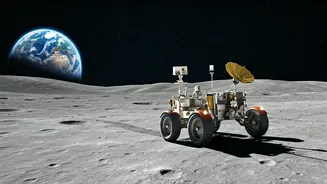
You can’t discount the power of national pride. In 2023, India became just the fourth country to land a craft on the Moon—and the first to ever reach its south polar region. The successful Chandrayaan-3 mission was a massive cultural event, captivating the nation and turning ISRO scientists into rock stars. This success had a profound halo effect on the entire industry. It made space “cool” in a way it hadn't been for years. University applications for aerospace engineering have reportedly surged, and working for a space startup is now a badge of honor. This isn't just fleeting patriotism; it’s a deep-seated belief that India is becoming a global leader in a critical 21st-century industry, and young people want to be part of that story.